Choosing electrician SEO services in the United States can be difficult when proposals use the same broad promises but describe different work. One provider may focus on website fixes, another on local visibility, and a third on publishing content without explaining how it supports service calls.
A useful comparison starts with your business needs, then checks what each provider will do, how the work fits U.S. local search, and how progress will be measured. The questions below can help you separate a clear, accountable scope from vague claims before you sign an agreement.
Define what your electrical business needs from SEO
Before comparing providers, write down the business problem you want search work to address. A residential electrician who wants more panel-upgrade inquiries may need a different plan from a commercial contractor seeking larger project opportunities. A company entering a new service area has different priorities from one that already receives steady calls but has an outdated website.
Be specific about the services and locations that matter. List the work you want to promote, such as troubleshooting, lighting installation, generator installation, or electrical panel work. Then identify the cities or counties you actually serve, along with any limits on travel, job size, or availability. This gives providers a practical basis for proposing work instead of a generic package.
Also review what is already in place. Gather access to your website, Google Business Profile (GBP), call tracking, and analytics if you have them. Note which pages bring inquiries, which service areas are most profitable, and whether your contact forms and phone number work on mobile. A provider should not assume that every lead source or service is equally valuable.
- Set a business priority: for example, increase qualified calls for a specific service, improve visibility in a defined service area, or make the website easier to use.
- Record a starting point: note current inquiry volume and sources where available, plus the condition of key service pages and local listings.
- Agree on constraints: tell the provider which jobs you do not take and which locations are outside your operating range.
These details help you judge whether a proposal is relevant. If a provider recommends dozens of location pages but has not asked where your crews work, what jobs you want, or how leads are handled, ask for a clearer rationale before discussing deliverables.
Compare the actual scope of electrician SEO services
Do not compare proposals by the number of tasks alone. Ask what each task involves, who is responsible for it, and what will be delivered. “Technical SEO” might mean a site audit and prioritized fixes, or it might mean only a list of issues for your staff to handle. “Content” could mean writing and publishing complete service pages, or simply suggesting topics. Those are materially different scopes.
For technical work, ask whether the provider will check crawlability, indexing, page speed, mobile usability, internal links, redirects, and broken pages. Crawlability is a search engine’s ability to access site pages. Indexing is the process of storing eligible pages so they can appear in search results. A competent plan should explain which issues matter on your site and whether the provider will implement fixes or coordinate with your web developer.
For local and on-page work, ask what pages, profiles, and business details are included. Find out whether the provider will review service descriptions, page titles, calls to action, contact details, and the path from a search result to a call or estimate request. The scope should also say how recommendations will be prioritized, not just list every possible optimization.
SEO Deep Insights describes its electrician seo services as covering SEO, Answer Engine Optimization (AEO), and Generative Engine Optimization (GEO), including technical fixes, local visibility, content, ethical link building, and reporting tied to leads. Use that kind of scope description as a prompt for questions: what does each area mean for your website, what work is included, and how will progress be reviewed?
Ask each provider to separate recurring work from one-time setup. Request a written list of deliverables, expected review points, and any work that depends on your team, such as approving service details or supplying project photos. If a proposal uses broad terms without explaining the work behind them, it is not yet specific enough to compare fairly.
Check the provider’s United States local SEO plan
For an electrical contractor, local visibility can affect whether nearby customers find the business while searching for a service or using a phrase such as “electrician near me.” Ask how the provider will approach Google Business Profile, local organic results, and the map pack, the map-based group of business listings shown for some local searches. No provider can guarantee placement in these results, so look for a plan and clear limits rather than a promise of a fixed position.
Ask who will manage your GBP and what changes they propose. A provider should understand the difference between a real operating location and a service-area business, and should not recommend misleading addresses or business details. Confirm that your business controls its profile and that you will retain access if the relationship ends. The provider should also explain how profile updates connect with the services and locations shown on your website.
Consistency matters across local business information. Ask whether the provider will check that your business name, address where applicable, and phone number (often called NAP) are accurate and consistent across the website and relevant directories. Clarify which directories they plan to review and whether they will correct errors or simply report them. Do not accept a large directory count as proof of quality without knowing which listings matter and what will be done.
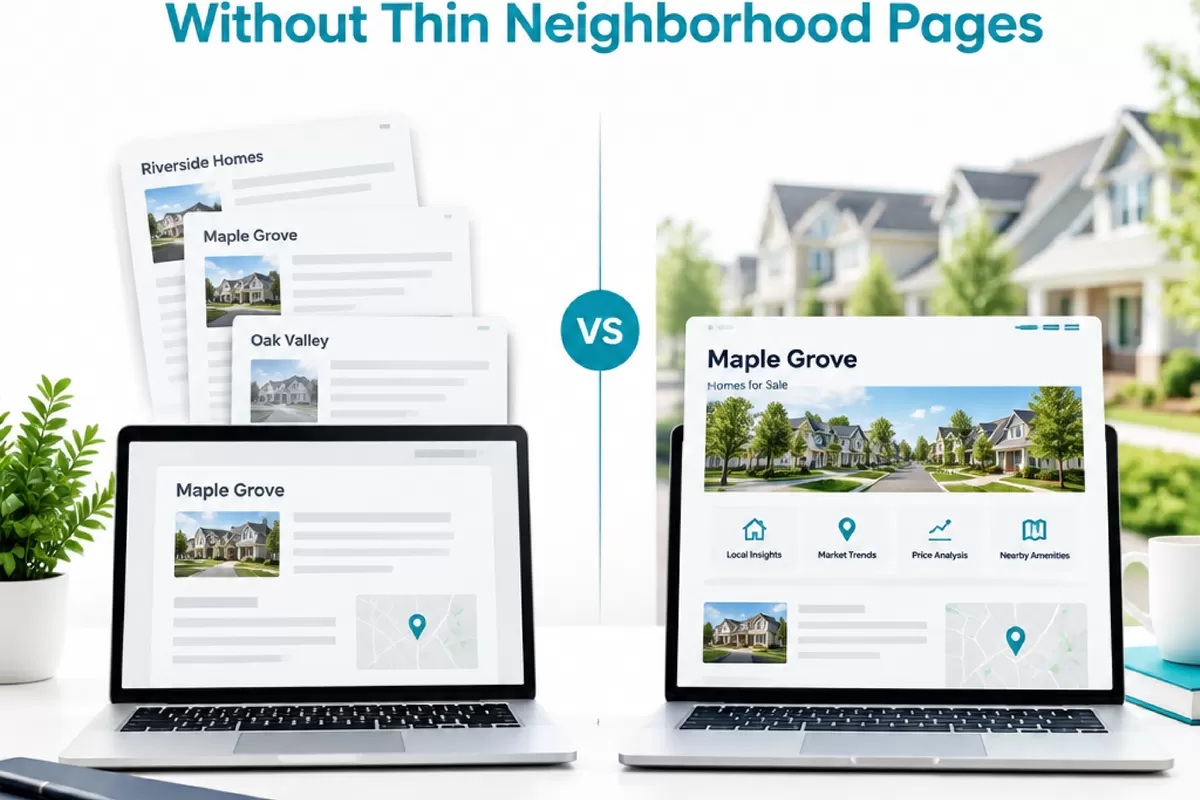
Location pages need a real reason to exist. If your company serves multiple U.S. cities, ask how the provider will make each page useful and distinct. A page can explain available electrical services, realistic service coverage, and how customers can request help. Replacing only the city name across a batch of nearly identical pages is not a sound substitute for useful local information.
- Which service areas will the plan target first, and why?
- How will GBP updates, local pages, and website contact details stay aligned?
- How will review requests be handled without pressuring customers or filtering out negative feedback?
- What local signals will the provider track, and what do those signals not tell us?
Reviews can help prospective customers assess a contractor, but the provider should not write fake reviews, offer inappropriate incentives, or promise that review activity will produce a specific ranking. Ask for a process that makes it easier to invite honest feedback while leaving customers free to describe their experience in their own words.
Assess content quality and ethical link building
Content should answer questions a customer might have before contacting an electrician. A useful service page explains what the service covers, what information a customer should share when requesting an estimate, and how to get in touch. It should be accurate to the work your company performs. Ask who will verify technical details and whether someone from your business can review content before it goes live.
Watch for pages written mainly to repeat service and city phrases. A provider should be able to explain the intended reader and purpose of each page, whether it is a core service page, a location page, or an article supporting a service topic. Ask how new content will fit with existing pages so that multiple URLs do not compete for the same query or leave visitors unsure which page to use.
AEO and GEO may also appear in a proposal. AEO refers to Answer Engine Optimization, work intended to make useful information easier for answer-focused search features to interpret. GEO refers to Generative Engine Optimization, which considers how information may be understood or referenced by generative search experiences. Ask what changes the provider actually plans to make, such as improving clarity, structure, or factual detail. Neither term should be treated as a guarantee of being cited in an answer.
For link building, ask how potential websites are selected and what the provider does to earn or obtain links. Ethical work should be transparent about outreach and avoid schemes such as buying large volumes of links, using private link networks, or placing links on unrelated sites simply to manipulate rankings. Request examples of the kinds of sites they would consider, not fabricated promises about how many links or ranking gains you will receive.
Good content and links take time to evaluate, and a link on a site is not automatically valuable because a report labels it authoritative. Ask for a process you can review: what was published, where outreach occurred, which links were earned, and whether any placements were rejected. The provider should be willing to explain risks and trade-offs in plain language.
Ask how reporting connects search work to leads

Reports should help you decide what to do next, not simply show a collection of charts. Ask what the provider will report each month or review period, where the data comes from, and how metrics relate to your business goals. Useful measures may include organic visits to important service pages, calls or form submissions attributed to search where tracking permits, GBP activity, and the status of agreed technical work.
Clarify the difference between visibility measures and business outcomes. Impressions and rankings can show whether pages are appearing for searches, but they do not prove that a person became a qualified lead. A call count also needs context: some calls may be existing customers, sales solicitations, or requests for work you do not offer. Ask how the provider will identify these limitations and how your team can confirm lead quality.
Agree on tracking before work begins. That may include confirming analytics access, testing forms, recording how phone calls are attributed, and deciding how inquiries will be marked as qualified. If your office staff can record whether a caller asked for a service you offer and came from a target location, that information can make reporting more useful. Make sure the provider explains any tracking setup and its privacy or technical requirements rather than assuming the data will be complete.
Ask to see a sample report with sensitive business information removed, or request a walkthrough of the report format. Look for a clear summary of completed work, changes in relevant indicators, problems found, and planned next steps. If performance is flat, the provider should be prepared to investigate and explain what is known, what is uncertain, and what they recommend testing. Reporting tied to leads does not mean every lead can be attributed perfectly.
Verify claims and choose with evidence
Strong claims need a clear explanation and evidence you can inspect. Be cautious of guaranteed rankings, guaranteed leads, or a promise to reach the top of the map pack by a fixed date. Search results can vary by query, location, competition, and other factors. A trustworthy provider can describe its process and reporting, but should not present uncertain outcomes as certainties.
Ask for proof that relates to the work in the proposal. A sample technical audit can show whether recommendations are specific. A content brief can show how a service page will serve customers. A reporting example can show whether the provider distinguishes search visibility from inquiries. If the provider shares past performance, ask what was measured, over what period, and what other changes may have contributed. Do not rely on a dramatic result without enough context to understand it.
Before choosing, compare proposals against the same questions:
- Does the provider understand your priority services, real service areas, and lead-quality needs?
- Are technical, local, content, and link-building tasks described as actual deliverables?
- Are responsibilities, approvals, access, and dependencies clear?
- Does the plan follow platform rules and avoid manipulative tactics?
- Will reporting show both work completed and the best available evidence of leads?
- Can the provider explain what it will change if the work does not move in the expected direction?
Compare the answers, not just the proposal’s length or its list of promised activities. A good fit is a provider that can explain why each part of the scope matters to your electrical business, show how the work will be checked, and be candid about what cannot be promised. If key details are missing, ask for them in writing before you commit.