Why AI caution matters for search marketers
The AI industry is entering a more cautious phase, and that shift matters far beyond product teams and model builders. For search marketers, slower AI development cycles are a strategic signal. They suggest that the next wave of search change may arrive in smaller, more uneven steps rather than in one dramatic leap.
That matters because SEO is one of the most platform-sensitive disciplines in digital marketing. Even modest changes in search visibility, AI summaries, or result layouts can alter traffic, click-through rates, and conversion paths. When AI developers hit the brakes, marketers should not assume the impact on search will also slow to a crawl. Instead, they should prepare for a more unpredictable environment where generative AI SEO is important, but not yet stable enough to build around blindly.
Key point: AI caution does not reduce SEO risk. It changes the shape of the risk. The challenge becomes balancing experimentation with disciplined measurement.
For experienced teams, the right response is not to chase every AI feature or abandon traditional SEO fundamentals. It is to reassess how aggressively the program is being built around AI-assisted search experiences, and whether the team has enough flexibility to adapt as the interface keeps evolving.
SEO impacts of slower AI rollout
Slower AI rollout can affect search marketing in several practical ways. First, it can extend the life of existing SERP patterns. Organic blue links, featured snippets, and traditional search result layouts may remain relevant longer than many expected. Second, it can create a more fragmented adoption curve for AI overviews and other answer-style surfaces, meaning some queries may be transformed quickly while others remain largely unchanged.
This creates a difficult planning environment. Teams that assumed rapid replacement of traditional search with AI-mediated answers may need to recalibrate expectations. At the same time, cautious rollout does not mean AI is receding. It means the search ecosystem is likely to evolve through iterative product changes, policy reviews, and user testing. That makes algorithm changes and interface updates harder to predict, but more important to track closely.
For marketers, the strategic implication is clear: build for resilience, not for a single AI scenario. If AI-powered search becomes more prominent in some verticals and less prominent in others, your SEO program must be able to absorb both outcomes without losing momentum.
- Short-term: Expect uneven shifts in ranking behavior and AI answer visibility.
- Medium-term: Expect stronger emphasis on trusted sources, structured content, and entity clarity.
- Long-term: Expect AI-mediated discovery to remain a structural part of search marketing, even if rollout is slower than anticipated.
What to monitor in SERPs
If AI search experiences are evolving more cautiously, your reporting needs to become more precise. Traditional rank tracking alone will not tell the full story. Marketers should monitor how SERPs behave across query types, devices, and intent categories, especially where AI summaries, answer boxes, and citation patterns appear.
Focus on the following signals:
- AI overviews frequency: Which queries trigger them, and how often do they appear by intent type?
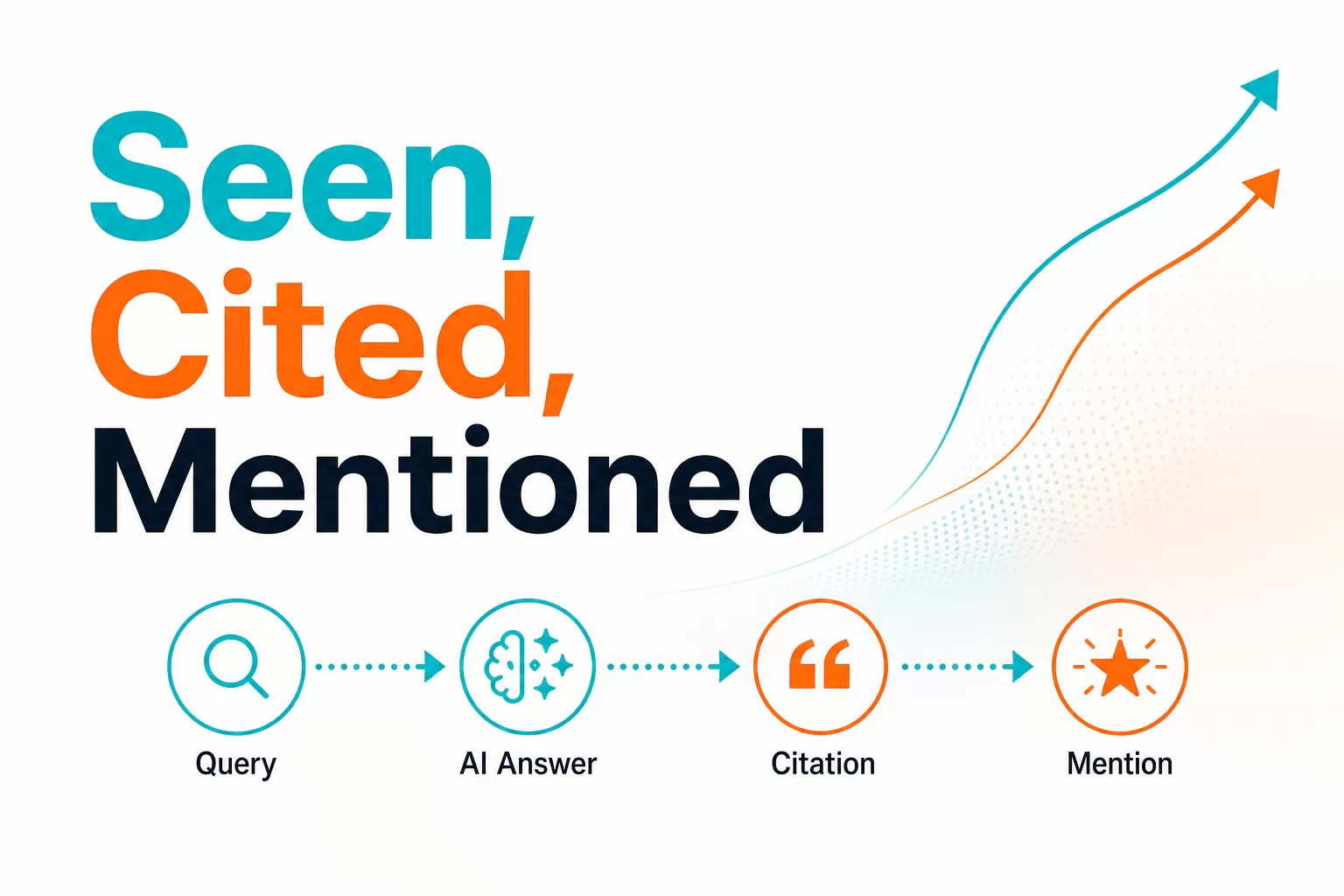
- Citation patterns: Are your pages being cited, summarized, or ignored by AI-generated answers?
- Organic click-through rate: Are AI features reducing clicks even when rankings remain stable?
- Result volatility: Are rankings changing because of core updates, interface tests, or answer-layer expansion?
- Brand visibility: Is your brand mentioned in AI summaries even when the page is not ranking in the top organic positions?
These are not vanity metrics. They are operational indicators of how search behavior is changing. In a cautious AI environment, the rollout may be slower, but the impact can still be substantial. A query that begins showing AI summaries only occasionally can still change user behavior enough to affect traffic and lead volume.
Warning: Do not assume that a slower AI rollout means a lower SEO priority. It often means the change is arriving quietly, which makes it easier to miss until performance drops.
Content and technical SEO adjustments
When AI-driven search experiences become more influential, content optimization priorities shift. The goal is no longer just to rank. It is to be legible to both users and machine systems that summarize, compare, and synthesize information. That requires a more disciplined approach to content structure, topical authority, and technical hygiene.
Start with content. Pages should be written to answer specific questions clearly, with strong definitions, concise explanations, and supporting detail that makes the page worth citing. This is especially important for AI search marketing, where models often favor content that is explicit, well-organized, and easy to extract.
Practical content adjustments include:
- Strengthen topical depth: Build clusters that cover the full intent landscape, not just isolated keywords.
- Use clear sectioning: H2s and H3s should map to user questions and sub-intents.
- Lead with the answer: Put the core point early, then expand with evidence and nuance.
- Support claims: Use original data, examples, and expert context where possible.
- Refresh strategically: Update pages that are most likely to be summarized by AI features or cited in answer surfaces.
Technical SEO matters just as much. AI systems and search engines both benefit from clean site architecture and structured information. That means your program should continue to invest in crawlability, indexation control, schema markup, internal linking, and page performance. These basics become even more important when machine systems are deciding which sources to trust.
For teams serving complex B2B or SaaS markets, this is especially relevant. A strong internal architecture can help reinforce authority across related topics, which is useful whether the user lands on a standard organic result or an AI-generated answer. Businesses looking to deepen that kind of support often benefit from specialized implementation, such as SEO Services for SaaS & Software in Lahore.
Agencies also need to rethink their own visibility strategy. If clients are asking how to adapt to AI-driven search, the agency’s own content should demonstrate that it understands the shift. That is where resources like SEO Services for Digital Marketing Agencies in Lahore can be naturally relevant as part of a broader service ecosystem.
How digital marketing teams should adapt workflows
The biggest operational change is not just in content production. It is in workflow design. Teams that once treated SEO as a monthly reporting function now need a more responsive process for monitoring AI-related search changes and reacting to them quickly.
That means tighter collaboration between SEO, content, analytics, and paid media teams. If AI summaries are affecting organic clicks, the impact may show up in paid performance, branded search behavior, or conversion rates before it appears in a ranking report. A mature workflow should connect those signals.
- Create a SERP watchlist: Track priority queries weekly or biweekly for interface changes.
- Segment by intent: Informational, commercial, and navigational queries may behave differently in AI search.
- Audit content by visibility risk: Identify pages most exposed to AI summaries or zero-click behavior.
- Test content formats: Compare concise answer-led pages with deeper, evidence-rich pages.
- Document changes: Keep a log of SERP shifts, ranking movement, and CTR changes tied to known updates.
In practice, this is a form of risk management. If AI development slows, the market may become less predictable, not more predictable. Teams that can observe and respond faster will be better positioned than those waiting for a single major platform announcement.
Strategic takeaways for marketers
The most important takeaway is that slower AI development should not be interpreted as a reason to pause SEO innovation. It is a reason to become more selective and more disciplined. The winners in the next phase of search marketing will likely be the teams that combine experimentation with operational rigor.
Strategic takeaway: Build SEO programs that can survive both rapid AI adoption and gradual AI rollout. Flexibility is now a competitive advantage.
Here is the practical framework:
- Do not overcommit to any single AI search tactic.
- Protect fundamentals like crawlability, intent alignment, and topical authority.
- Measure visibility broadly across organic results, AI overviews, and answer surfaces.
- Optimize for citation-worthiness by improving clarity, structure, and trust signals.
- Build adaptable content systems that can be updated as search interfaces change.
For experienced marketers, the message is not simply that AI is changing SEO. It is that the pace of change may be more cautious than expected, which makes strategic patience just as important as innovation. In a generative AI-driven search environment, the best SEO programs will not be the ones that react to every trend. They will be the ones that stay visible, measurable, and resilient as the search experience continues to evolve.
In other words, the future of search marketing will reward teams that understand both sides of the equation: the promise of generative AI SEO and the reality that AI rollout may be slower, messier, and more incremental than the industry once assumed.