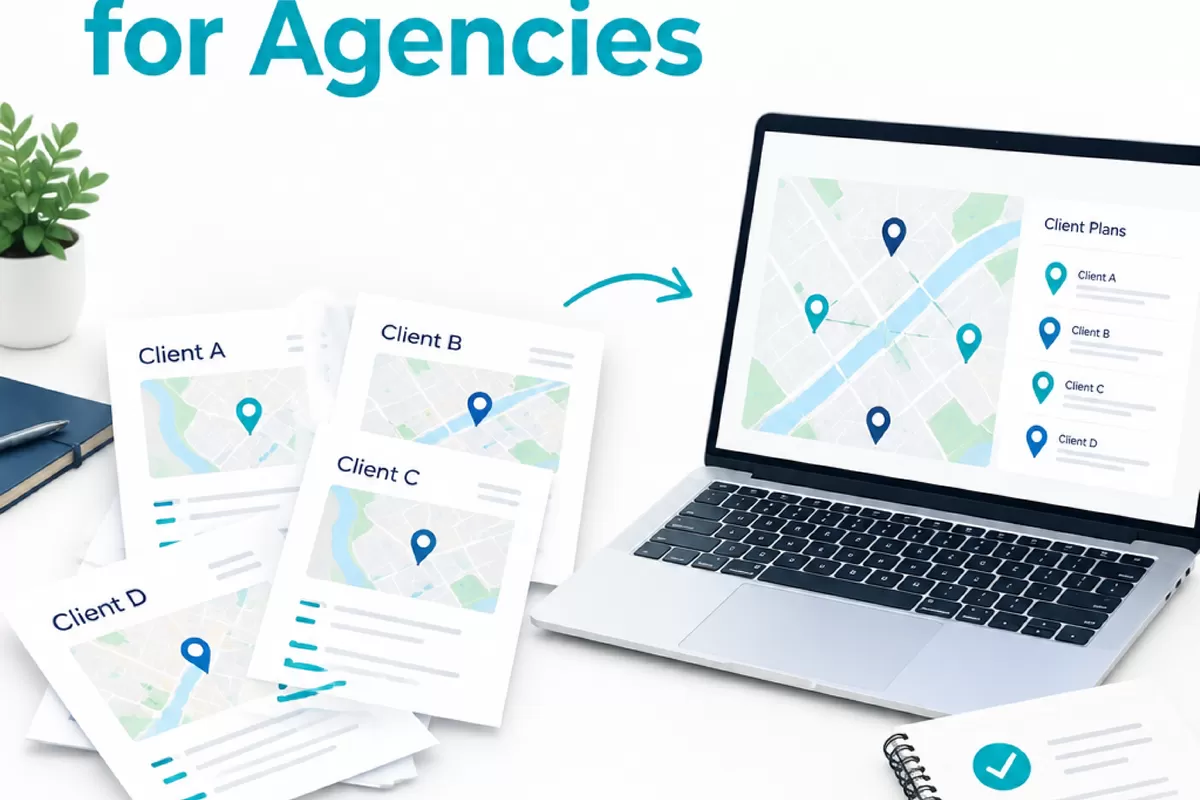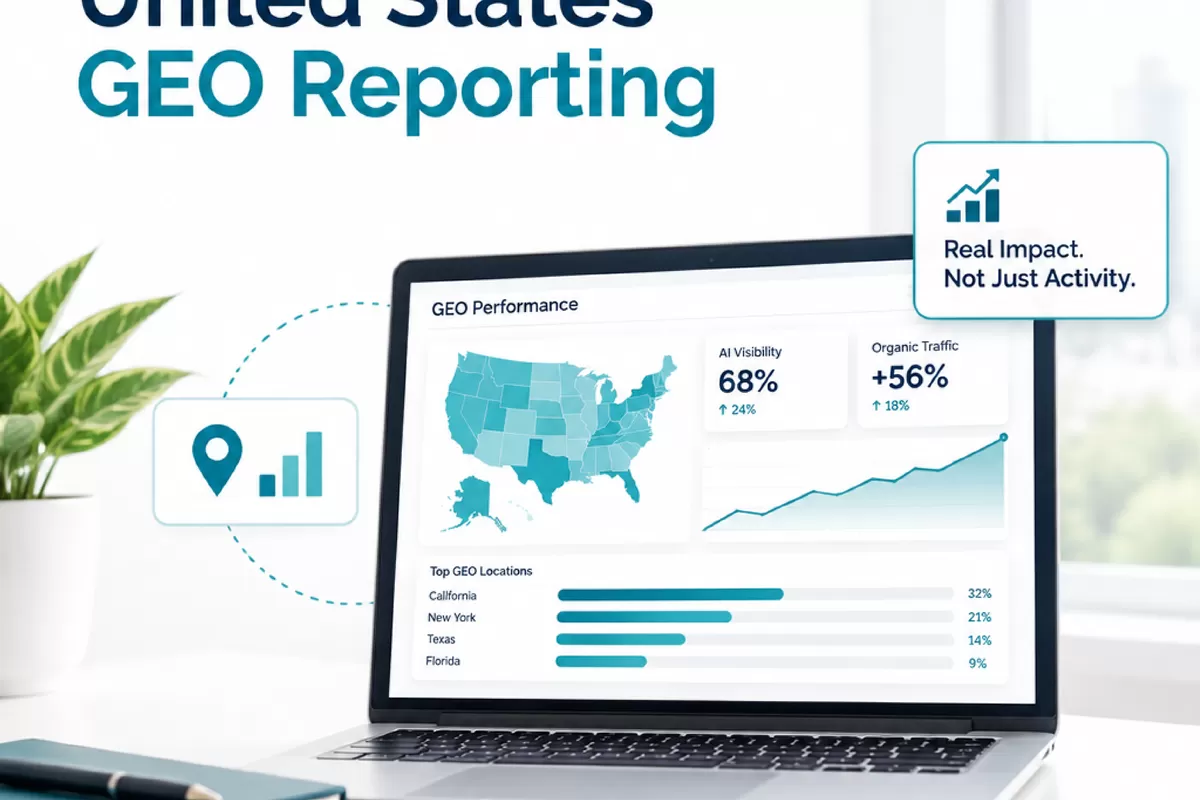
For digital marketing agencies in the United States, GEO reporting can become hard to explain when a client sees a list of tasks but cannot tell what changed for the brand. The first step is to clarify what “GEO” means in the project: local visibility tied to geography, generative engine visibility in AI answers, or both.
From there, report the markets and audience questions covered, the work completed, the measures selected for that client, what those measures show, and the next decision. This keeps activity separate from outcomes, and gives the client a practical way to judge progress without promising rankings, mentions, or citations that no agency can guarantee.
Why GEO reports confuse activity with visibility
GEO is used to describe more than one kind of search work. Some clients use it to mean geographic optimization, such as improving a business’s visibility in a city or service area. Others use it to mean Generative Engine Optimization, or work intended to help a brand appear accurately in AI-generated answers. The two can support the same broader search strategy, but they are not interchangeable.
Reports become muddy when they blend these activities under one label. A list that says “updated location pages,” “reviewed answer prompts,” and “added business details” does not tell a client which audience or visibility problem each task addresses. Nor does a completed task prove that a brand gained visibility. Those are separate points to report.
Before work begins, agree on what the client means by GEO and what visibility problem the project will address. If geographic and generative work are both in scope, label them separately. That makes it easier to connect each activity to its purpose and choose measures that fit.
Geographic and generative visibility in the United States
Geographic visibility concerns searches shaped by a person’s location or service needs. A customer in the United States might search for a nearby provider, a service in a particular city, or a business that serves a named suburb. Work may include a well-maintained Google Business Profile (GBP), consistent business name, address, and phone details (NAP), location-specific pages, and a reliable review process.
Generative visibility concerns how a brand is represented in answers produced by AI systems. The work may involve improving the clarity, structure, and credibility of information about the brand and its services. Possible observations include whether the brand is mentioned or cited in relevant answers, but those signals vary by system, prompt, and time. They should be treated as optional measures, not promised outcomes.
The distinction matters for reporting. For a multi-location business, geographic work might focus on whether key locations have accurate profiles and useful local pages, and on how the business appears for a defined set of local searches. Generative work might examine how the brand is described in answers to questions its audience asks. A single client may need both, but each needs its own scope and interpretation.
United States search behavior also varies by market. A useful local plan names the cities, neighborhoods, or service areas that matter to the client instead of assuming that a single national page answers every local need. A business should only target locations it genuinely serves. A page for a city where the company has no relevant service or presence can confuse visitors and weaken trust.
How agencies can integrate GEO into a client engagement
Start with discovery, not a list of GEO deliverables. Ask where the client wants to be more visible, which products or services matter, who is searching, and what kinds of questions lead people toward a decision. For local work, confirm locations served, business details, and the status of each GBP. For generative work, agree on the audience questions and the answers the brand needs to communicate accurately.
Then map each need to the right workstream. A local discoverability problem may call for correcting inconsistent NAP details, improving a location page, or reviewing how the GBP represents the business. A problem with unclear service information may need better organized, factual website content. Technical SEO may also be relevant if search engines or visitors have trouble accessing key pages. GEO should connect to the client’s existing SEO and content work, not sit beside it as an unexplained collection of tasks.
Set a baseline before making changes. Record what was checked, which markets or questions were included, and when the review took place. This gives the agency a fair comparison point later. For example, a baseline for a local project might document profile completeness and the selected local searches. A generative visibility review might record a defined group of prompts and the systems checked. Neither snapshot is universal proof of visibility, but a consistent method makes later comparisons more useful.
Finally, define what would count as a meaningful change before reporting begins. That could be more accurate business information, improved visibility for a selected set of local searches, or clearer brand descriptions in the answers reviewed. The right measure depends on the client’s objective and available evidence. If a signal cannot be checked consistently, explain that limitation rather than presenting it as a firm outcome.
What should a client-friendly GEO report show?
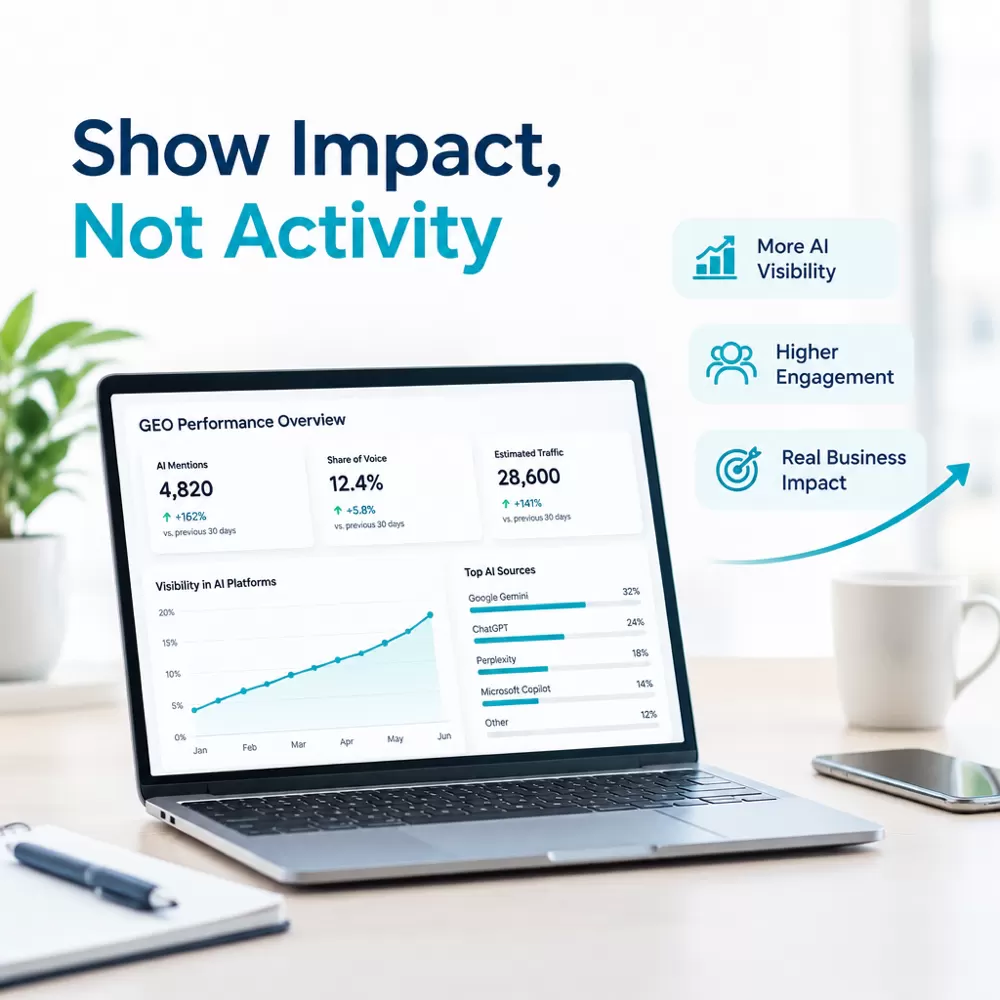
A useful report follows the logic of the work. Keep it concise enough for a client to understand, but include enough context for someone to verify what was checked. A five-part structure works well:
- Markets and audience questions: Name the locations, service areas, and audience questions included in the project. For example, distinguish a search for a provider in a named city from a question about how a service works.
- Work completed: Summarize the changes actually made, such as reviewing GBP details, correcting NAP inconsistencies, updating a relevant location page, or improving the clarity of service information. Label planned work separately from completed work.
- Measures selected: List the indicators being monitored and why they fit the objective. Possible measures include profile accuracy, local search visibility, relevant brand mentions, or citations in AI answers when those can be checked in a consistent way.
- What changed: Describe the observed difference compared with the baseline, including where there was no clear change. State the dates, scope, and method used so the client can understand the limits of the comparison.
- Next decision: Recommend a specific next step, such as continuing to observe a change, fixing a remaining information gap, or testing a different audience question. Explain what new evidence would support that choice.
This structure helps separate outputs from outcomes. An output is work the agency completed, such as editing a page. An outcome is an observed change related to the objective, such as a difference in a selected visibility measure. Reporting both is useful, but they should not be described as if they mean the same thing.
Use plain labels and keep comparisons fair. If a visibility check was run in a different market, on different prompts, or through a different tool, say so. Search results can vary by location, query, and platform. A snapshot can help the team spot patterns, but it cannot establish that a particular edit caused every change in visibility.
Report the work, the evidence, and the uncertainty separately. A transparent “we did not see a consistent change yet” is more useful than turning a completed task into a claimed result.
Choose measures and scope that fit the client
There is no single GEO metric that fits every engagement. For geographic work, an agency might track the accuracy of business information, the health of location pages, or visibility for a defined group of relevant local searches. For generative work, it might monitor how a brand is described in selected answers, or whether mentions and citations appear for a set of relevant prompts. These are options to consider, not standard deliverables or guaranteed results.
Each measure needs a clear definition. If the report says “visibility improved,” specify where it was checked, what searches or prompts were used, and what was compared. If the measure is an AI answer mention, note the system and prompt used, and whether the result was repeatable across checks. If the team cannot reproduce a signal reliably, use it as an observation with caveats, not as a headline KPI.
Scope and cost should follow the actual work required. The number of locations, the state of existing business data, the amount of content to review, the technical needs, and the frequency of monitoring can all affect the effort involved. An agency should define those factors before quoting or comparing options. Avoid implying that a higher volume of pages, prompts, or reports automatically means better visibility.
Set expectations about dependencies, too. The client may need to confirm locations, service details, and access to relevant profiles or analytics. If key business information is incomplete or inaccurate, resolving that first may be more useful than expanding the scope. A specialist may be needed when ownership, duplicate profiles, or complex multi-location data cannot be resolved through routine project work.
Connect reporting to the client’s next work plan
A report should help the client decide what to do next, not merely close the month. Tie each recommendation to an observed gap or an unanswered question. If location details remain inconsistent, assign an owner and agree on what needs verification. If local pages do not clearly explain who a service is for or where it is available, prioritize those facts before adding more pages. If generative answer checks show inconsistent descriptions, review the source information and make sure the brand’s services are explained accurately.
Agencies building this work into broader search engagements can use an integrated approach across SEO, Answer Engine Optimization (AEO), and GEO. The how can digital marketing agencies integrate geo services to boost client brand visibility? guide describes SEO Deep Insights’ service context for agencies, including technical fixes, local visibility, content, ethical link building, and reporting tied to the work. The practical lesson for an account team is to connect each recommendation to a defined objective, evidence, and responsible workstream.
Before sending a report, check that the market and questions are named, completed tasks are separated from planned tasks, measures have definitions, and comparisons use a consistent method. Then make the next decision clear. It might be to continue monitoring, revise the scope, fix a prerequisite, or pause a measure that is not producing dependable information.
That discipline makes GEO easier to explain to clients in the United States and easier to manage inside an agency. It replaces a vague promise of “more visibility” with a transparent account of what the team covered, what it observed, what it cannot yet conclude, and what should happen next.