OpenAI’s ChatGPT Ads Manager beta is now reaching UK advertisers, and the rollout matters for a bigger reason than early access. This is not just another product test. It is a clear sign that OpenAI is building the operational foundation for a scalable advertising business inside an AI-native environment.
For paid media teams, the most important question is not whether ads will appear in ChatGPT someday. It is how quickly a new interface, permission model, and measurement layer can evolve into a channel that agencies and brands can actually plan around. That is where the strategic signal lives.
When a platform adds campaigns, billing, settings, and partner access, it is not experimenting with ads anymore — it is building the infrastructure to commercialize attention.
What OpenAI launched in the UK
For hands-on help with this topic, explore SEO Services for Digital Marketing Agencies.
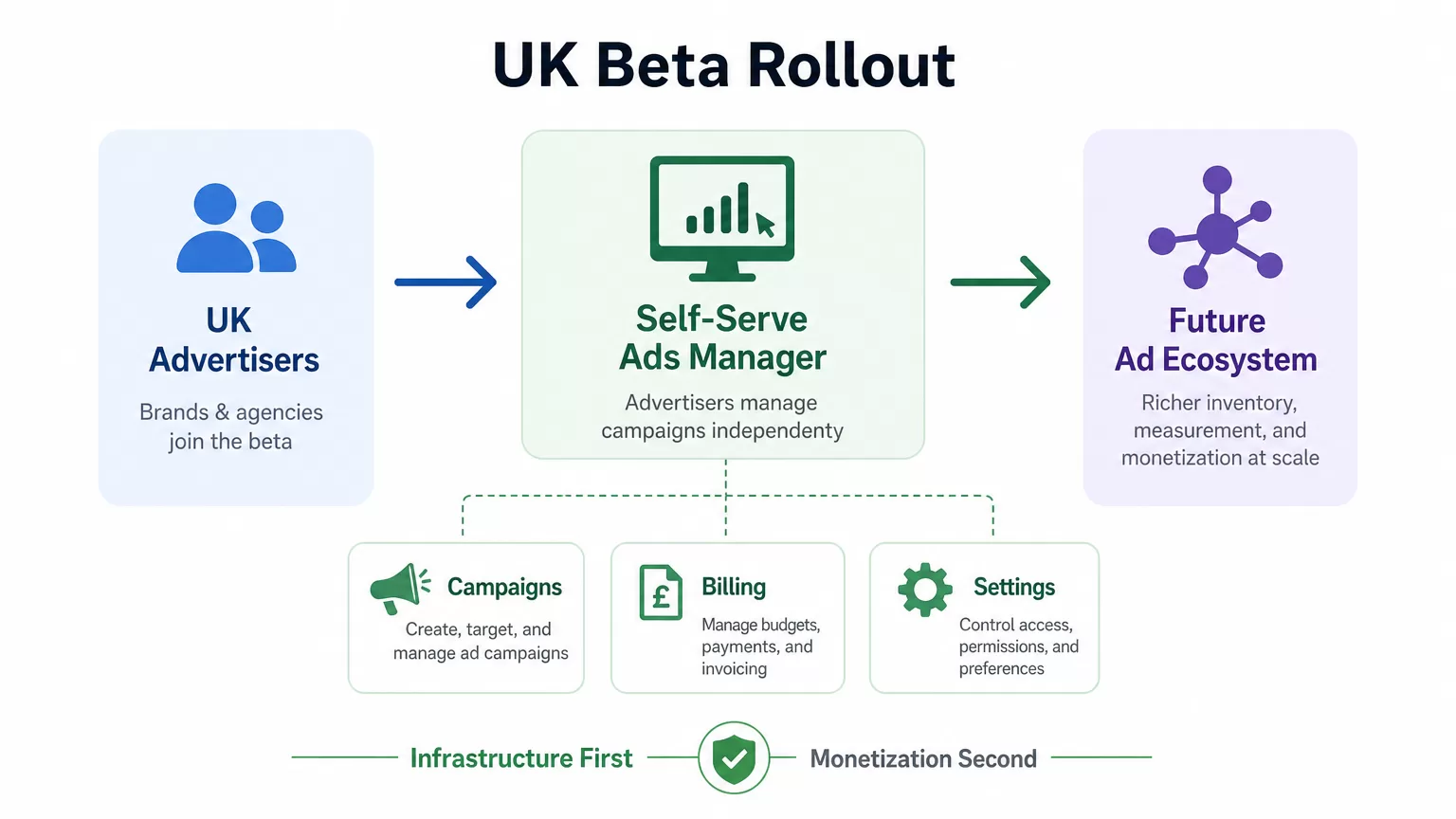
The current rollout is a beta version of ChatGPT Ads Manager for UK advertisers. The interface is self-serve and intentionally familiar, with four core areas: campaigns, tools, billing, and settings. That structure lowers friction for marketers who already work inside conventional ad platforms.
Just as important, this beta removes some early setup friction. Account creation does not appear to require upfront billing details at the start, which makes it easier for advertisers to explore the platform before committing budget. For a new channel, that is a smart adoption move: reduce the barrier to entry, then learn how users behave.
The UK-first rollout also suggests OpenAI is likely using a controlled market to validate the basics before expanding more broadly. In practice, that means advertisers should treat this as an early signal of platform maturity, not as a finished media product.
Why this matters for advertisers
The significance of this launch is less about immediate scale and more about platform readiness. In paid media, a self-serve Ads Manager is often the clearest sign that a company is preparing to monetize inventory in a durable way.
That matters because AI platforms are reshaping how people discover information. If ChatGPT becomes a meaningful ad surface, marketers will need to think beyond keywords and search engine results pages. They will need to think about conversational context, prompt intent, and how brand visibility works when an AI assistant mediates the response.
For teams already exploring Generative Engine Optimization (GEO) and Answer Engine Optimization (AEO), this beta reinforces a larger trend: discovery is moving toward AI-led experiences, and paid media will likely follow the same path.
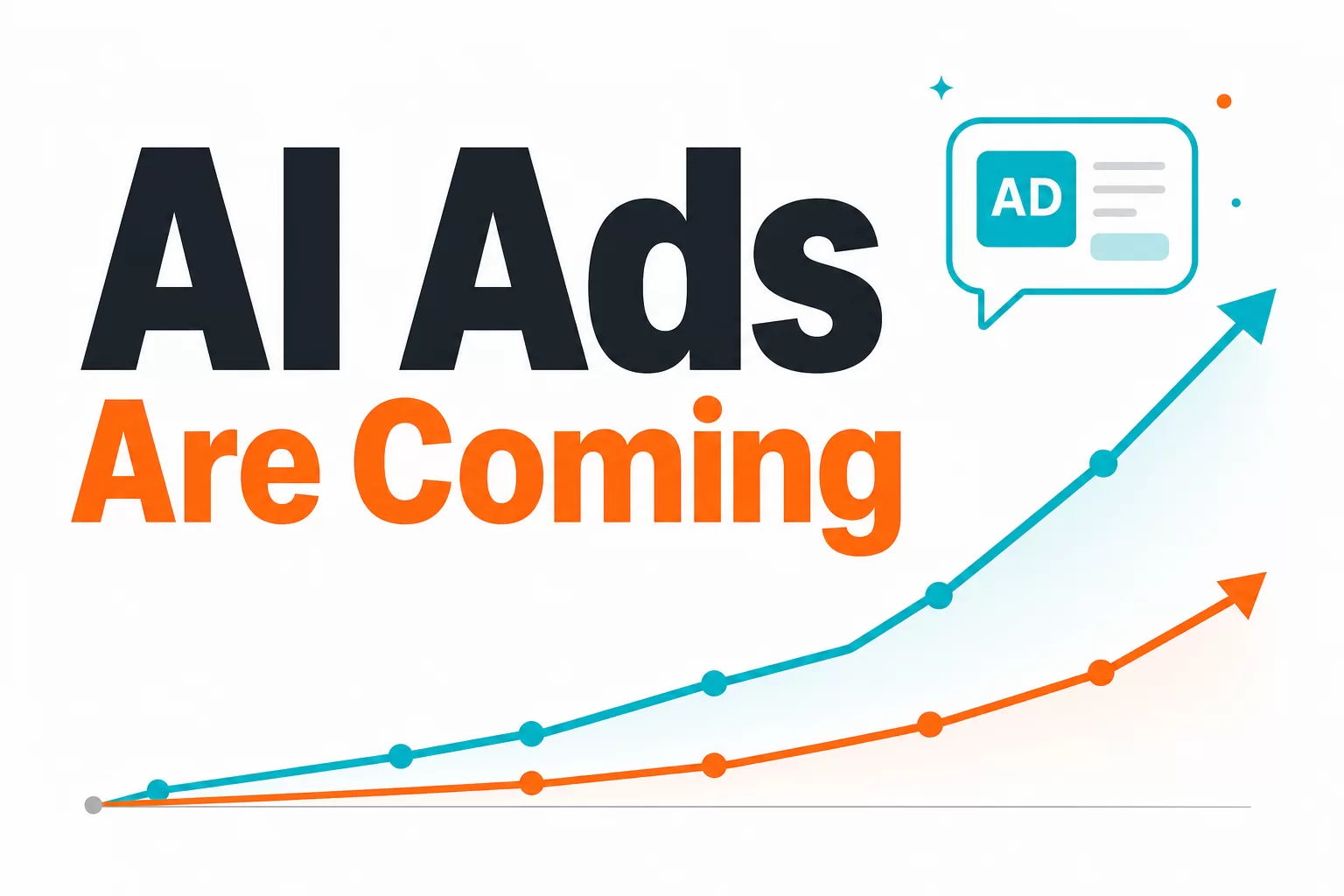
The real shift is not “ads in ChatGPT.” It is the rise of AI-native advertising, where the interface, the intent signal, and the placement logic all change at once.
How the Ads Manager works
At a high level, the beta looks designed to feel recognizable to digital marketers. The four main sections — campaigns, tools, billing, and settings — mirror the mental model advertisers already use in mature platforms. That is a deliberate onboarding choice. If the interface feels familiar, teams can evaluate it faster and with less training overhead.
From a workflow perspective, this is useful because it suggests OpenAI wants advertisers to move quickly from account creation to campaign setup. The platform is not trying to reinvent every operational pattern at once. Instead, it is borrowing the language of existing ad systems while building a new environment underneath.
- Campaigns: where advertisers will likely build and manage active media.
- Tools: where supporting utilities and setup functions can live.
- Billing: where commercial readiness becomes visible.
- Settings: where permissions and account configuration are controlled.
That familiar structure will help agencies and in-house teams get oriented, but it also raises a key question: how much of the platform’s future functionality will mirror traditional paid media, and how much will be unique to conversational delivery?
Agency setup and account access
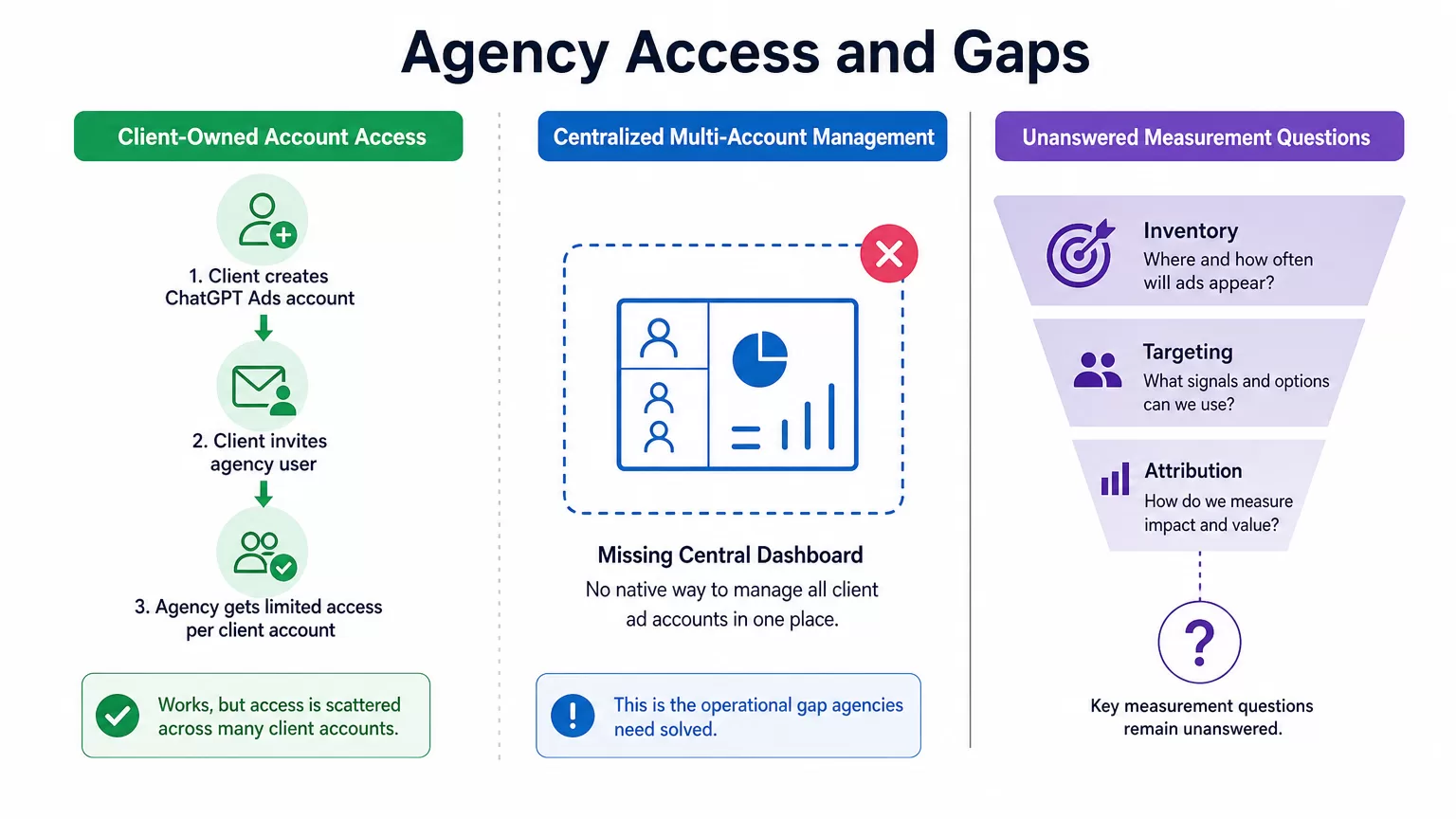
For agencies, the beta’s access model is one of the most revealing details. OpenAI is reportedly telling agencies and freelancers not to create accounts on behalf of clients. Instead, the client must create the account and then invite partners through settings.
That is a meaningful departure from the multi-account structures many teams are used to in Google Ads-style workflows. It suggests OpenAI wants tighter account ownership, cleaner permissioning, and potentially stronger compliance control. It also keeps the client relationship more explicit, which may reduce confusion later if the product matures into a larger commercial platform.
There is a catch, though: the beta does not yet offer a centralized multi-account management view. Users can switch between accounts, but they cannot manage multiple accounts simultaneously from one dashboard. For agencies, that is a real operational limitation.
In practical terms, this means:
- Less efficiency for teams managing many accounts.
- More manual switching between client properties.
- Clearer ownership boundaries between brands and partners.
That tradeoff is typical of a beta, but it is also a clue. OpenAI appears to be prioritizing controlled access over agency convenience for now.
What’s still missing
The most important unanswered questions are not about account setup. They are about the mechanics that will determine whether this becomes a serious paid media channel.
Right now, the biggest gaps are around inventory, targeting, measurement, and ad placement format inside ChatGPT conversations. Those are the issues that will decide whether advertisers can scale spend with confidence.
Measurement will likely be the battleground. If impressions, clicks, assisted conversions, and conversational exposure do not map cleanly to standard reporting, advertisers will struggle to compare performance against search and social.
That is especially important because AI-mediated placements may not behave like traditional search ads. The user journey could be longer, less linear, and harder to attribute. A prompt may influence consideration without producing a direct click. A recommendation may shape demand without a clean last-touch path.
For marketers, that means the next phase of scrutiny should focus on what happens inside the conversation itself — not just whether ads exist, but how they are embedded and measured.
Strategic implications for paid media teams
Paid media teams should treat this beta as a new channel readiness signal. The best response is not to wait for full-scale launch before planning. It is to start preparing the operational and measurement frameworks now.
That preparation should include:
- Testing governance: define who owns the account, who can approve changes, and how partner access will work.
- Measurement planning: decide which KPIs matter if standard click-based reporting is incomplete.
- Creative adaptation: think about how messaging may need to work in a conversational environment.
- Cross-channel strategy: connect AI-native visibility with search, content, and paid media planning.
This is also where broader search strategy comes back into view. If AI assistants become ad surfaces, then organic visibility, answer inclusion, and paid placement will increasingly interact. Teams that already align SEO, content, and media workflows will be better positioned to adapt.
In that sense, the beta is a reminder that the future of paid media is not just about buying traffic. It is about understanding how AI systems surface brands, how users respond inside those systems, and how measurement evolves when the interface itself becomes part of the funnel.
For agencies, brands, and performance marketers, the takeaway is straightforward: learn the workflow early, document the gaps, and prepare for a world where AI-native advertising becomes a standard part of the media mix.