SEO Services for Travel & Hospitality work best when they operate like a managed system, not a one-time audit. For agencies and in-house teams, the goal is not just to lift rankings for destination pages, hotel pages, or booking intent queries. The real objective is to build a repeatable framework that improves crawlability, earns trust, supports editorial planning, and compounds organic growth over time.
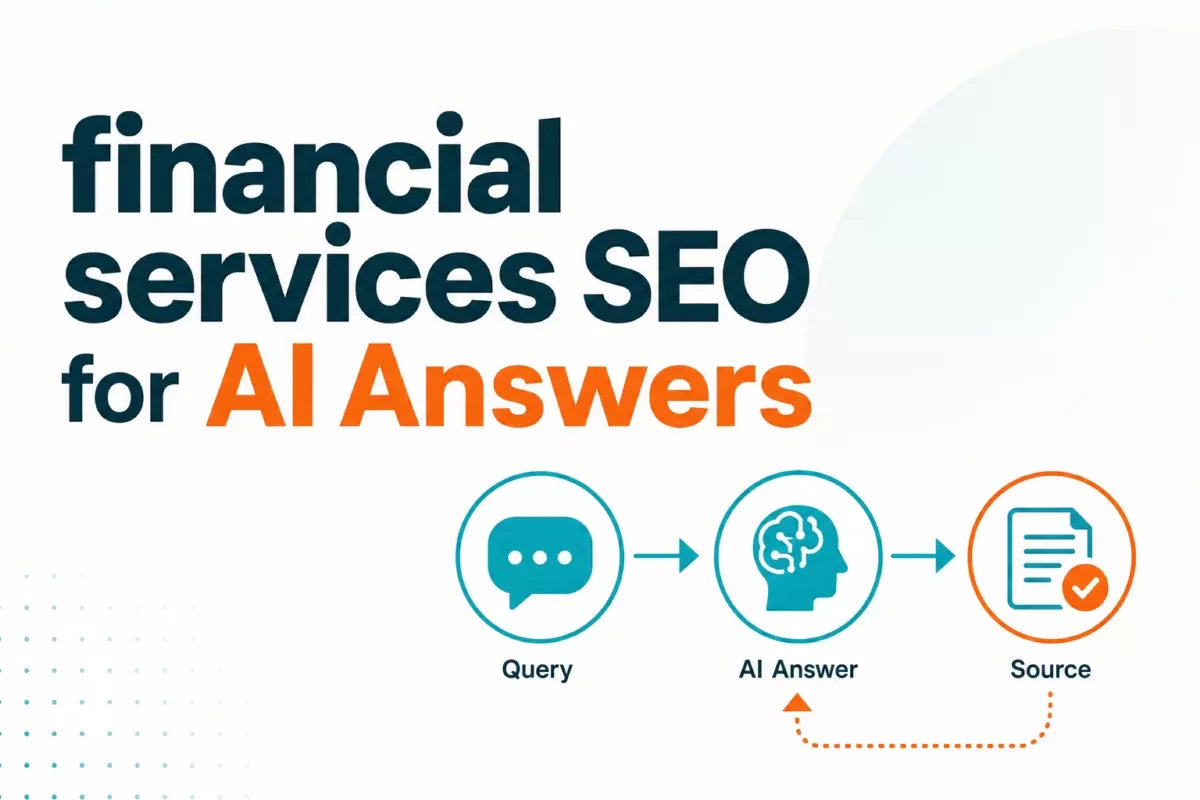
That matters because travel SEO and hospitality SEO are trust-sensitive by nature. Searchers want accurate details, current availability, reliable policies, and proof that a brand can deliver the experience it promises. In practice, that means technical SEO, content strategy, backlink acquisition, and E-E-A-T need to work together from the first month onward. The same logic also applies to financial services SEO, where compliance, authority, and precision determine whether a page earns visibility or gets ignored.
Managed SEO for travel and hospitality is not about isolated wins. It is about building a search system that can withstand seasonal demand, competitive SERPs, and constantly changing user intent.
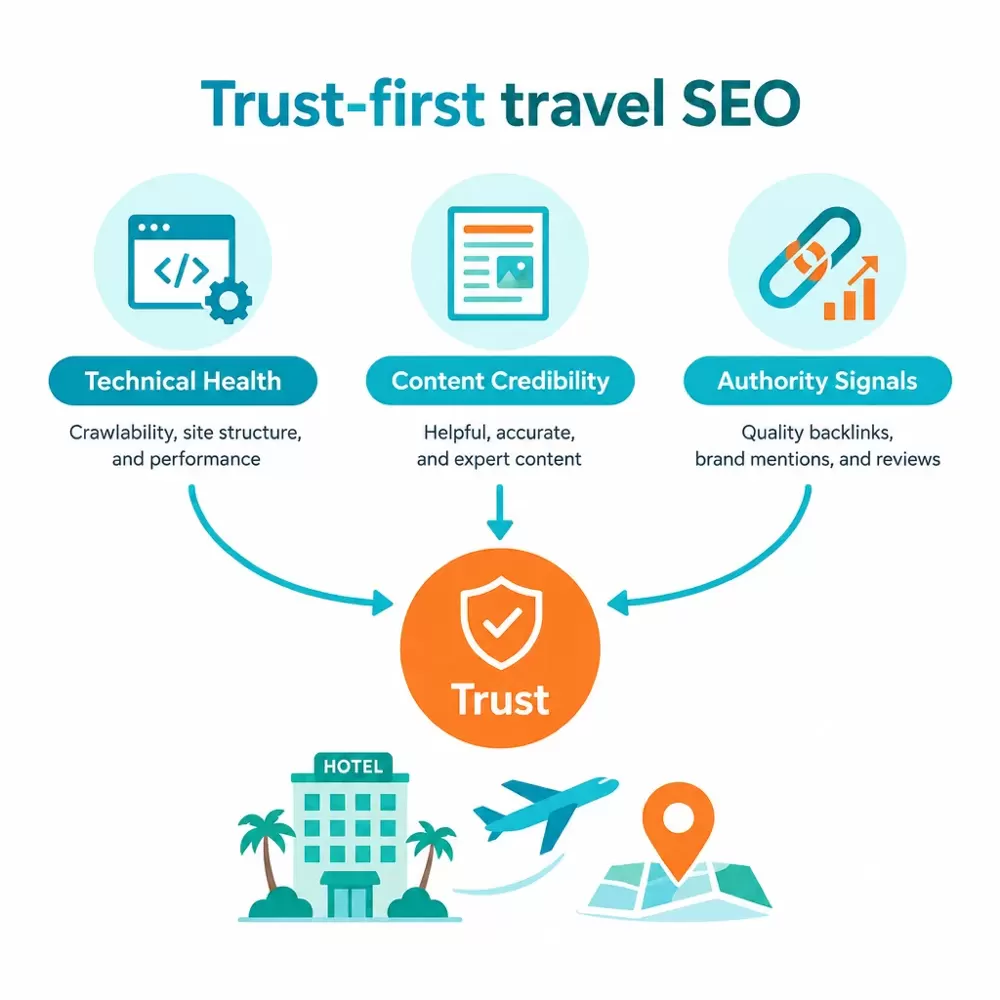
Why travel SEO need trust-first strategies
For hands-on help with this topic, explore SEO Services for Travel & Hospitality.
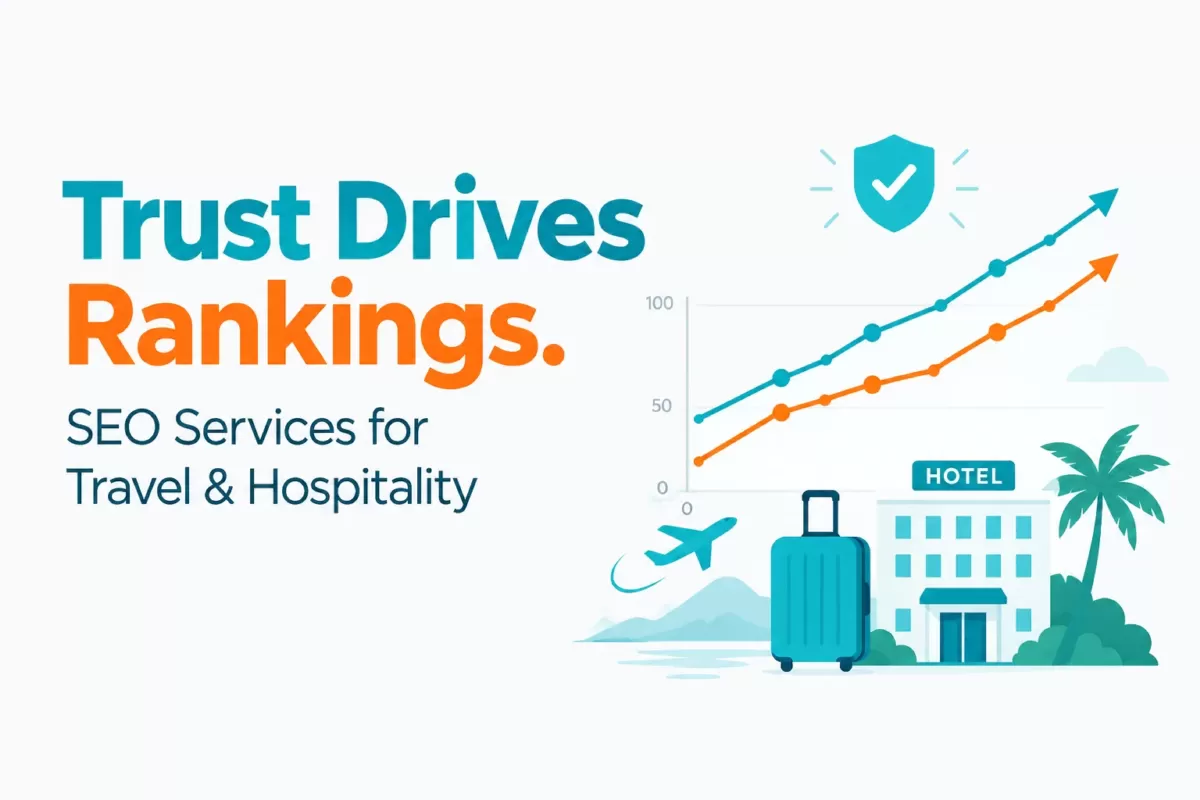
Travel and hospitality brands often compete in results where the difference between a click and a bounce is trust. A user comparing resorts, tours, or booking policies may see five similar listings, but they will usually choose the result that looks current, credible, and easy to verify. That is why SEO Services for Travel & Hospitality must start with trust-first strategy rather than broad keyword chasing.
We see this in practice across hotel groups, tour operators, destination brands, and booking platforms. Pages need more than keyword relevance; they need visible signals that support decision-making:
- Clear brand ownership on hotel, tour, and destination pages
- Consistent pricing and policy language across rooms, packages, and cancellation terms
- Fresh content dates and update cues for seasonal travel pages
- Author or reviewer context for guides, itineraries, and local recommendations
- Structured data for properties, FAQs, reviews, and offers where appropriate
For financial services, the same trust-first logic applies differently. A mortgage, insurance, or banking page must show compliance, accuracy, and expertise. In both niches, organic growth depends on reducing doubt before the click. That is why teams should treat trust signals as a ranking asset, not a branding afterthought.
Practical takeaway: if a travel or hospitality page cannot quickly answer “Who is behind this, how current is it, and why should I trust it?”, rankings become harder to sustain.
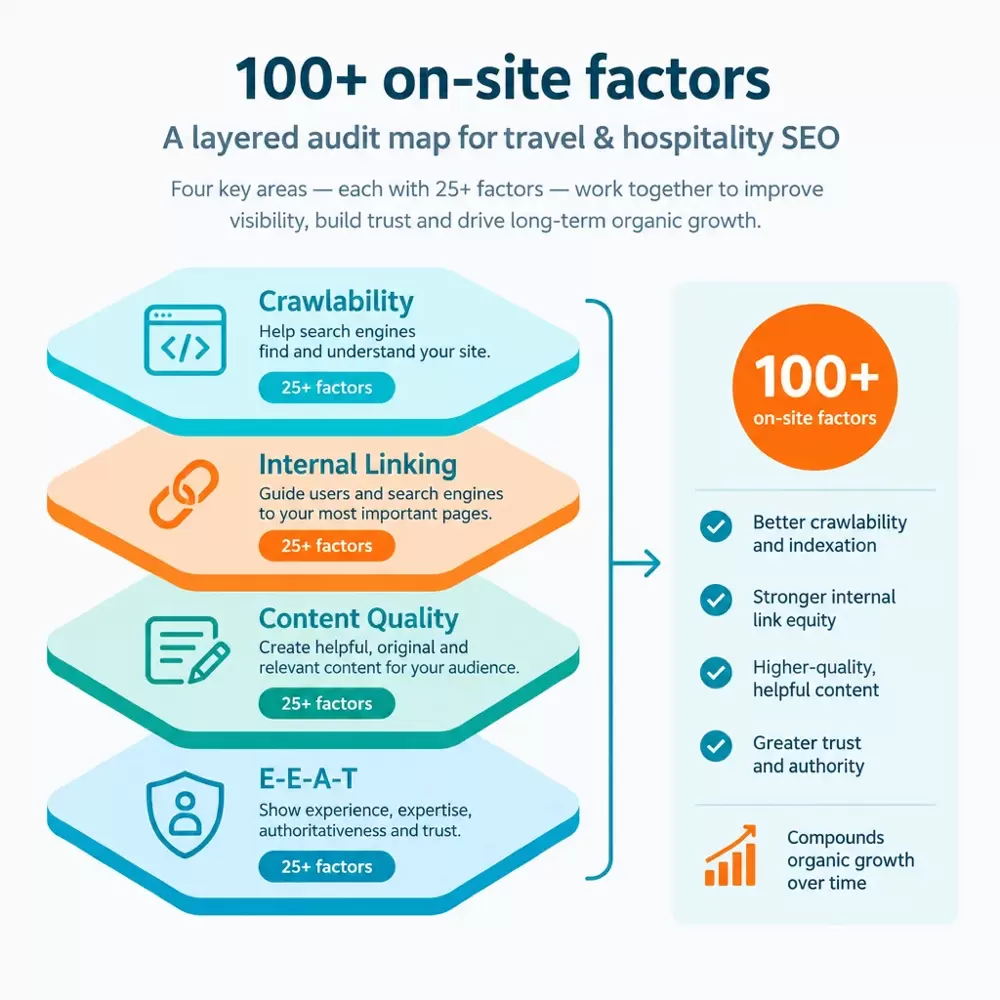
100+ on-site factors that matter
The strongest SEO Services for Travel & Hospitality programs begin with a deep technical and on-site audit. The first two months usually focus on foundational fixes that unlock content already on the site: crawl paths, indexation issues, template-level problems, and relevance gaps across property, destination, and booking pages.
This is where a managed SEO system earns its value. Instead of a generic checklist, the audit should evaluate 100+ on-site factors across the site architecture and page experience. For travel and hospitality brands, that scope typically includes:
- Baseline visibility for branded and non-branded travel queries
- Technical SEO issues such as crawl waste, duplicate URLs, pagination, faceted navigation, and orphan pages
- Competitor comparisons across destination terms, property types, and itinerary topics
- Keyword gap analysis for rooms, amenities, attractions, packages, and nearby experiences
- Internal linking between category pages, city guides, property pages, and booking pathways
- Domain migration checks for rebrands, site consolidations, or booking platform changes
- Branded search analysis to understand demand and intent shifts by market
- E-E-A-T review for author bios, editorial standards, contact details, and organizational credibility
On travel sites, small technical issues can have outsized impact. For example, if resort pages rely on outdated canonicals or if tour pages are buried behind inconsistent internal links, Google may struggle to understand which version to rank. Hospitality sites also face template complexity: room types, event pages, spa services, and local landing pages often create overlapping intent. Managed audits help prioritize the exact issues that block performance instead of spreading effort too thin.
Monthly strategy should then be guided by proprietary analysis across a broader factor set, often extending well beyond the initial audit. The point is not the number itself; it is the discipline of re-evaluating what matters as seasonality, competition, and site changes evolve.
In travel SEO, technical health is not a one-time win. It is the foundation that lets content, links, and trust signals compound.
Content calendars and outlines
Travel and hospitality brands cannot rely on ad hoc blogging if they want durable organic growth. A strong content calendar turns search demand into a planned publishing system, with each topic mapped to intent, funnel stage, and internal linking opportunities. This is especially important for agencies managing multiple properties or for in-house teams balancing campaigns, seasonality, and brand approvals.
Effective editorial planning for hospitality SEO should define more than publish dates. Each outline should include:
- Primary H1 that matches search intent and property focus
- H2 and H3 structure that anticipates traveler questions
- Target keywords for destination, amenity, and experience-based queries
- Narrative angle tied to brand differentiators, such as family-friendly stays, business travel, or luxury experiences
- Internal links to booking pages, city guides, seasonal offers, and related properties
- Review checkpoints to ensure SEO integrity before publishing
For example, a hotel group launching a spring travel calendar might publish a cluster around weekend escapes, airport-accessible stays, rooftop dining, and local event travel. A resort brand might plan around wellness retreats, beach season, and wedding venue pages. In both cases, the content plan should be built from search demand and customer decision paths, not just brand brainstorming.
That same editorial rigor translates cleanly to financial services SEO. A bank or insurance provider also needs structured outlines, compliance review, and controlled messaging. The difference is the topic set, not the system: both sectors need accuracy, consistency, and a repeatable process that avoids publishing risk.
Best practice: every publish-ready outline should answer what the page must rank for, what it must prove, and where it should link next.
Manual outreach and link building
Backlinks still matter in travel and hospitality, but the quality bar is high. Broad directory submissions and low-value placements rarely move the needle in competitive SERPs. Instead, SEO Services for Travel & Hospitality should use manual outreach, careful vetting, and editorially relevant placements that support authority.
An effective link program for this niche often includes:
- Prospect vetting for relevance, audience fit, and editorial standards
- Guest content creation when the placement genuinely serves the host publication
- Digital PR angles around destination insights, seasonal trends, or local expertise
- Brand mention recovery for unlinked references to properties or travel resources
- Localized outreach to tourism, events, and experience-based publications
Travel brands often benefit from links that reinforce geographic and experiential authority, such as a city guide mentioning a resort, or a regional publication linking to an itinerary page. Hospitality brands can also earn relevant links through event partnerships, amenity-focused content, or local attraction collaborations. The objective is not volume alone; it is to build a link profile that mirrors real-world credibility.
This is where transparency matters. Teams should know which links were earned, which were manually placed, and how each one supports the broader content architecture. If a program claims strong outcomes, it should also show the work: outreach standards, placement criteria, and ongoing performance review.
Link building in travel is strongest when it looks like authority, not manipulation.
Measurement, transparency, and long-term growth
The final piece of a managed SEO system is measurement. Agencies and in-house teams need reporting that connects technical fixes, content production, and link acquisition to meaningful outcomes such as rankings, organic clicks, assisted conversions, and booking revenue signals where available.
For SEO Services for Travel & Hospitality, that means tracking more than vanity metrics. Useful reporting should include:
- Organic visibility for branded and non-branded travel queries
- Keyword movement across destination, property, and amenity pages
- Indexation and crawl health after technical fixes
- Content performance by page type and funnel stage
- Backlink quality and referral relevance
- Search Console and analytics trends tied to seasonal demand
Transparent reporting is especially important when results are paced over months rather than days. Initial gains often come from unlocking existing assets through technical work, internal linking, and page-level improvements. Later growth comes from compounding content depth and authority signals. That is why managed SEO should be framed as an ongoing operating system, not a single deliverable.
When the workflow is consistent, teams can identify what is working, what needs more support, and where the next growth opportunity sits. A travel brand may see stronger destination visibility after resolving template issues and publishing a structured content calendar. A hospitality group may gain traction by combining author-reinforced guides with vetted backlinks and improved on-page trust signals. The same disciplined framework can also help financial services teams balance compliance, authority, and performance in one measurable system.
If you are evaluating a program for this niche, start with the search fundamentals: technical audits, intent-led content, manual link acquisition, and E-E-A-T. Then keep the system honest with reporting that shows progress over time. That is how organic growth becomes durable, even in competitive travel and hospitality markets.
Bottom line: the best SEO systems for travel and hospitality do not chase isolated rankings. They build trust, clarify relevance, and turn search into a predictable growth channel.