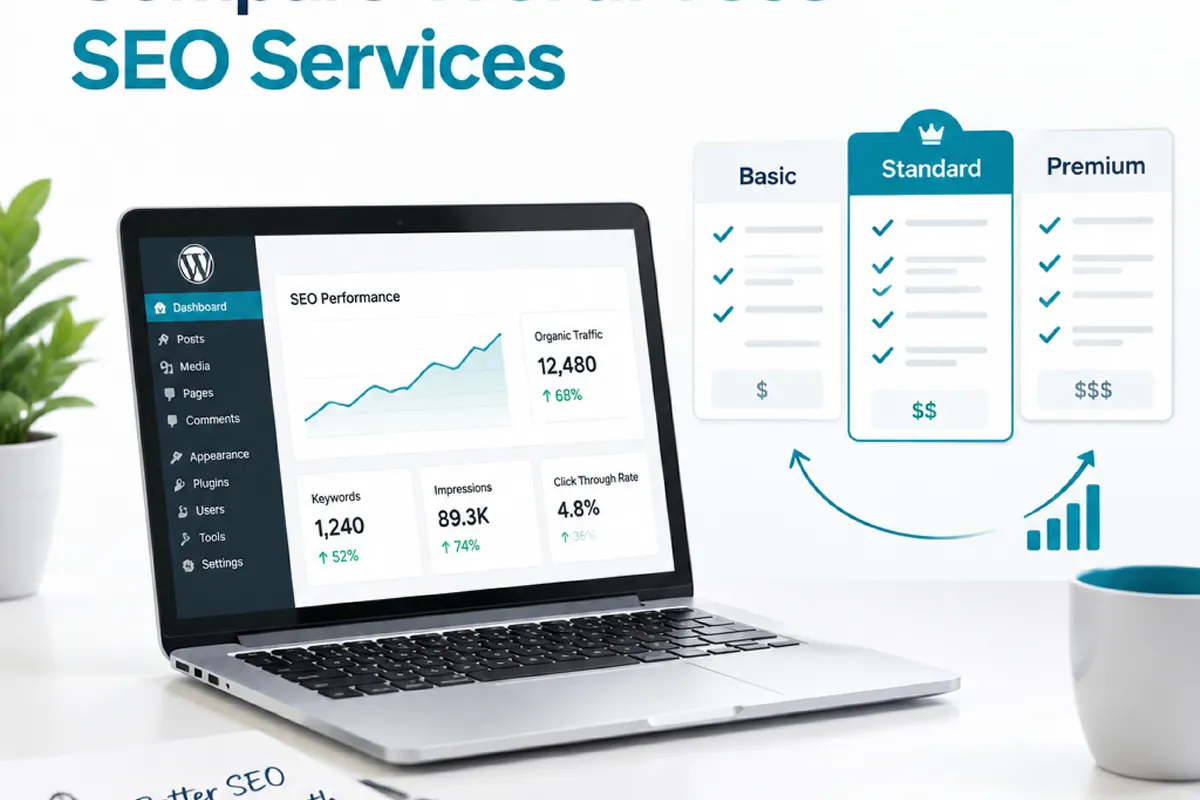
Comparing WordPress SEO services can be frustrating when one proposal promises an audit, another lists content updates, and a third focuses on rankings. Those descriptions do not show whether the work is comparable, who will carry it out, or how you will know if it is helping the business.
A useful comparison looks past package names. Check what the provider will assess and implement, how priorities are chosen, whether content and local visibility fit your needs, and how reporting connects search activity to leads and revenue. The questions below can help you compare proposals on the work that matters, not just the wording.
Why WordPress SEO proposals are hard to compare
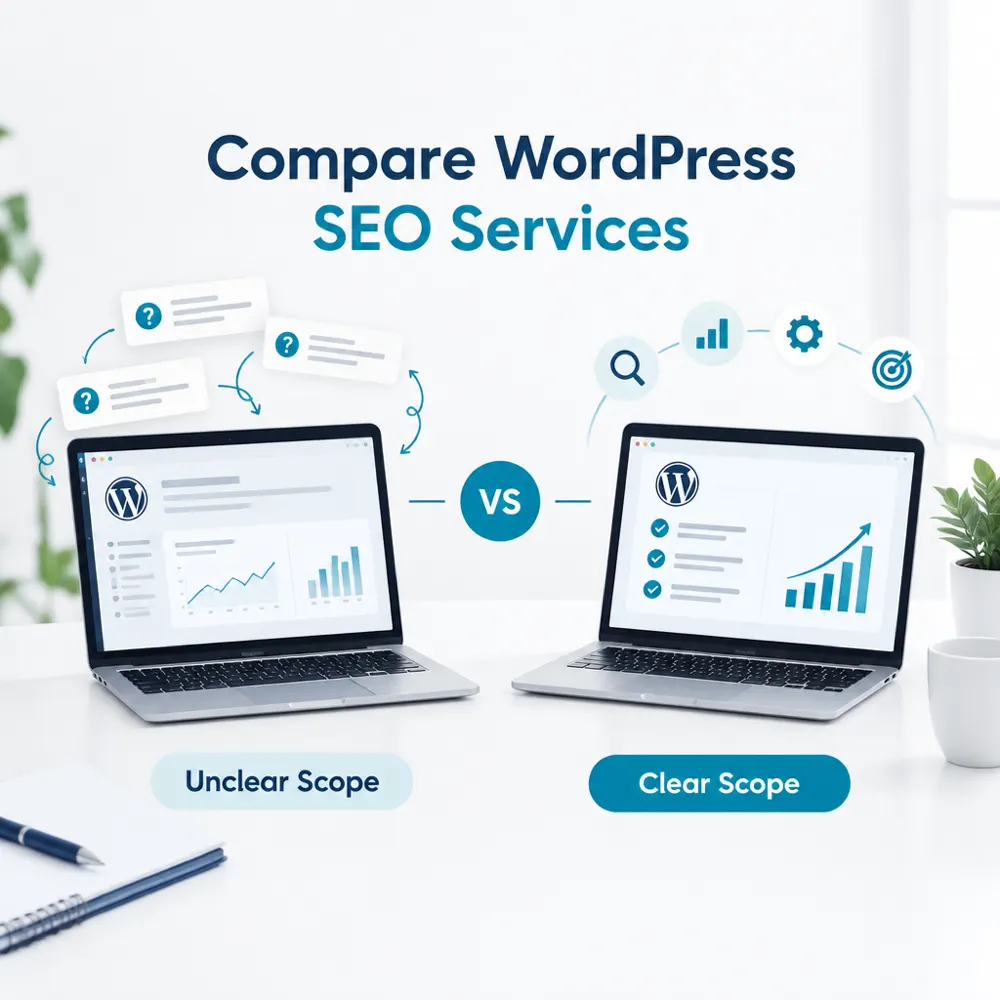
SEO proposals often group work under broad labels such as “technical optimization” or “content strategy.” Those labels can cover very different tasks. A technical audit might identify crawl problems but leave implementation to your team. Another service may include technical fixes, while a third might only provide recommendations. Until you clarify what is included, the proposals are not an apples-to-apples comparison.
Success can be described just as loosely. A provider may discuss keyword rankings or organic traffic without explaining which pages or searches matter to your business. Those measures can help diagnose performance, but by themselves they do not tell you whether organic search is contributing to qualified inquiries, sales, or other useful outcomes.
Before you compare providers, write down the business problem you want SEO to address. For example, you might need more relevant organic visits to product pages, stronger visibility in a specific service area, or a technical review of a WordPress site that has grown difficult to manage. This gives each provider the same starting point and makes gaps in a proposal easier to spot.
Ask every provider to describe the work in plain terms. Which pages or parts of the site are in scope? What will the team change, and what will it recommend for your staff to implement? How will progress be evaluated? Clear answers make it easier to distinguish a defined service from a list of SEO activities with no agreed priority.
Evaluate the scope before comparing providers
Start by checking whether the scope reflects your site and its goals. A small WordPress site with a few core service pages has different needs from a larger site with many categories, locations, or regularly published articles. A proposal should make its assumptions visible rather than imply that the same checklist fits every website.
Review the stated work across these areas:
- Discovery and priorities: Does the provider explain how it will understand your business goals, audience, site structure, and current search performance?
- Technical SEO: Are technical issues identified only, or does the scope also cover making or supporting fixes?
- Content: Does the work include reviewing existing pages, planning new content, improving pages, or some combination?
- Local visibility: If location-based searches matter to your business, is local SEO part of the work?
- Authority building: Does the provider explain its approach to earning or building links ethically?
- Measurement: Does reporting cover activity and search performance, as well as leads or revenue where tracking makes that possible?
Scope also needs to clarify responsibilities. Find out who needs to approve content, who can access the WordPress site, and whether your team or the provider will make changes. If a developer, designer, or internal marketing lead must handle some tasks, ask how recommendations will be handed off and checked after implementation.
SEO Deep Insights describes its WordPress offering as SEO, Answer Engine Optimization (AEO), and Generative Engine Optimization (GEO), alongside technical fixes, local visibility, content that ranks, ethical link building, and reporting tied to leads and revenue. Review the wordpress seo services guide to understand that service scope. When comparing it with another proposal, focus on which parts fit your goals and how the work will be delivered, rather than assuming that matching labels mean matching services.
Compare technical SEO implementation, not just audits
Technical SEO is the work that helps search engines access, understand, and index a website. For a WordPress site, it can include reviewing site structure, page accessibility, duplicate URLs, internal links, and technical problems that affect important pages. The right checks depend on the site, so a proposal should explain how technical issues will be identified and prioritized instead of presenting a generic list as a complete plan.
One distinction matters early: an audit is not the same as implementation. An audit documents issues and recommended actions. Implementation means someone makes the changes or works with the people responsible for the site to get them made. Ask whether the provider will carry out technical fixes, provide instructions for your developer, or do both. Also clarify how the team will confirm that a fix worked and whether any follow-up review is included.
Ask how technical recommendations will be ranked. A long list of possible improvements is not a plan. The provider should be able to explain which issues affect important pages or search access, which are lower priority, and what information is needed before acting. Some changes can have effects beyond SEO, especially when they involve templates, plugins, redirects, or site structure. Confirm who reviews those changes and how they will be tested before or after release.
For WordPress sites, make sure the proposal accounts for your actual setup. Ask which site areas, templates, or types of page are included, and whether the provider needs access to the content management system or technical support from your team. Do not assume a platform-specific service will automatically include every fix. A clear scope will state what the provider can handle and what depends on your access, approvals, or development resources.
Finally, ask how technical work will be documented. You should be able to see the issue, the recommended or completed change, and the reason it was prioritized. That record helps your team understand what changed and gives the provider a basis for checking the effects later.
Check content, local visibility, AEO, and GEO coverage
Content work should be tied to the pages and questions that matter to your audience. Ask whether the provider will review existing pages, identify gaps, recommend new topics, or help improve and publish content. “Content optimization” can mean anything from a short recommendation to hands-on edits, so ask for the deliverables and responsibilities in concrete terms.
For example, if a service page attracts visits but few relevant inquiries, a useful review might examine whether the page clearly describes the service, answers likely customer questions, and guides visitors to a sensible next step. That does not mean every low-converting page needs more keywords. The provider should explain what it plans to investigate and how the suggested changes connect to the page’s purpose.
Local visibility deserves a separate conversation if customers search for services in particular areas. Ask which locations or local pages are included, how the provider will assess their usefulness, and whether local SEO tasks fit the business’s actual service area. A company that serves customers in one region may need a different approach from a business with multiple locations. Do not agree to a list of location pages without understanding their purpose and how they will be maintained.
SEO Deep Insights also includes AEO and GEO in its WordPress service context. AEO, or Answer Engine Optimization, focuses on making information useful and clear for answer-style search experiences. GEO, or Generative Engine Optimization, concerns how content may be understood and surfaced in generative search experiences. These approaches sit alongside core SEO work. Ask how they relate to your existing content plan, which pages they apply to, and how the provider will report on the work without promising control over third-party search features.
Check the workflow, too. Who briefs or drafts content? Who checks accuracy and brand fit? Who approves the final page? A provider can offer useful SEO recommendations, but your subject knowledge may be necessary to verify details and make the content trustworthy. Agreeing on review steps before work begins can prevent delays and reduce the risk of publishing material that does not reflect your business.
Ask how ethical link building and communication work
Links from other websites can help search engines discover and assess pages, but link building should be handled carefully. Ask what the provider means by ethical link building and how it decides which opportunities are appropriate. A clear answer should describe the general approach and how link activity will be documented, without relying on vague promises about large quantities of links or guaranteed ranking gains.
Ask what you will be able to review. Depending on the agreed work, useful details may include the pages being supported, the relevance of potential linking sites, and the status of outreach or other link-building activities. You should also be able to raise concerns about a proposed placement or tactic. If a provider will not explain its approach, or treats the number of links as the only measure of success, ask for more detail before proceeding.
Communication about priorities is just as important as the task list. SEO work competes with development capacity, editorial schedules, and other business needs. Ask who will explain recommendations, how often you will review priorities, and what happens when an urgent technical issue appears or a planned task cannot be completed. The answer should help you understand how decisions are made, not just how often meetings are scheduled.
Clarify how the provider handles changing priorities. A new page launch, a site redesign, or a change in business focus may alter what deserves attention. Ask whether the plan will be reviewed as new information comes in and how any change to agreed work will be communicated. A sensible process makes room for informed adjustments while keeping track of what was planned and why.
Before signing, identify the people who need to be involved on both sides. That may include the marketing lead, content reviewer, WordPress administrator, or developer. Agree on the channel for questions, who approves changes, and who can unblock implementation. A provider can recommend good work, but progress may depend on access and decisions from your team.
Judge reporting by leads, revenue, and next steps
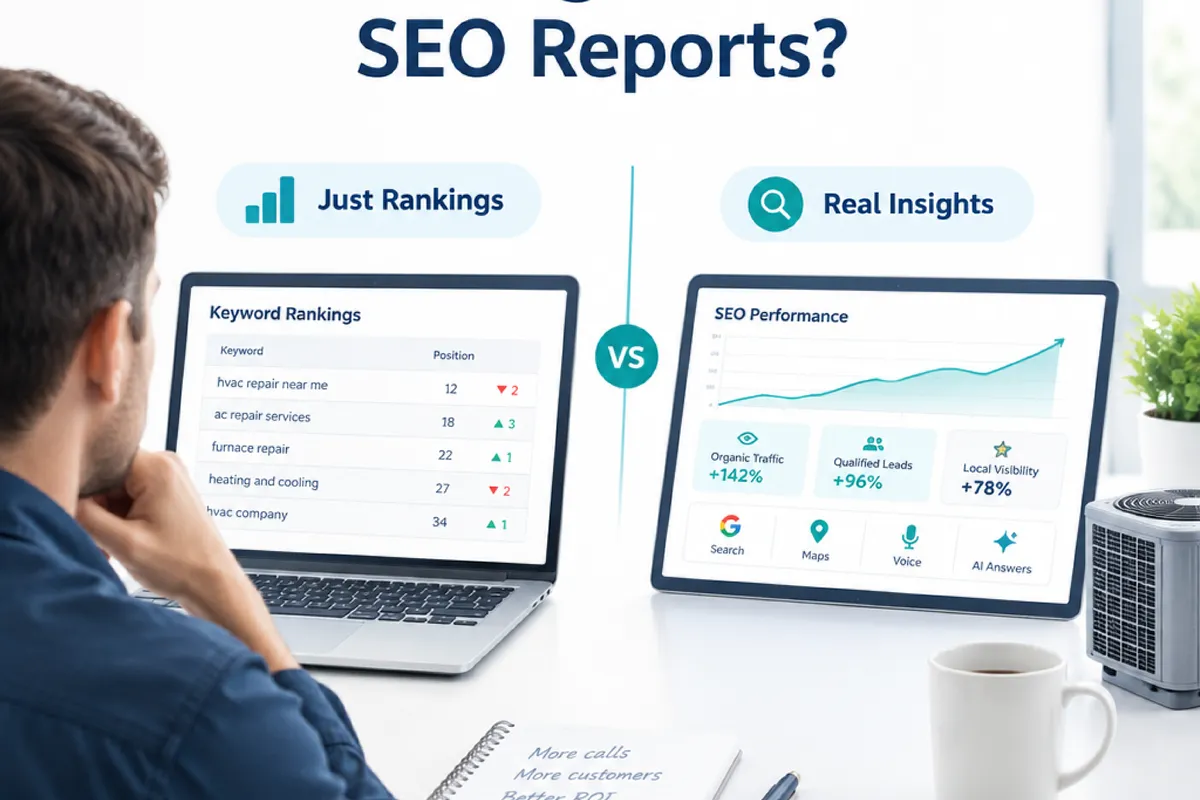
Reporting should help you make decisions. Rankings, impressions, clicks, and organic sessions can show how search visibility is changing, but they are not interchangeable with business results. Ask the provider to explain what each reported measure means and how it relates to the goals you agreed on. A report that shows activity without interpretation can leave you with more data but no clear sense of what to do next.
For a business focused on inquiries or sales, ask how organic visits will be connected to leads and revenue. That connection depends in part on your analytics and conversion tracking. If tracking is incomplete, the provider may not be able to attribute outcomes reliably at the start. Clarify what needs to be set up, who will handle it, and what the report can and cannot show until the data is dependable.
Look for reporting that connects the work to observed changes. A useful update might explain which technical fixes were completed, which content pages changed, what happened to relevant search visits, and whether tracked leads moved during the same period. It should distinguish an observed result from a cause. Search performance can change for several reasons, so a report should not claim that one activity caused a business outcome unless the evidence supports that conclusion.
Ask what decisions each report is meant to support. For example, will it help determine whether to address a technical issue, improve a page that already attracts relevant visits, or shift attention to local visibility? The provider should be able to explain how it turns findings into next steps. This is especially useful when results are mixed or when a planned task has not produced the expected change.
Before you choose, compare each proposal against the same short checklist:
- Are the business goals and site assumptions clearly stated?
- Can you tell what is included, what is excluded, and who implements changes?
- Does the work cover the technical, content, and local needs relevant to your site?
- Is the link-building approach explained and consistent with ethical practice?
- Are reporting measures connected to leads and revenue where tracking allows?
- Does the provider explain how it will communicate priorities and adapt the plan?
Then ask each provider to address any unclear item in writing. If a proposal leaves implementation, approvals, or measurement vague, treat that as an open question rather than filling in the gap with assumptions. The best fit is not necessarily the proposal with the longest task list. It is the one whose scope matches your needs, whose process your team can support, and whose reporting gives you a credible way to assess progress.