Cloudflare’s PACT protocol is more than a bot-defense update. It points to a future where browsers can prove that a human is in the loop, AI agents can be recognized without exposing identity, and merchants can reduce checkout friction without opening the door to abuse.
That is why the latest backing from major browser and ecommerce players matters. The conversation is no longer just about stopping scrapers or rate limits. It is about whether the web should gain a shared trust layer for agentic AI, one that can separate legitimate automation from abusive traffic while preserving privacy.
For site owners, SEOs, and ecommerce teams, the strategic signal is clear: anti-bot protection is evolving from a collection of defensive patches into infrastructure-level policy. If PACT gains traction, it could influence how users verify themselves, how AI agents interact with sites, and how merchants balance trust, conversion, and fraud prevention.
What PACT is and why it matters
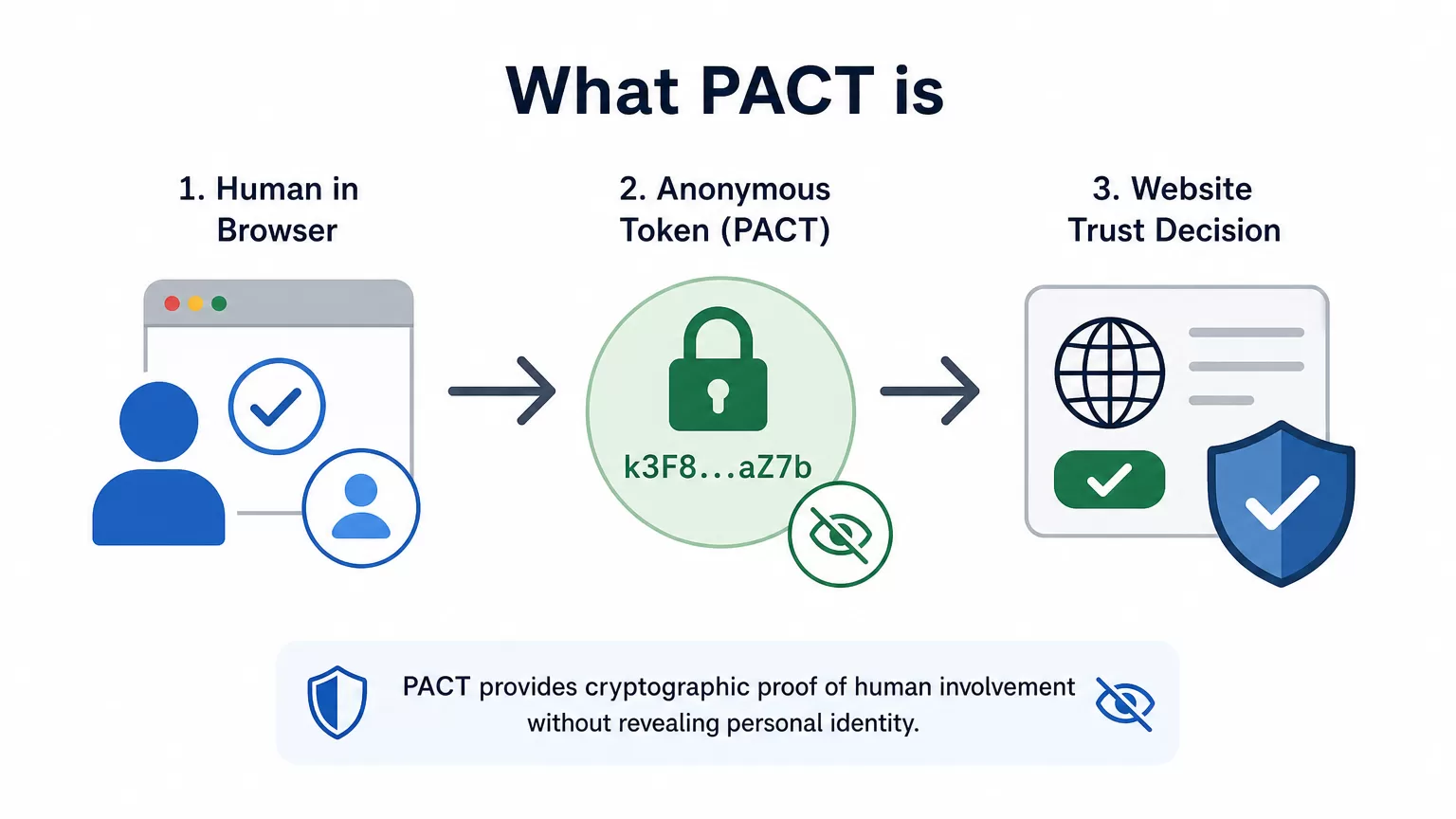
PACT, or Private Access Control Tokens, is designed to create a privacy-preserving way to signal trust across websites. In simple terms, a browser could present a token that says, “a real person is involved here,” without revealing who that person is or where they have been online.
That distinction matters because today’s anti-bot systems often rely on a messy mix of CAPTCHAs, fingerprinting, behavioral analysis, and device reputation. Those methods can work, but they also create friction for legitimate users and can misclassify real shoppers as suspicious. PACT aims to change that by moving trust closer to the browser and farther away from invasive tracking.
Key shift: from reactive bot detection to a standardized trust signal that can travel with the user experience.
That makes PACT strategically important for three groups:
- Browsers, which may become the primary trust intermediaries on the open web.
- Merchants, which need fewer false positives at checkout.
- AI agents, which need a legitimate path to act on behalf of users without being treated like hostile automation.
In other words, this is not just a security story. It is a web architecture story.
How the protocol works
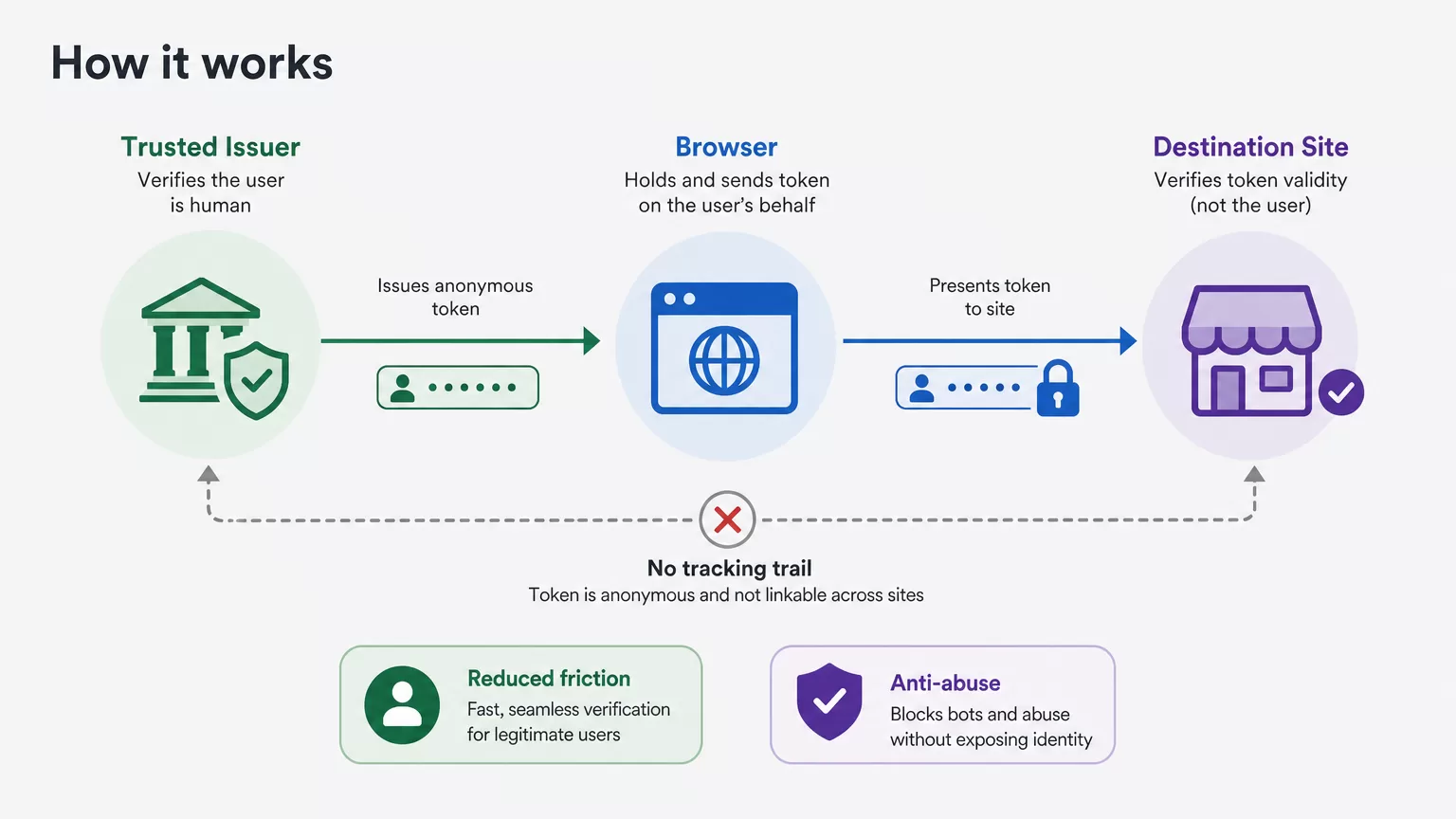
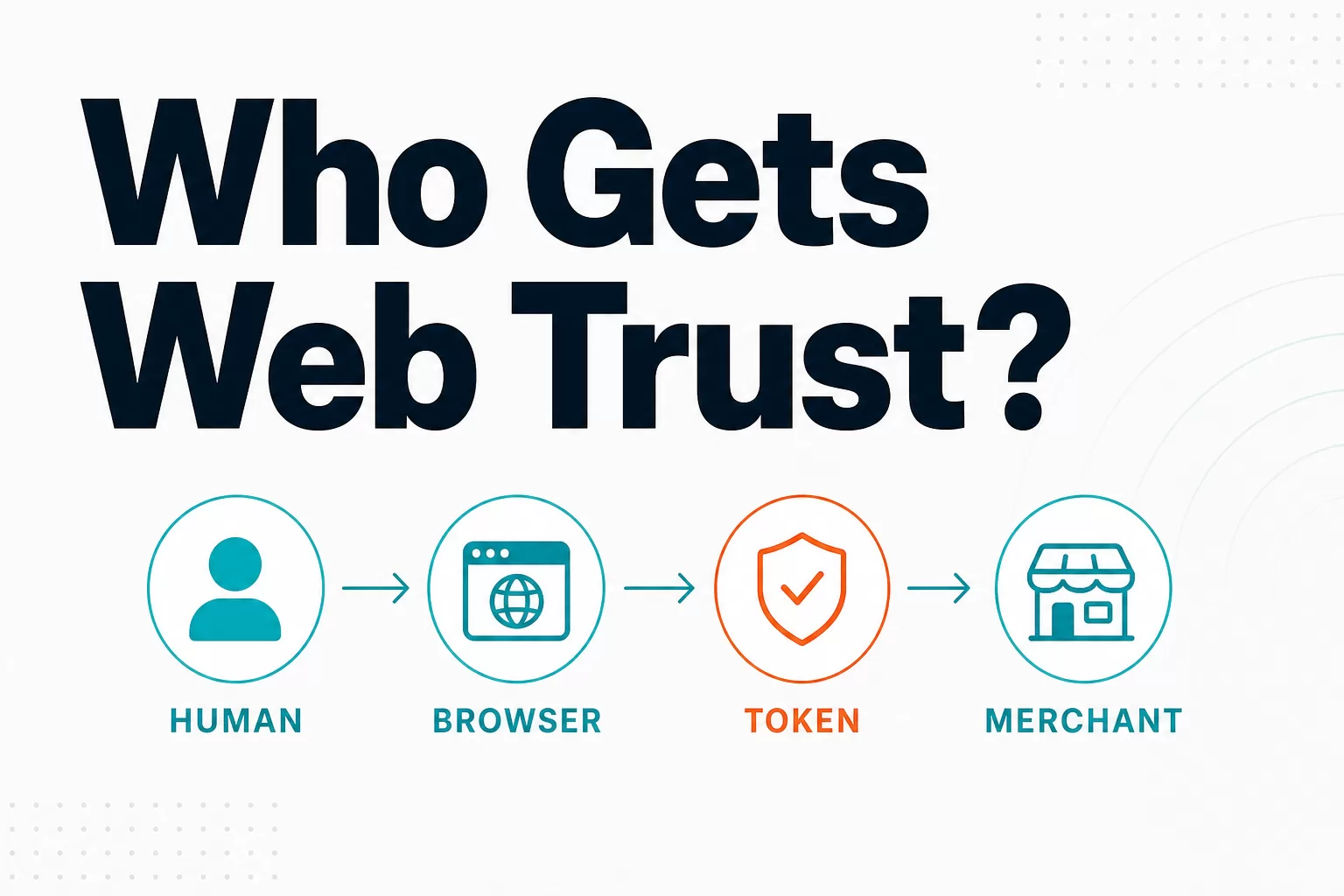
The basic model is straightforward: a site with strong confidence in a user’s personhood can issue an anonymous token. That token can then be presented to another site as proof that the browser has already passed some trust threshold.
What makes this different from many current systems is what it does not do. The token is not supposed to expose identity, browsing history, or cross-site behavioral trails. That privacy-preserving design is the core idea. The token verifies trust without becoming a tracking mechanism.
From a workflow perspective, PACT introduces a layered trust exchange:
- A browser or trusted environment establishes that a human is involved.
- A token is issued in a way that is meant to be anonymous.
- Another site accepts that token as a signal to reduce friction or allow access.
- Abusive automation has a harder time reusing the same trust path at scale.
This is why many observers see PACT as a potential CAPTCHA alternative. Instead of interrupting users with challenges, the protocol tries to make challenges unnecessary for trusted sessions. That has obvious appeal in ecommerce, where every extra click can increase abandonment.
Strategic implication: if trust can be verified before the interaction gets messy, the web may rely less on detection after the fact.
For merchants, that could mean fewer false declines, fewer checkout interruptions, and better protection against automated abuse that targets inventory, promotions, or account creation flows.
Why browsers and Shopify are involved
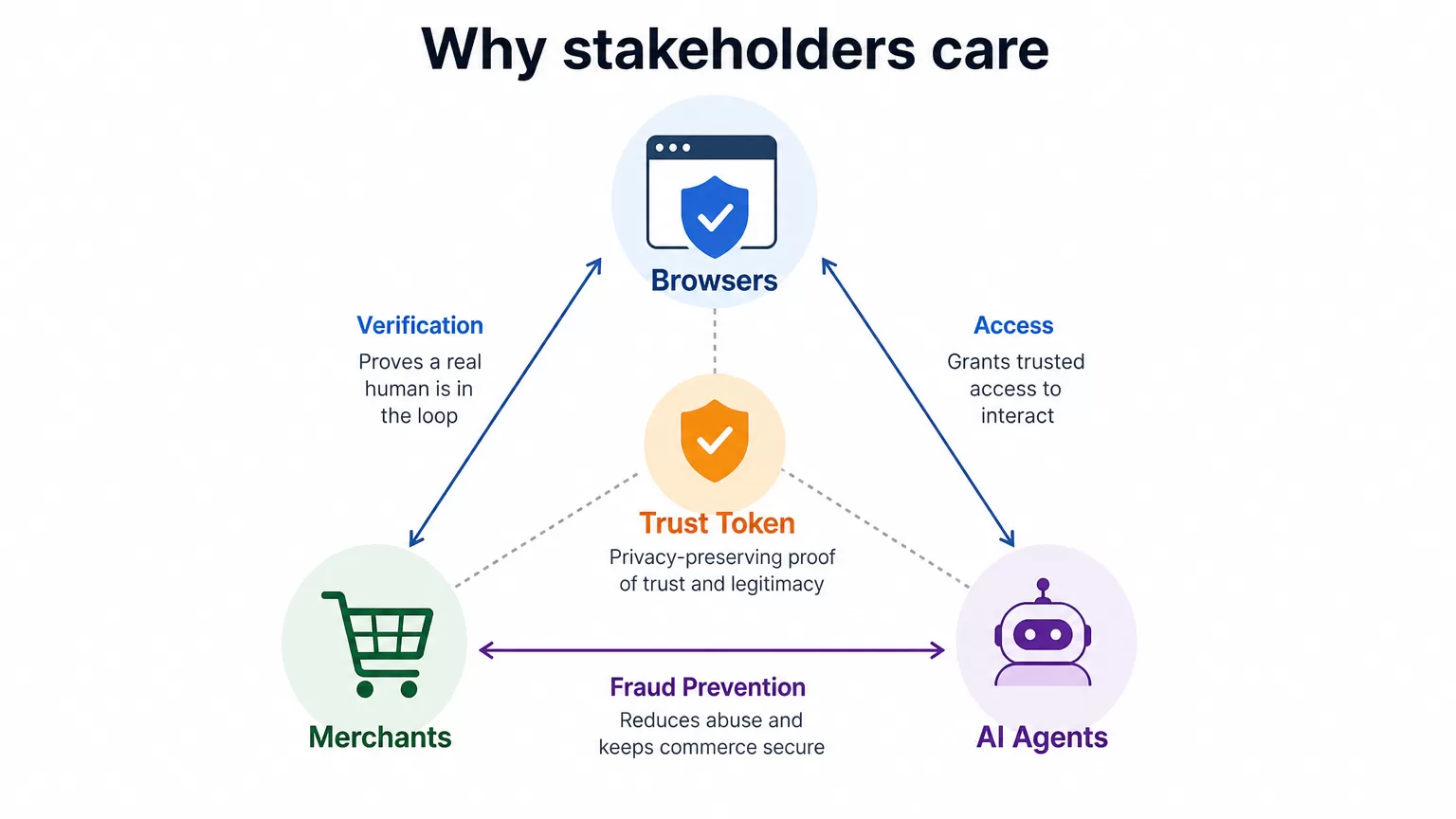
Browser participation is critical because browsers sit at the point where users, sites, and AI agents meet. If browser makers support a trust protocol, the system can become part of default web behavior rather than an optional add-on that only security teams configure.
That is why the involvement of major browser vendors is strategically significant. It signals that AI bot verification is moving from a site-by-site problem toward a standards conversation. Once browsers help define the rules, the protocol becomes more than an anti-abuse feature. It becomes part of the web’s operating logic.
Shopify’s involvement adds another layer. Ecommerce platforms see the real cost of bot abuse and overblocking every day. A merchant does not just want fewer bots; it wants fewer blocked buyers, fewer abandoned carts, and fewer false positives that hurt conversion. That is especially important for large-scale ecommerce ecosystems where even small friction points can affect revenue across many stores.
For platforms and merchants, the appeal is practical:
- Less checkout friction for legitimate shoppers.
- Better anti-abuse controls for bots targeting inventory or promotions.
- More reliable trust signals for human-assisted AI agents.
Cloudflare is well positioned here because it already operates at the intersection of network infrastructure, bot management, and emerging AI agent tooling. That gives it a rare ecosystem advantage: it can help shape the protocol while also helping deploy it at scale.
Privacy vs fraud prevention
The most interesting part of PACT may be its attempt to avoid the usual privacy-versus-security tradeoff. Traditional anti-bot systems often ask users to prove they are human by revealing more about themselves, or by enduring repeated friction that hurts legitimate traffic.
PACT takes a different route. It tries to preserve privacy while still giving merchants and websites enough confidence to distinguish between:
- real humans browsing directly,
- authorized AI agents acting on a user’s behalf, and
- abusive automation that should be blocked.
That matters because ecommerce trust is not just about stopping fraud. It is also about enabling good customers to move quickly through the funnel. Overzealous defenses can create the very loss they are trying to prevent: abandoned carts, failed logins, and broken checkout flows.
For merchants, the real risk is not only abuse. It is also false friction that quietly suppresses conversion.
Still, privacy claims will need scrutiny. A trust token that is anonymous in theory still needs strong governance in practice. If the protocol becomes widely adopted, the industry will need clear answers about issuance, revocation, interoperability, and abuse prevention at the protocol level.
What this means for SEO, ecommerce, and web trust
For SEO and digital strategy teams, PACT is relevant because it affects how the web recognizes legitimate automation. That has implications for crawling, AI-assisted interactions, and the broader rise of answer engines and agentic search workflows.
We are already in a world where AI systems summarize, retrieve, and act across the web. As that behavior becomes more common, site owners will need to think beyond raw bot blocking and toward trust-aware access. That is especially true for businesses investing in Generative Engine Optimization (GEO), where visibility in AI-mediated experiences depends on both content quality and technical readiness.
For ecommerce brands, the operational impact could be even more immediate. A trust protocol that reduces repeated challenges may improve:
- conversion rates by lowering checkout friction,
- account creation success by reducing false blocks,
- promotion integrity by making abuse harder to scale, and
- customer trust by making the experience feel less adversarial.
That does not mean every site should remove its current defenses. It means the long-term model may shift toward layered protection: protocol-level trust signals first, then behavioral analysis, rate controls, and anomaly detection where needed. Teams managing E-commerce SEO and SEO Services for E-commerce should watch this closely because checkout experience, crawl access, and trust signals increasingly overlap.
There is also a broader trust angle for SEO. If AI agents become more common intermediaries, sites may need to decide which automated behaviors they welcome, which they restrict, and how they communicate those rules. That affects everything from structured data strategy to access policies and server-side controls.
Open questions and risks
PACT is promising, but several questions remain unresolved.
First: governance. If a protocol becomes a standard for trust, who defines what counts as trustworthy? The organizations that shape those rules may influence access, visibility, and control across the web.
Second: interoperability. A trust token only helps if it works across browsers, sites, and platforms. If implementation fragments, the protocol could become another partial solution instead of a durable standard.
Third: abuse resistance. Any trust layer will attract attackers looking for ways to game issuance, replay tokens, or exploit edge cases. The system will need strong revocation, auditing, and anti-replay safeguards.
Fourth: user understanding. Privacy-preserving does not automatically mean user-friendly. If people do not understand what is being shared, when, and why, adoption may stall.
Bottom line: the hardest part may not be the cryptography. It may be the policy.
There is also a strategic risk for merchants and publishers: if trust becomes protocolized too aggressively, smaller sites may depend on infrastructure providers to interpret access in ways they cannot fully control. That could reshape the balance of power on the web.
Strategic takeaways for site owners
Site owners do not need to redesign their stack overnight, but they should prepare for a future where bot management is less about blocking everything suspicious and more about recognizing trusted behavior.
Here is the practical playbook:
- Audit friction points in signup, login, and checkout flows.
- Review bot defenses for false positives that may be hurting real users.
- Track conversion drops alongside security events, not separately.
- Monitor browser and platform adoption of privacy-preserving trust standards.
- Plan for AI agents as a legitimate traffic class, not only a threat class.
For ecommerce teams, the right question is not whether to choose trust or fraud prevention. It is how to build a system that supports both. For SEO teams, the question is how AI-mediated access changes discoverability, engagement, and the technical rules of participation.
PACT may still be early, but the direction is hard to ignore. The web is moving toward a model where browsers, merchants, and AI agents need a shared language for trust. If that happens, the winners will be the sites that adapt early, reduce unnecessary friction, and build policies that treat privacy and protection as complementary goals.