AI search citations are changing how content earns visibility. In many cases, the pages that get cited are not simply the ones that rank well in Google; they are the ones that are easiest for AI systems to parse, summarize, and trust.
That distinction matters. If your content is built only for traditional search rankings, it may still miss the citation layer inside AI answers. The good news is that the pattern is practical, not mysterious: pages with strong clarity, visible E-E-A-T signals, Q&A formatting, clean section structure, and useful structured data are more likely to appear in AI-generated responses.
This playbook breaks down what that means in practice and how to audit pages that already perform in search but are still underrepresented in AI citations. For teams building a broader Generative Engine Optimization (GEO) workflow, the key is to treat AI visibility as a content interpretation problem, not just a technical one.
AI search optimization is less about writing for a machine and more about making your expertise easy to extract, verify, and reuse.
What the study measured
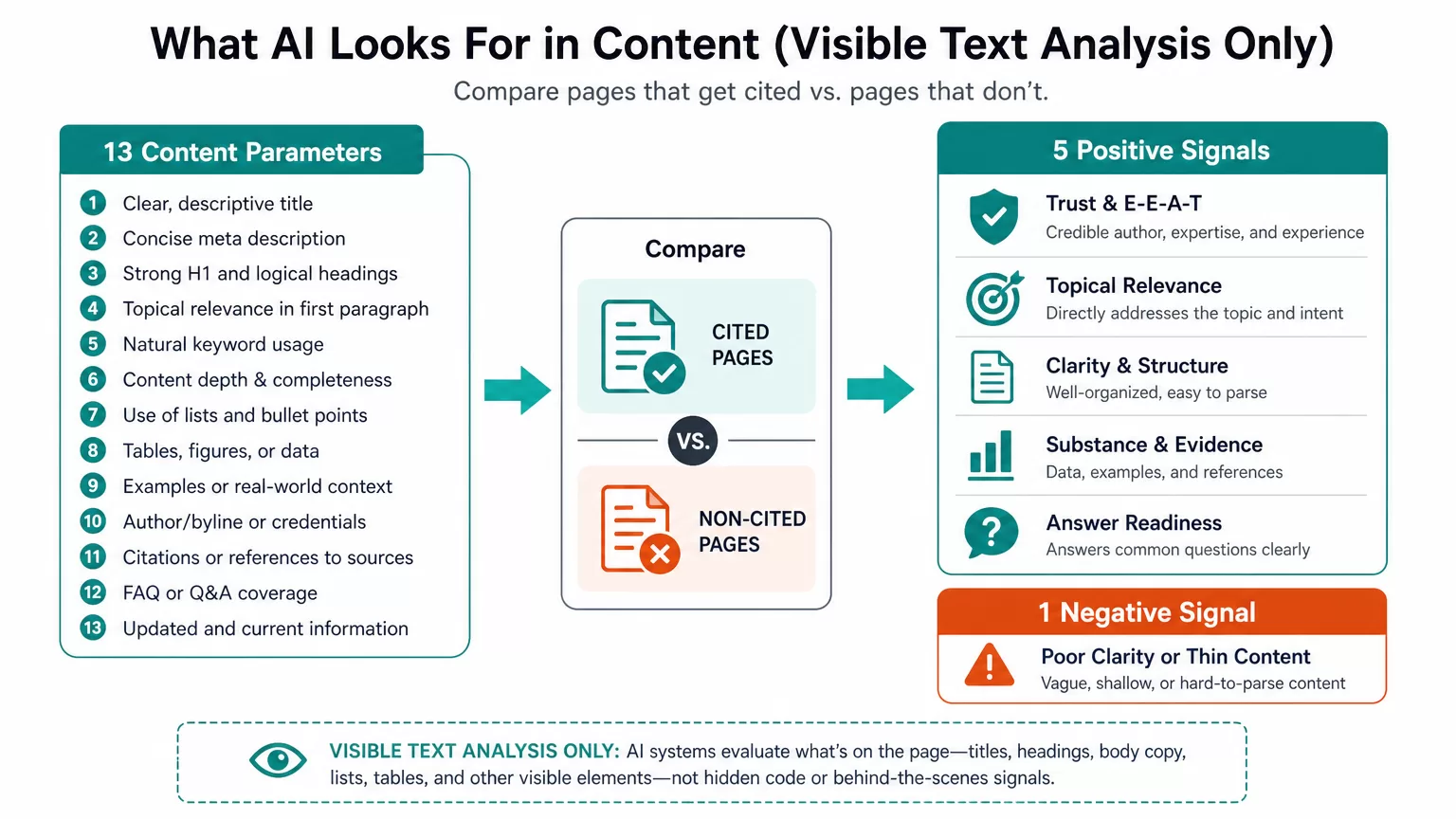
The study behind these findings focused on a simple but important question: what text-level characteristics make one page more likely to be cited by AI systems than another? Instead of assuming that ranking position alone explains AI visibility, the analysis compared large sets of cited pages against similar pages that already ranked well in Google.
That comparison is critical. It isolates the content qualities that appear to influence citation behavior beyond ordinary search performance. In other words, the research does not claim that technical SEO no longer matters. It narrows the lens to visible text so we can better understand how AI systems respond to the words on the page.
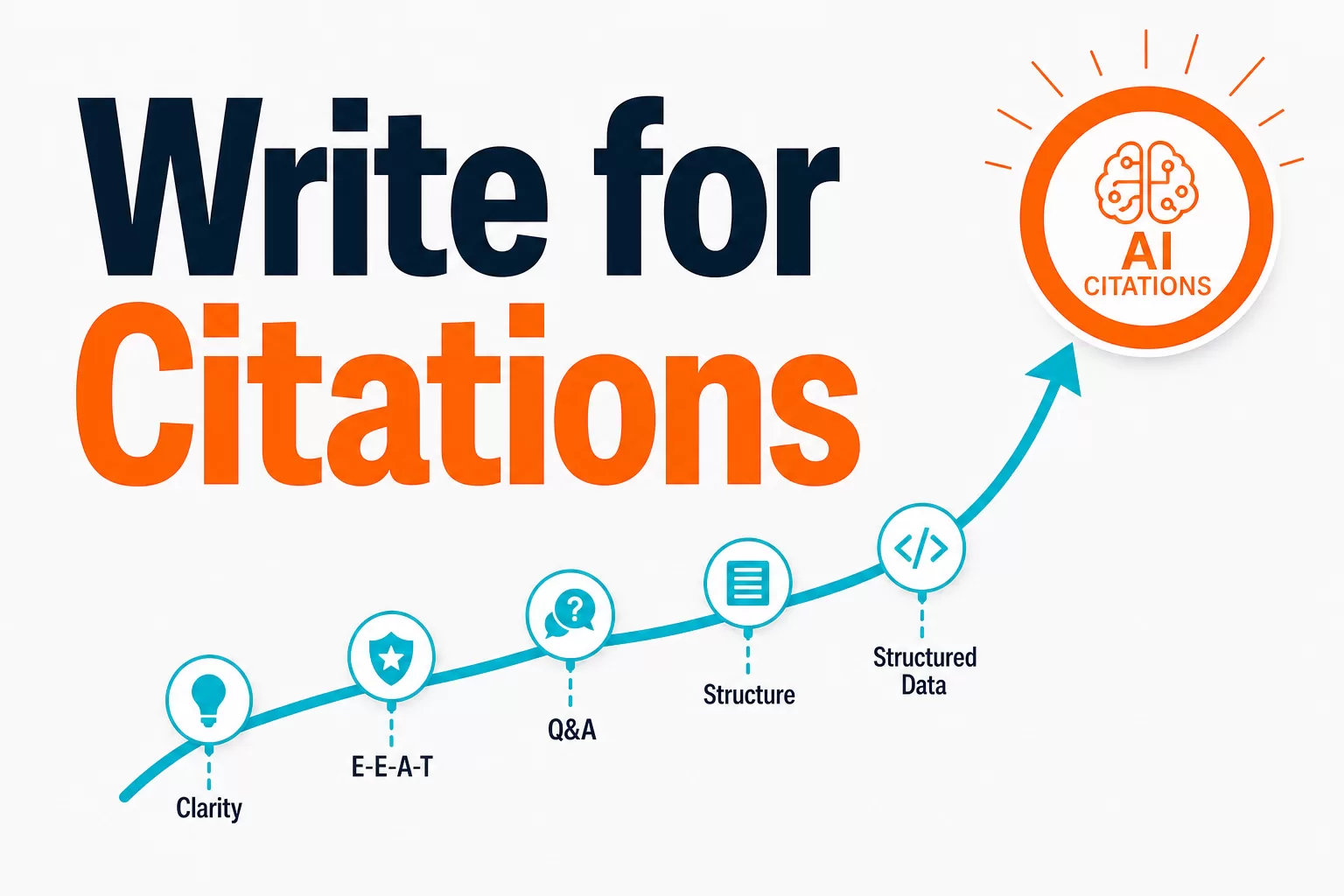
The study evaluated 13 content parameters and found that only 5 materially differentiated cited pages from non-cited pages. Those five signals were:
- Clarity and summarization
- E-E-A-T signals
- Q&A format
- Section structure
- Structured data elements
One additional factor showed a negative correlation: non-promotional tone. That result should be read carefully. It does not necessarily mean AI systems dislike promotional writing. It may simply indicate that cited pages are often produced by teams that already invest in better editorial quality, better structure, and stronger trust signals.
That nuance matters because it reframes the goal. We are not trying to “sound less marketing-like” for its own sake. We are trying to build pages that are easier to interpret and more credible to cite.
The five factors that matter most
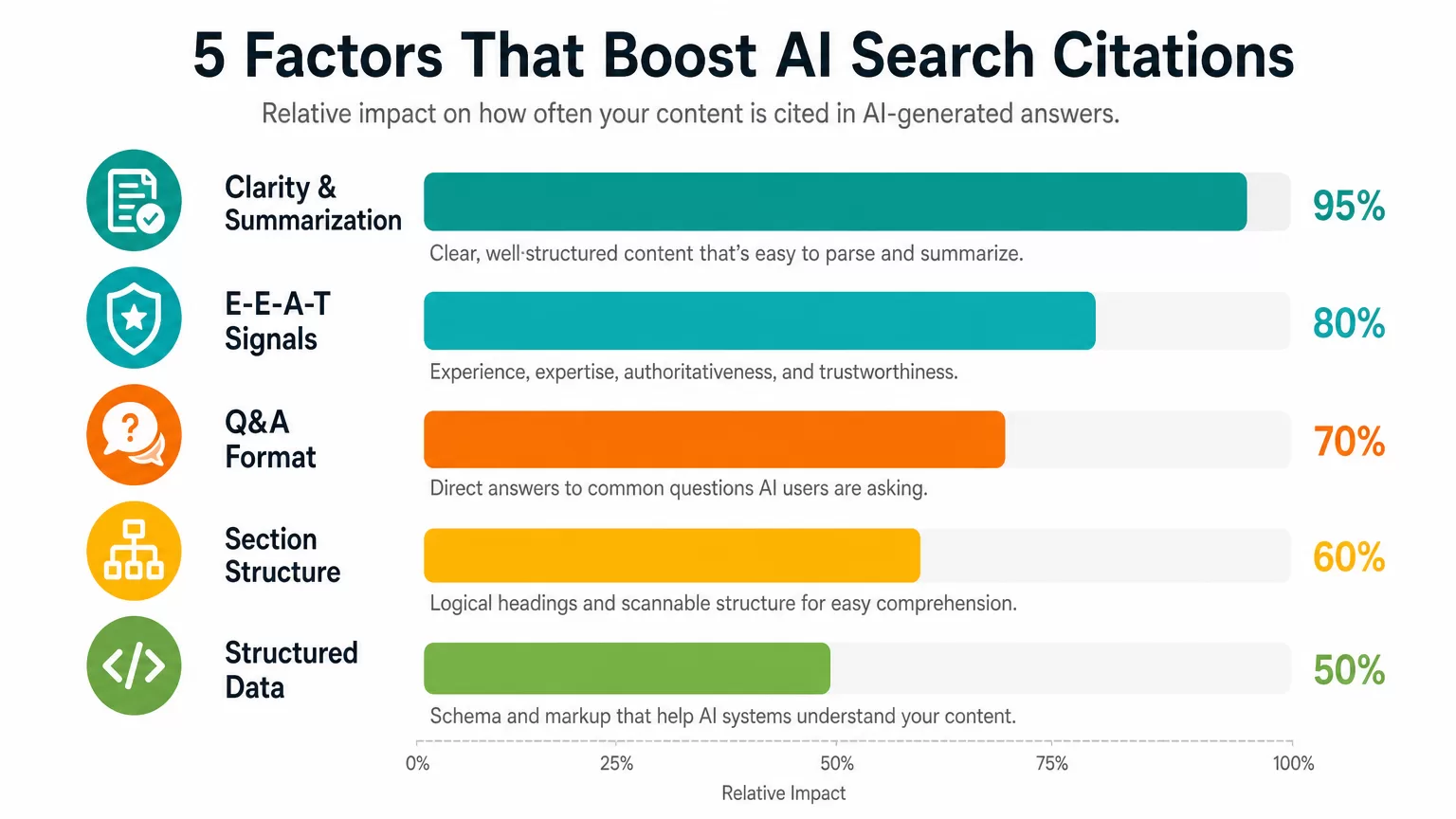
The strongest takeaway from the research is that citation-friendly content is easy to extract. AI systems appear to favor pages that present information in a way that reduces ambiguity and makes summarization straightforward.
1. Clarity and summarization
This was the strongest positive signal. Pages that quickly surface the main answer are easier for models to use because they reduce the work required to identify the core point. That means your opening paragraph should not bury the thesis beneath context, branding, or scene-setting.
Instead, lead with a concise summary of the answer, then expand with supporting detail. A practical pattern is:
- State the main point in one or two sentences.
- Explain why it matters.
- Provide supporting evidence or examples.
This is also where many teams benefit from a stronger editorial workflow. If your content strategy already supports Answer Engine Optimization (AEO), your pages should be built to answer the question first, then deepen the explanation.
2. E-E-A-T signals
Expertise, experience, authoritativeness, and trustworthiness remain important because AI systems need confidence in the source. The study’s results reinforce that pages with visible E-E-A-T signals are more likely to be cited.
Practical examples include:
- Clear author bylines and credentials
- Evidence of first-hand experience or subject-matter expertise
- References to reliable sources
- Specific, verifiable claims instead of vague generalities
For marketers, this is a reminder that trust is not only a brand issue. It is a content design issue. If a page makes claims without showing why they should be believed, AI systems have less reason to cite it.
3. Q&A format
Q&A formatting performed well because it mirrors how users ask questions and how AI systems respond. When content is organized around direct questions, the answer becomes easier to lift into an AI response.
This does not mean every article should become a FAQ page. It means specific sections should be framed around discrete questions wherever that improves clarity. For example:
- What is the problem?
- Why does it matter?
- How should teams respond?
That structure is especially useful for comparison pages, educational content, and explainers where the reader wants a fast, direct answer before the nuance.
4. Section structure
Strong sectioning helps both humans and machines. Clear headings, logical progression, and digestible blocks of text make the page easier to scan and easier to summarize. The study found a meaningful positive correlation here, which suggests that structure is not just a UX preference.
Well-structured pages typically do three things well:
- Each section covers one idea.
- Headings signal what the reader will learn.
- Lists and short paragraphs break up dense information.
This is one reason content teams should think beyond keyword placement. A page can be topically relevant but still difficult to interpret if the structure is messy or repetitive.
5. Structured data elements
Structured data-related elements also correlated positively with AI citations. The study focused on visible text characteristics, so the lesson is broader than schema alone: machine-readable organization matters.
That means headings, lists, tables, and other cleanly segmented content blocks help AI systems understand the page. Schema markup can support that interpretation, but it should not be treated as a substitute for better writing.
In practice, structured data works best when it reflects a page that is already easy to read. If your content is unclear, schema will not rescue it. If your content is clear, schema can reinforce the signals that help models understand what the page is about.
Why promotional tone underperforms
The study found a negative correlation for non-promotional tone, which sounds counterintuitive at first. The safest interpretation is not that promotional language is inherently bad. Instead, the pattern likely reflects the fact that cited pages are often professionally produced and editorially stronger overall.
That distinction is important because many marketers overcorrect here. They strip out useful context, remove brand voice, and flatten the copy into something bland in the name of being “non-promotional.” But AI citation visibility is not won by making content lifeless.
The real issue is whether the page is useful, specific, and trustworthy. Promotional content tends to underperform when it:
- Leads with the offer instead of the answer
- Uses vague claims without evidence
- Hides the main point behind marketing language
- Fails to answer the user’s actual question
That is why the better editorial goal is clarity over persuasion. A page can still be commercially relevant, but it should not read like a pitch deck. If your content is also meant to support demand generation, it should do so through substance, not hype.
AI systems do not need your copy to be sterile. They need it to be clear enough to trust and structured enough to cite.
This is also where many teams see the gap between traditional SEO and AI search. A page can be optimized for search intent and still fail to become a preferred citation source if the writing is too vague, too promotional, or too difficult to summarize.
How to audit your pages
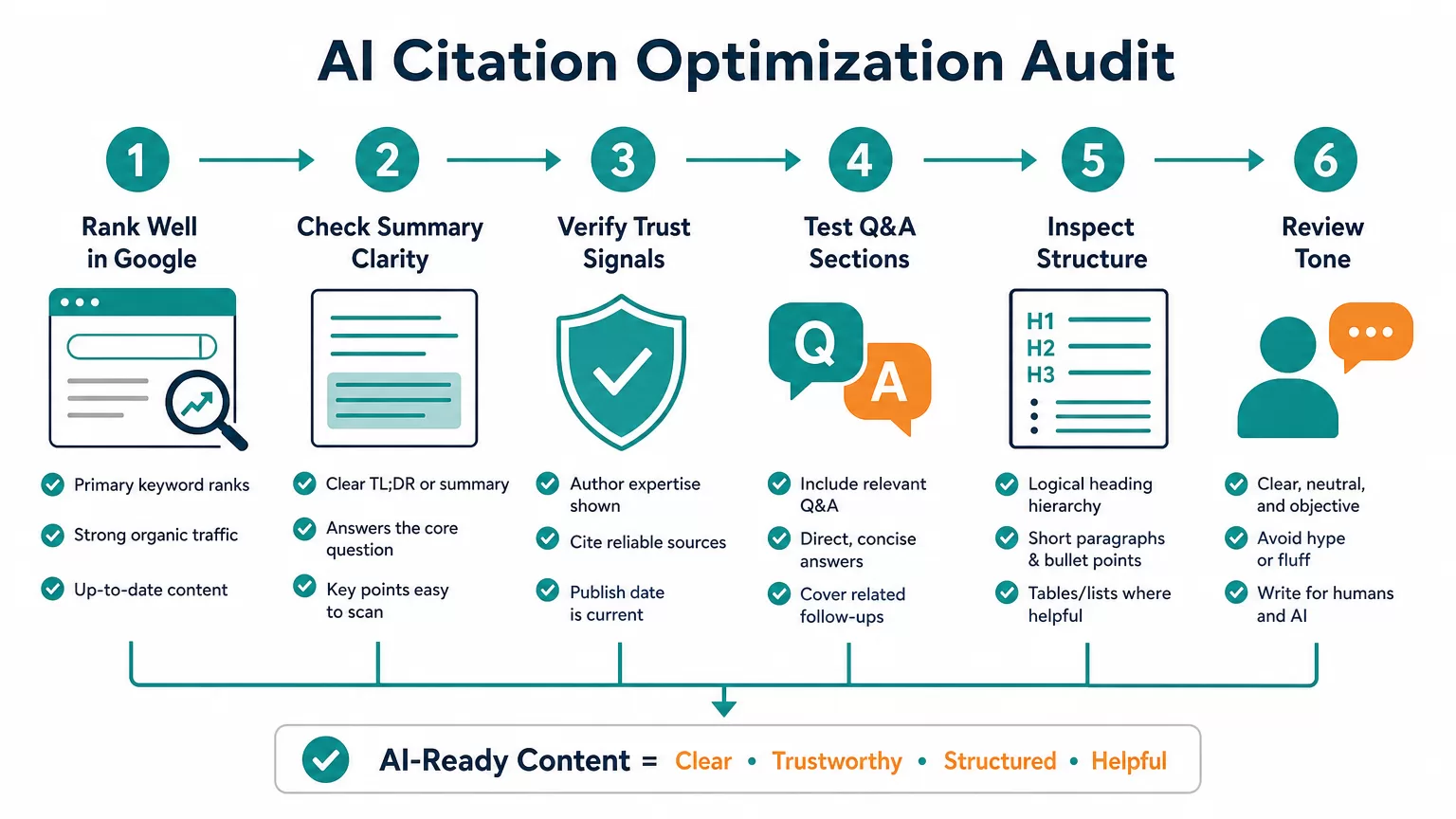
The most practical workflow is to compare pages that rank well in Google with pages that are actually being cited by AI systems. That comparison often reveals a content-level gap that ranking reports alone will not show.
Start with pages that already attract impressions or clicks, then test whether they answer the query in a way that is easy to extract. The goal is to identify pages that are visible in traditional search but weak in AI answers.
Audit questions to ask
- Does the page open with a concise summary of the main answer?
- Are the headings descriptive and logically ordered?
- Does the page include direct questions and answers where appropriate?
- Are there visible E-E-A-T signals such as author expertise or references?
- Does the page use lists, tables, or other structured blocks to segment information?
- Is the tone informative, or does it drift into promotional language before the answer is delivered?
For teams working in education, SaaS, or other information-heavy verticals, this audit can be especially valuable. A resource may rank well but still lose AI citation share if it is too broad, too soft, or too difficult to summarize. If you manage content in a highly competitive niche, aligning this work with SEO Services for Education & E-learning can help standardize content quality at scale.
One useful test is to read the page aloud and ask: Would an AI system pull a clean answer from this section in two sentences? If the answer is no, the section likely needs tighter framing.
Practical optimization checklist
If you want to improve AI search citations without rewriting everything from scratch, use this checklist as a content operations guide.
- Lead with the answer. Open with a short summary before adding nuance.
- Use question-based headings. Mirror the way people ask and AI systems answer.
- Prove expertise. Add author credentials, references, and evidence where relevant.
- Break content into single-purpose sections. Avoid long, multi-topic blocks.
- Use lists and tables. They improve readability and machine interpretation.
- Support with structured data. Use schema where it accurately reflects the page.
- Reduce vague promotional language. Keep the page useful before persuasive.
- Compare ranking pages to citation pages. Optimize for the gap, not just the keyword.
For many teams, the biggest win will come from revisiting existing pages rather than producing more content. A page that already ranks has a head start; it may only need a better summary, stronger structure, and clearer trust signals to become citation-ready.
In AI search, the winning page is often not the longest page or the loudest page. It is the page that is easiest to understand, verify, and reuse.
That is why AI search optimization should be treated as a content interpretation discipline. Technical SEO still matters, but the study’s findings make the case that the visible text is doing more of the heavy lifting than many teams assume. If your content is clear, structured, and credible, you are giving AI systems a better reason to cite it.
That is the practical path forward: optimize for extraction, not just ranking; for trust, not just traffic; and for readability, not just keyword coverage.