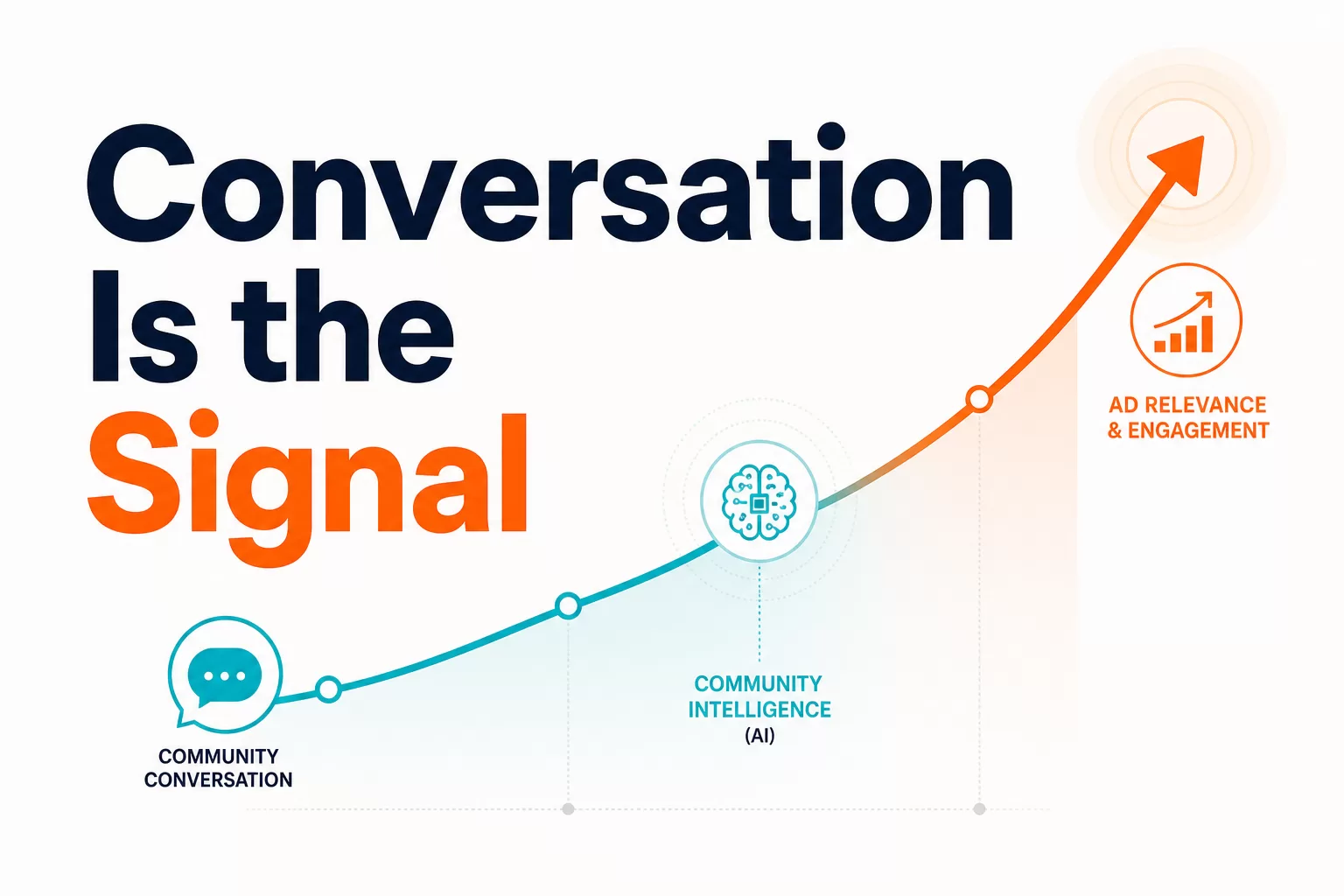
Paid media is moving beyond keywords, audiences, and static intent models. A new signal is emerging from the places where people ask, compare, doubt, and validate: community-generated conversations. For advertisers, that shift matters because it turns authentic discussion into a usable input for creative generation, contextual targeting, and machine learning optimization.
In practical terms, this is not just another automation feature. It is a change in how platforms define relevance. When ad systems can read discussion patterns across billions of posts and comments, they can identify purchase intent in the language people actually use. That creates a new advantage for brands that know how to work with community intelligence without sounding forced or synthetic.
Community conversation is becoming more than a listening channel. It is becoming an advertising signal, a relevance layer, and a performance variable.
Why community conversations are becoming ad fuel
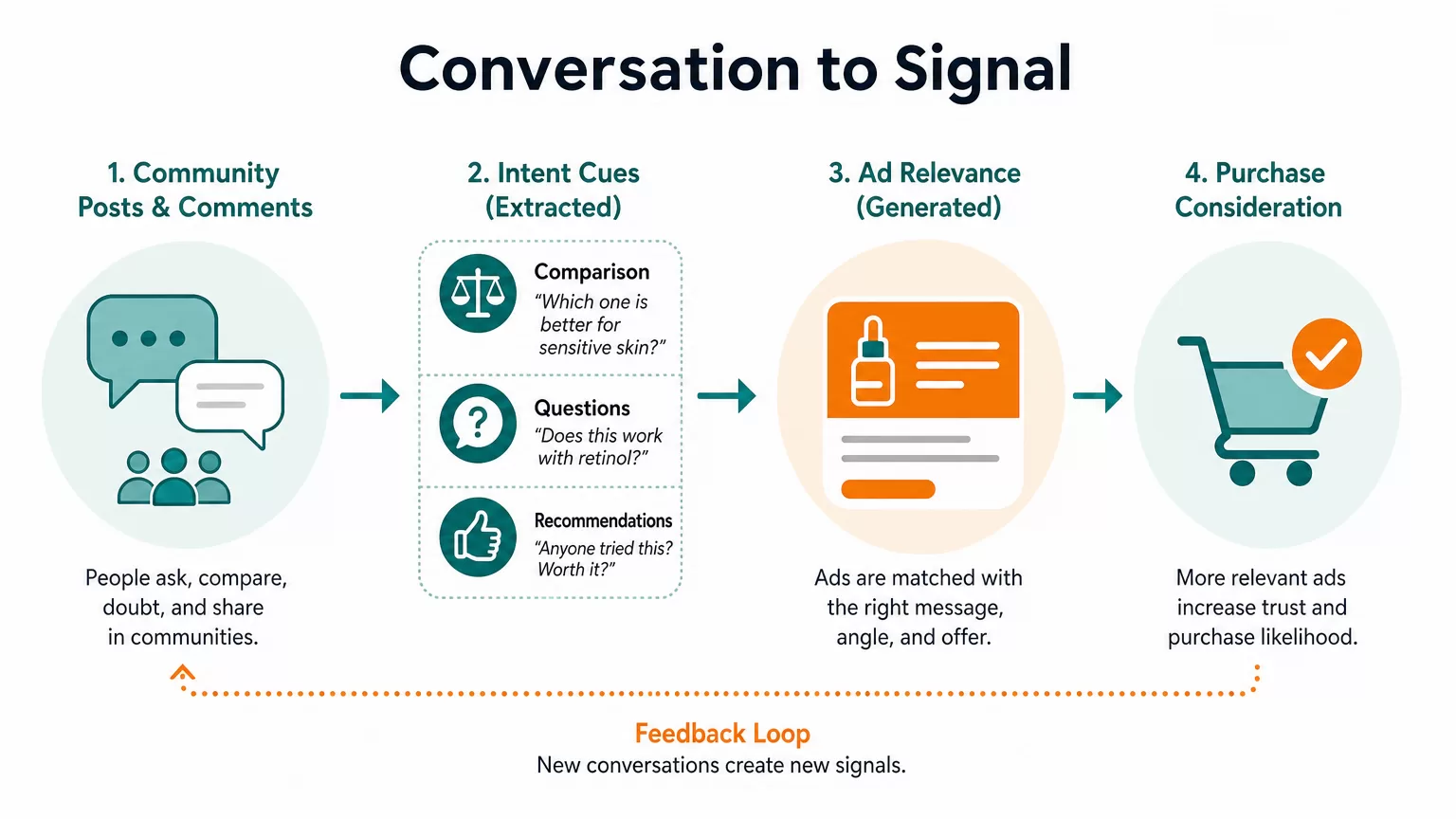
Traditional targeting has long depended on first-party data, broad interest segments, and keyword clusters. Those inputs still matter, but they often miss the messy middle of the buying journey: the comparisons, objections, and peer validation moments that shape real decisions. Community threads capture those signals in natural language, which makes them especially valuable for AI-powered ad systems.
This is where the strategic shift begins. Instead of using community data only for social listening or brand monitoring, platforms are now structuring it into an advertising layer. That means discussion graphs can inform not only what to target, but also how to phrase the message and which products to surface.
- Comparison language reveals what users are weighing against each other.
- Question language exposes uncertainty and research-stage intent.
- Recommendation language signals trust-building moments.
- Complaint language highlights pain points that creative can address directly.
For marketers, this matters because community conversations are often closer to the buying decision than demographic segments ever will be. If a user is debating a product in a forum or asking for validation from peers, that is not just engagement data. It is often a clear sign of purchase intent.
When people explain what they want in their own words, they create stronger intent signals than many conventional audience models.
What the new ad tools do
The newest wave of ad products is designed to transform community intelligence into usable campaign assets. The key idea is simple: combine brand content with relevant conversations so the resulting creative feels native to the environment where it appears. That is a major step forward from generic dynamic creative.
One major capability is AI-assisted copy generation that blends a brand’s site content with community context. Instead of producing polished but detached ad language, the system can generate headlines and variations that sound closer to how real users talk. That is especially useful in environments where credibility depends on tone, not just message.
Another important development is the use of visible social proof inside the ad unit itself. When a platform inserts conversation summaries or related organic posts into a paid placement, it turns earned discussion into a trust signal. In effect, the ad is no longer only making a claim; it is showing that people are already discussing the product in a relevant context.
There is also a commerce layer. Shopping-oriented formats can match products to relevant conversations and present them in a carousel, which helps intercept users while they are still researching and comparing options. That is a strong fit for Reddit advertising and similar conversation-led environments where users are actively looking for peer validation.
For teams already experimenting with What Improves AI Search Visibility, the overlap is clear: both AI search and community-led ads reward content that reflects real language, clear intent, and contextual usefulness.
AI is not just writing more ads. It is learning which ads belong inside a conversation and which ones feel like interruptions.
Performance implications for advertisers
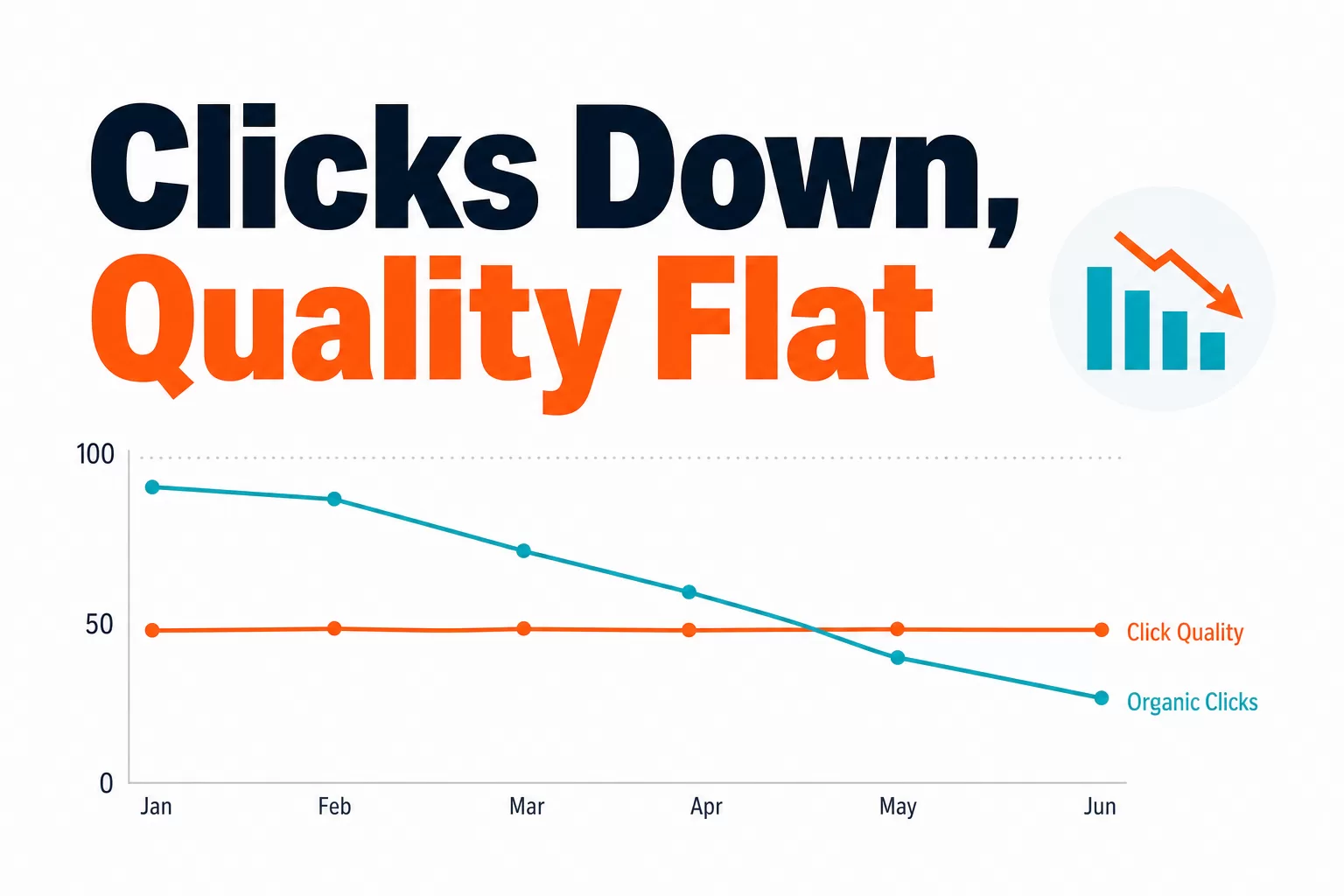
The performance story is just as important as the creative story. Early optimization tests point to a shift away from vanity metrics and toward engagement quality. A six-second engaged video view goal, for example, suggests that machine learning is being used to find users who are more likely to watch meaningfully, not just click or scroll past.
That distinction matters. In performance marketing, a cheaper impression is not always a better impression. If machine learning can improve view-through rates and completion rates, it may be identifying audiences that are more aligned with the message, the format, and the moment of exposure. That creates a better foundation for downstream conversion.
- Higher view-through rates can indicate stronger relevance at the top of the funnel.
- Better completion rates often suggest deeper message retention.
- Improved engagement quality can support more efficient retargeting pools.
- Context-aware delivery may reduce wasted spend on mismatched audiences.
For advertisers, the lesson is to separate optimization goals by format. Video should be evaluated differently from shopping placements. One is about attention quality; the other is about intent capture. Both can benefit from community intelligence, but they require different success metrics and creative structures.
This is also where ad creative automation becomes more strategic. If the system can generate multiple headline and image variations based on audience context, marketers can test message-market fit faster. The win is not just speed. It is the ability to scale relevance without manually rewriting every variant.
Strategic risks and opportunities
The opportunity is obvious: authentic community language can make ads more relevant, more credible, and more efficient. But there is a real risk in overusing it. If brands mine user sentiment too aggressively, the result can feel invasive, overly literal, or worse, manipulative.
That tension is the central strategic challenge. Community conversation should be treated as a signal, not a script. The best ads will borrow the shape of user language without copying it too closely. They will reflect sentiment without pretending to be a peer post. And they will use social proof as a trust layer, not as a gimmick.
Marketers should also be careful about context collapse. A phrase that works in one community may feel out of place in another. The same product can be discussed with enthusiasm, skepticism, humor, or frustration depending on the forum. Machine learning can surface those patterns, but human review is still necessary to keep messaging appropriate.
The strongest creative will not sound robotic, and it will not sound like it is trying too hard to be one of the crowd.
Brands that already invest in Social Media Marketing have an advantage here because they are more likely to understand tone, community norms, and the difference between participation and intrusion.
What marketers should test next
The next phase is not about chasing every new automation feature. It is about building a testing framework that respects how community intelligence works. Start with a few focused experiments that measure relevance, trust, and downstream performance.
- Test conversational copy against polished brand copy to see which version drives stronger click quality and engagement.
- Compare community-led creative to standard audience-based creative across the same product and funnel stage.
- Separate video and shopping objectives so engagement quality is not mixed with commerce intent.
- Use sentiment-informed messaging sparingly to avoid sounding synthetic or opportunistic.
- Track completion, assisted conversion, and post-click behavior, not just CTR.
It is also worth testing whether user-generated content themes can inform paid creative without being directly quoted. That approach often preserves authenticity while reducing the risk of sounding intrusive. In many cases, the best-performing ads will not copy community language verbatim. They will simply understand what the community cares about and respond in a more useful way.
That is the real strategic implication of community-generated conversations as an ad signal. The brands that win will not be the ones that automate the most. They will be the ones that use machine learning to improve relevance while still sounding human.
In the next era of paid media, authenticity is not just a branding value. It is a performance lever.