Google’s latest publisher guidance is less of a tactical update and more of a reality check. The message is simple, but it cuts against a lot of current AI SEO hype: publish content people actually want to read, and make sure Google can access it.
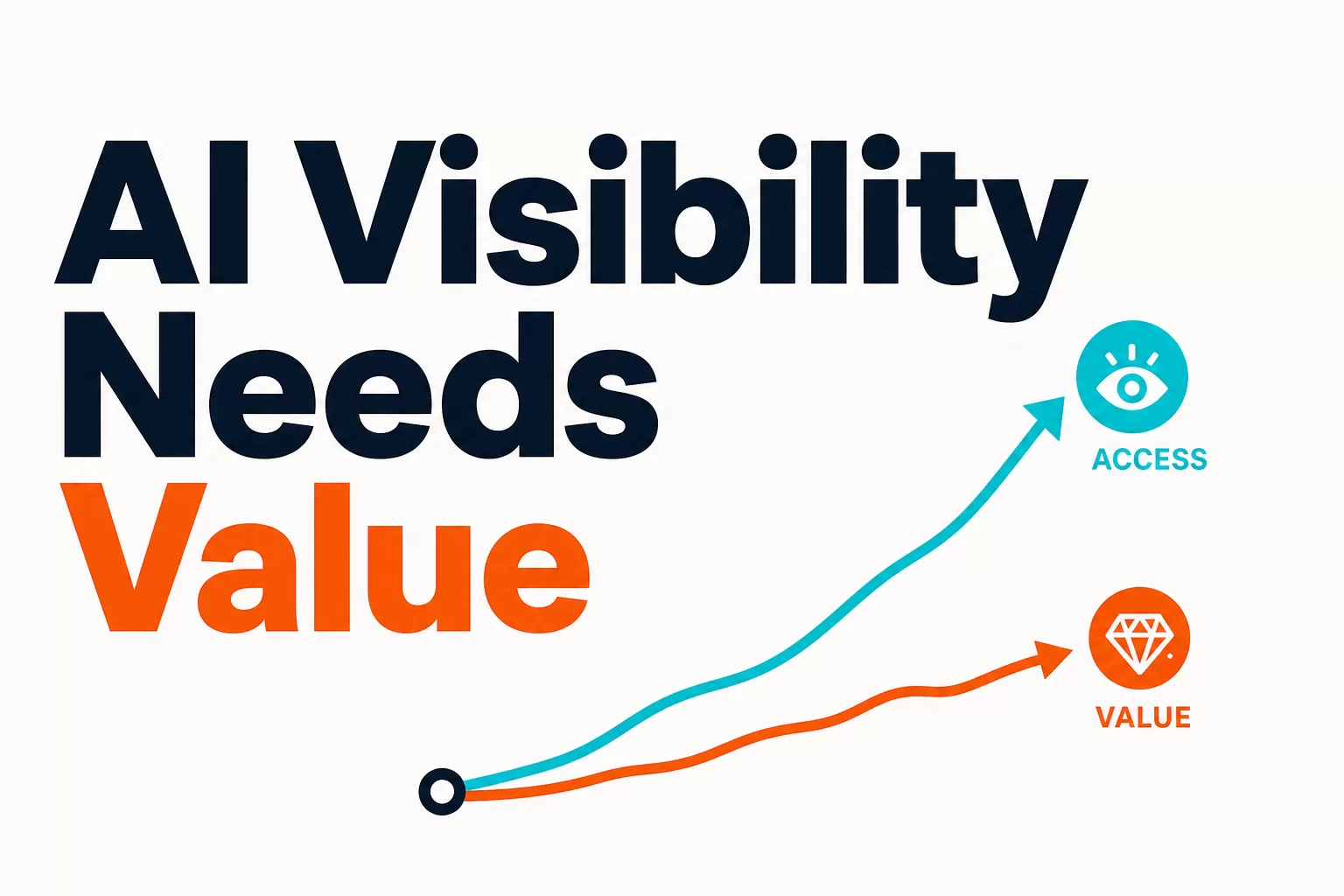
That framing matters because it shifts the conversation away from “How do we optimize for AI answers?” and toward a more durable question: What content deserves to be surfaced in the first place? For SEO teams, the answer now depends on two things working together: crawlability and content quality.
AI visibility is not a loophole. It is increasingly a reflection of whether your content is useful, differentiated, and easy to discover.
What Google is really saying
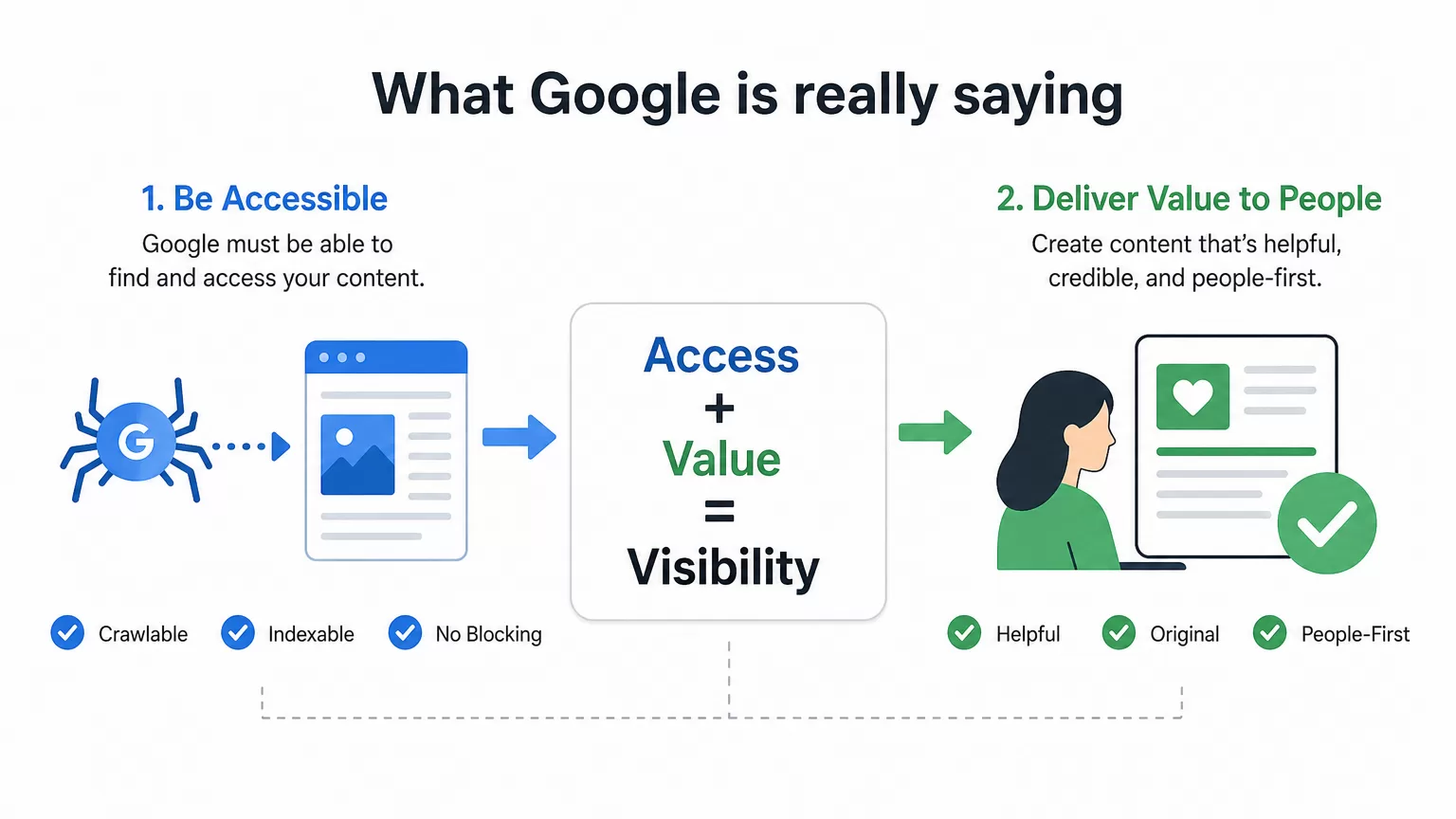
The clearest reading of the guidance is that Google is not asking publishers to chase a new AI-specific trick. Instead, it is reinforcing a familiar principle with sharper urgency: content that serves users wins more consistently than content built to satisfy search engines.
That distinction is important. Search-engine-first pages often optimize around keywords, templates, and predictable formatting. Audience-first content does something different:
- It answers a real question with specificity.
- It reflects firsthand knowledge or original analysis.
- It gives readers a reason to stay, trust, and return.
In other words, Google is signaling that AI search visibility is not just a technical problem. It is a user-value problem. If the page feels like the 1,000th copy of the same idea, it is unlikely to stand out in AI-mediated discovery or earn lasting engagement.
For brands, that means the editorial bar is rising. Pages need a point of view, not just a keyword footprint. If your team is mapping this into a broader workflow, that is where Content Marketing SEO becomes more than a traffic play—it becomes the mechanism for building content people genuinely want to read.
Why traffic loss is bigger than AI
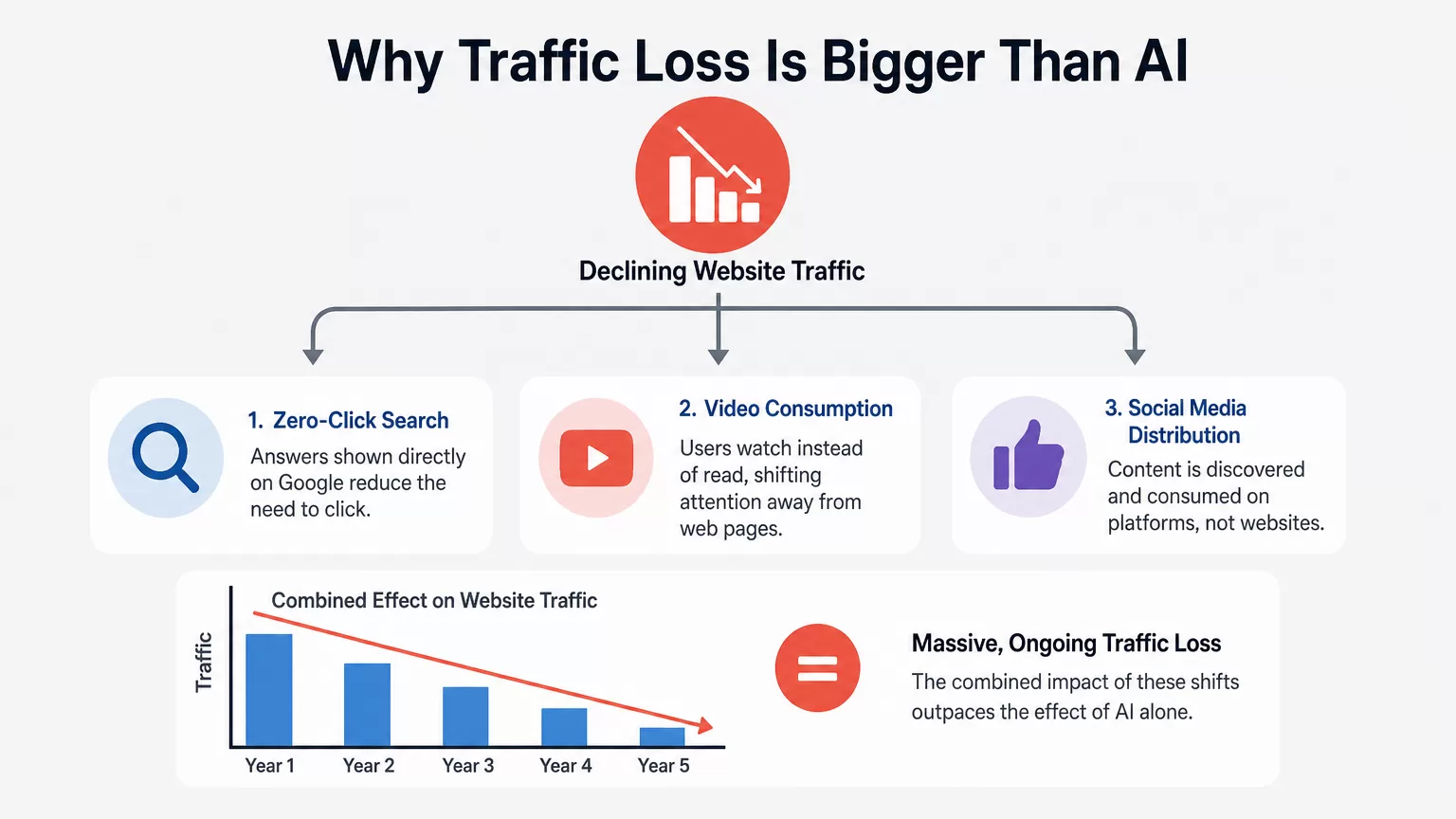
It is tempting to blame traffic decline on AI summaries alone, but Google’s framing is broader than that. The shift in clicks is being driven by multiple forces at once:
- Zero-click behavior is increasing as answers appear directly in search.
- Users are consuming more information through video and social platforms.
- AI is changing how information is summarized, presented, and compared.
That means the traffic story is not a single-cause story. Some clicks are disappearing because search results now satisfy the query earlier. Some are moving because audiences are choosing different formats altogether. And some are being lost because the content itself is too generic to earn attention in a crowded information market.
Not every drop in organic traffic is an AI problem. Sometimes it is a content problem, a format problem, or a distribution problem.
This is where many SEO teams need to broaden their diagnosis. If rankings are stable but clicks are falling, the issue may be less about position and more about presentation, differentiation, and intent satisfaction. If impressions are up but engagement is down, the page may be visible without being compelling.
That also changes how teams should report on performance. Instead of treating organic traffic as the only success metric, look at engagement quality, query intent, assisted conversions, and how often your content is being reused or cited across channels. AI visibility may be part of the story, but it is not the entire story.
The two buckets publishers must fix
Google’s guidance can be reduced to two operational buckets. If either one is weak, AI visibility suffers.
1) Accessibility and crawlability
If content is blocked, hidden, or difficult to discover, it cannot perform well. That sounds basic, but it is still where many sites lose visibility. Technical SEO remains the entry point.
- Make sure important pages are crawlable.
- Check indexability and rendering issues.
- Reduce unnecessary duplication and thin templated pages.
- Use internal linking to surface priority content.
This is also the point where a technical audit becomes more than housekeeping. If Google cannot reliably access your pages, AI systems cannot evaluate them well either. For teams that need a structured approach, Technical SEO Services can help identify the access issues that quietly suppress visibility.
2) Content quality and audience fit
The second bucket is the harder one. Even if a page is perfectly crawlable, it still has to be worth reading. That means the content must offer something beyond generic coverage:
- Original expertise instead of recycled definitions
- Fresh perspective instead of predictable summaries
- Depth and richness instead of surface-level completeness
- Audience relevance instead of algorithmic filler
This is where the phrase “don’t publish the 1,000th copy” becomes strategically important. The web does not need more sameness. It needs content that adds context, interpretation, and practical value.
For SEO teams, the implication is clear: technical accessibility gets you into the game, but originality keeps you competitive.
How to improve AI visibility
Improving AI search visibility does not require chasing every new surface or format. It starts with strengthening the content foundation that AI systems are most likely to reward.
- Audit crawlability first. Confirm that priority pages are indexable, internally linked, and not buried behind technical barriers.
- Prioritize original angles. Ask what your page says that the other ten results do not.
- Write for human reading satisfaction. If the content feels useful, clear, and complete to a reader, it is more likely to perform across search and AI surfaces.
- Show expertise explicitly. Use examples, process details, and nuanced explanations that demonstrate real-world knowledge.
- Refresh thin pages. Remove repetitive content, consolidate overlap, and expand the pages that deserve to rank.
There is also a strategic distribution lesson here. If users are increasingly finding answers through video and social media, then a website-only mindset is too narrow. The strongest brands will treat search as one channel within a broader content ecosystem, not the only destination.
AI visibility improves when your content is both easy to access and genuinely worth surfacing.
Strategic implications for SEO teams
Google’s latest guidance should push SEO teams toward a more integrated operating model. Technical SEO, editorial strategy, and audience research can no longer live in separate silos.
Here is the practical shift:
- Technical teams should focus on crawlability, indexability, and clean site architecture.
- Content teams should build audience-first content with clear expertise and original insight.
- SEO strategists should connect the two with query intent, page purpose, and performance analysis.
That cross-functional approach is especially important as zero-click behavior grows. If fewer users visit the page after seeing an answer, then every click that does happen has to be earned with stronger relevance and clearer value. Pages should not exist merely to match a keyword pattern; they should deserve attention.
In practice, this means auditing your content library with new questions:
- Which pages are technically accessible but editorially weak?
- Which pages are strong in depth but buried by poor architecture?
- Which topics deserve original reporting, not another rewritten explainer?
- Which content formats best match how your audience actually consumes information?
The long-term winners in AI search will not be the brands that publish the most pages. They will be the brands that publish the most useful pages—the ones built on expertise, differentiated thinking, and a real understanding of what audiences want to read.
That is the core message behind Google’s guidance. AI visibility is not about gaming the system. It is about building content that can survive a more selective, more competitive, and more user-driven search environment.