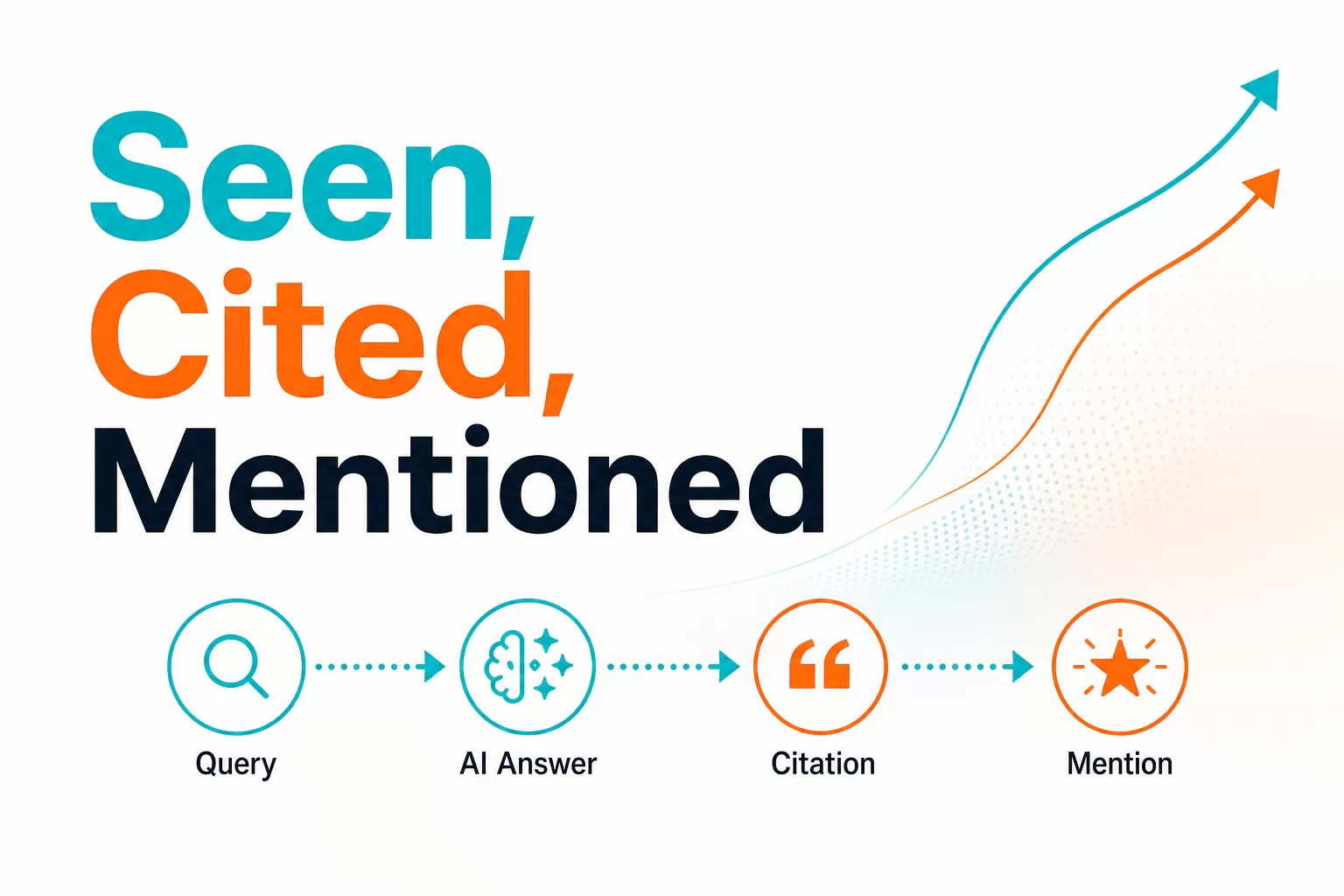
AI search is changing the unit of success. In classic SEO, the goal was to rank, earn the click, and convert on-site. In AI-driven search experiences, the goal is broader: be seen, be cited, be mentioned, and be trusted inside the answer itself.
That shift matters because large language models and AI Overviews do not always evaluate pages the way a human does. They tend to pull fragments, compare sections, and reuse concise passages that are easy to parse. For brands, that means visibility is no longer just about keyword targeting or total word count. It is about how content is structured, marked up, authored, and maintained.
AI search visibility is increasingly a machine-readability problem. If a page is hard to parse, hard to trust, or hard to extract, it is less likely to be cited in an AI answer.
This playbook breaks down what actually improves AI search visibility in LLMs and AI Overviews, and how to measure success beyond traffic alone.
Why AI Search Visibility Is Different
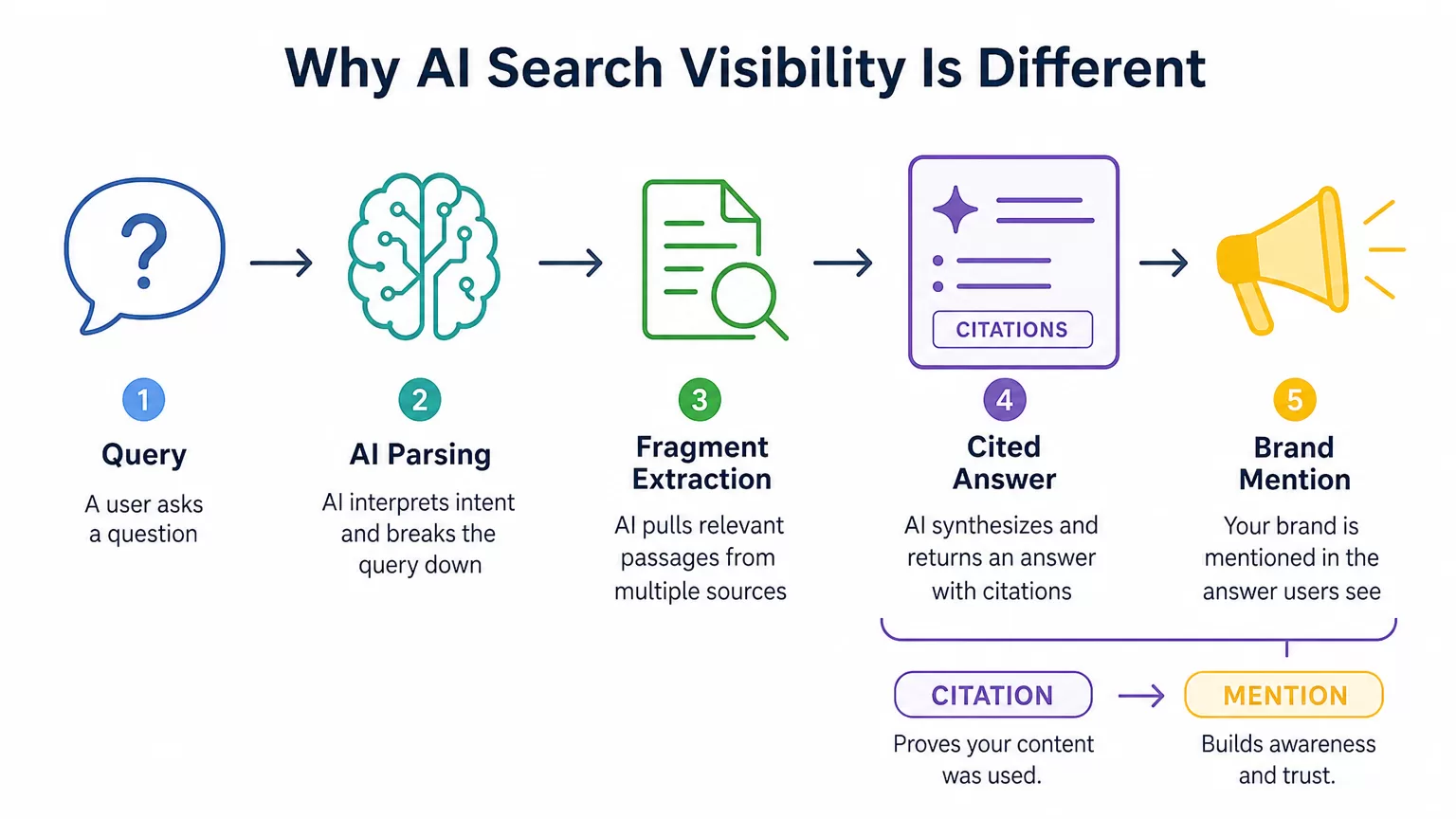
Traditional SEO assumes a user sees a result, clicks through, and consumes the page. AI search changes that journey. A user may get the answer inside the interface and never visit the site, even if your content helped shape the response.
That creates a new optimization target: fragment-level extraction. AI systems often work with sections, definitions, and compact explanations rather than evaluating an entire page as one monolith. As a result, content that is logically organized and easy to isolate has a better chance of being surfaced.
- Search engines traditionally reward relevance, authority, and usability.
- AI systems also reward extractability, clarity, and trust signals.
- AI Overviews often summarize, compress, and cite from multiple sources.
That means the old question, “How do we rank?” is no longer enough. A better question is, how do we become the most reusable source for a specific answer?
For teams building this capability, the strategic overlap with Answer Engine Optimization (AEO) is obvious: structure content so systems can confidently lift, summarize, and attribute it.
Structure and Markup Signals
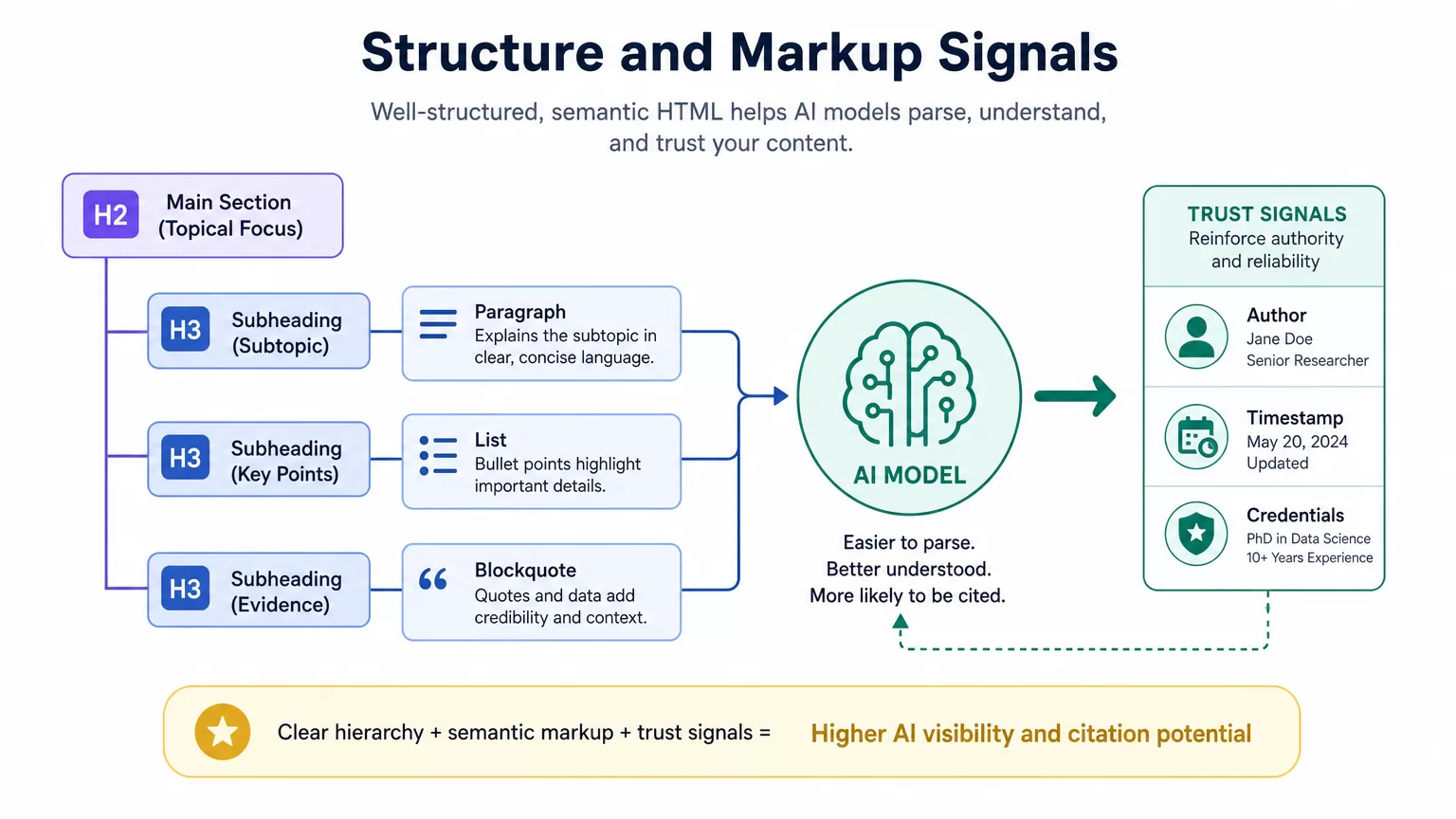
If AI systems are parsing pages into sub-documents, then structure becomes a visibility layer. Clean heading hierarchy, semantic HTML, and concise sectioning help models understand what each block of content is doing.
In practical terms, this means the page should read like a well-labeled knowledge object, not a wall of prose.
What strong structure looks like
- One clear topic per section with H2s that map to real sub-questions.
- Logical nesting so H3s support the H2 above them.
- Semantic elements such as paragraphs, lists, tables, and blockquotes used intentionally.
- Answer-first writing that states the point early, then expands.
This is not just a UX best practice. It improves AI readability—the likelihood that a system can identify, isolate, and reuse a passage without needing to reconstruct context from scratch.
Think in blocks, not blobs. Each section should be understandable on its own and still fit cleanly into the larger page narrative.
Semantic HTML also matters because it provides machine cues beyond visual formatting. A bold sentence is useful to humans; a properly nested heading, list, or section is useful to both humans and machines. That distinction becomes especially important for informational pages competing in AI Overviews, where concise passages are often favored over dense, undifferentiated content.
Brands investing in Generative Engine Optimization (GEO) should treat structure as part of the retrieval layer, not just page design.
Credibility Signals That Matter
AI systems are not only looking for relevance. They are also looking for signals that the content is trustworthy enough to reuse. In practice, that often means identifiable authorship, visible expertise, and freshness cues.
Three credibility signals that stand out
- Named expert authorship instead of anonymous publishing.
- Visible credentials that establish topical authority.
- Clear timestamps that show the content is current or recently updated.
These signals matter because AI-generated answers carry reputational risk. If a system cites a source, that source needs to look credible enough to justify inclusion. A dated, vague, or faceless article is easier to ignore than a clearly authored, well-maintained one.
Authority in AI search is not only about backlinks. It also includes who wrote the page, how current it is, and whether the content looks maintained rather than abandoned.
For editorial teams, that means every insight-heavy page should include a visible author bio, a publication date, and an update timestamp where relevant. Those elements are simple to implement, but they can materially improve how the page is perceived by both users and systems.
This is also where topical focus matters. A brand that repeatedly publishes strong, expert-led content in one domain builds a clearer authority profile than a brand that posts broadly but shallowly. That effect is especially valuable in competitive categories like SEO Services for Renewable Energy, where trust and subject matter depth influence both human and machine interpretation.
Measuring Beyond Traffic
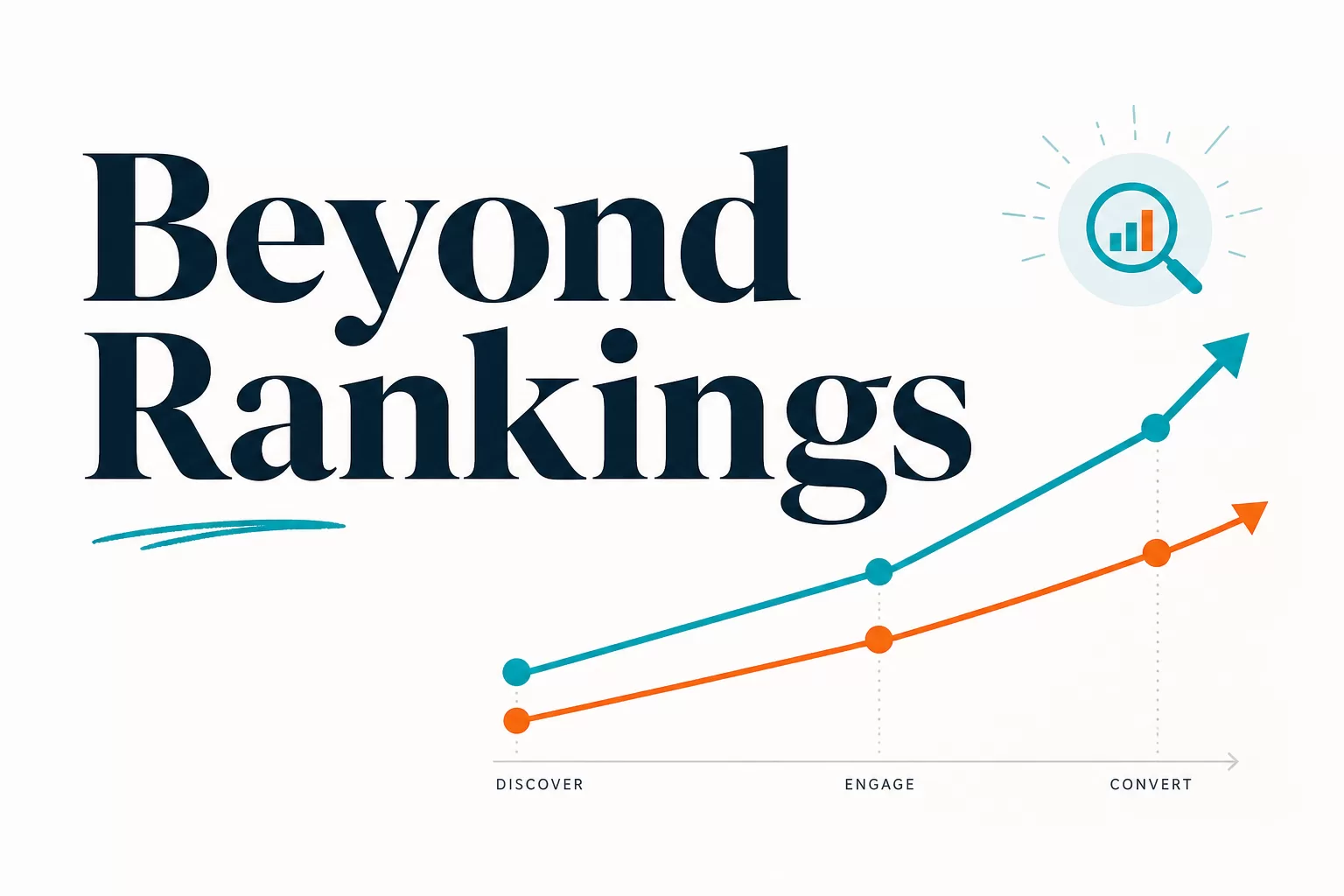
One of the biggest mistakes teams can make is judging AI visibility only through sessions. AI-mediated discovery can create value even when the user does not click immediately. If your content appears in an overview, gets cited in an answer, or is mentioned by an LLM, it may still shape awareness and consideration.
That is why visibility-first measurement is becoming essential. New KPIs are emerging around citation share, visibility rate, and LLM mentions. These metrics help teams understand whether content is being surfaced in AI environments, not just visited afterward.
What to track instead of traffic alone
- Citation share: how often your brand is cited relative to competitors in a topic area.
- Visibility rate: how frequently your content appears in AI-generated answers for target prompts.
- LLM mentions: how often your brand, product, or domain is named in model outputs.
- Assisted awareness: downstream branded search or direct visits after AI exposure.
These metrics do not replace organic traffic. They contextualize it. A page may attract fewer visits than before while still influencing more users through AI summaries, especially in top-of-funnel research queries.
If AI answers are intercepting demand, traffic alone undercounts impact. Visibility in the answer layer can shape brand recall long before a click happens.
For SEO teams, this means reporting needs to evolve. Pair Search Console and analytics with rank tracking, query clustering, and manual AI answer checks. Over time, you should be able to see which pages earn citations, which sections get reused, and where your brand is mentioned even without a direct click path.
Practical Optimization Checklist
Improving AI search visibility is not about chasing a single hack. It is about building pages that are easier for systems to understand, trust, and reuse. Use this checklist as a repeatable workflow.
- Lead with a clear answer before expanding into nuance.
- Use descriptive H2s and H3s that mirror real sub-questions.
- Write in modular sections that can stand alone if extracted.
- Apply semantic HTML consistently across headings, lists, quotes, and tables.
- Publish under named experts with visible bios and credentials.
- Add timestamps and update content when facts, tools, or guidance change.
- Include concise definitions for concepts likely to be quoted in AI answers.
- Track citation share and LLM mentions alongside organic traffic.
Teams that want to operationalize this workflow should think in terms of repeatable editorial systems, not one-off content tweaks. The goal is to create a page architecture that supports both human reading and machine extraction.
The strategy is simple: make your content easier to parse, easier to trust, and easier to cite.
That is the new competitive edge in AI search. Brands that master structure, credibility, and visibility metrics will not just rank—they will be referenced inside the answers that users actually see.