Hiring an SEO provider can feel uncertain when a proposal lists audits, technical fixes, content work, and reporting without explaining what happens after the review. WordPress SEO services should make that path clear: identify what is limiting organic visibility, agree on priorities, implement or guide the work, and check whether changes support meaningful business outcomes.
This article explains what a well-scoped engagement can include, how to distinguish urgent technical issues from lower-priority recommendations, and what useful reporting looks like. The right scope depends on your site, team, market, and business goals. An audit is a starting point, not a promise of rankings or a substitute for implementation.
What WordPress SEO services include, and who needs them
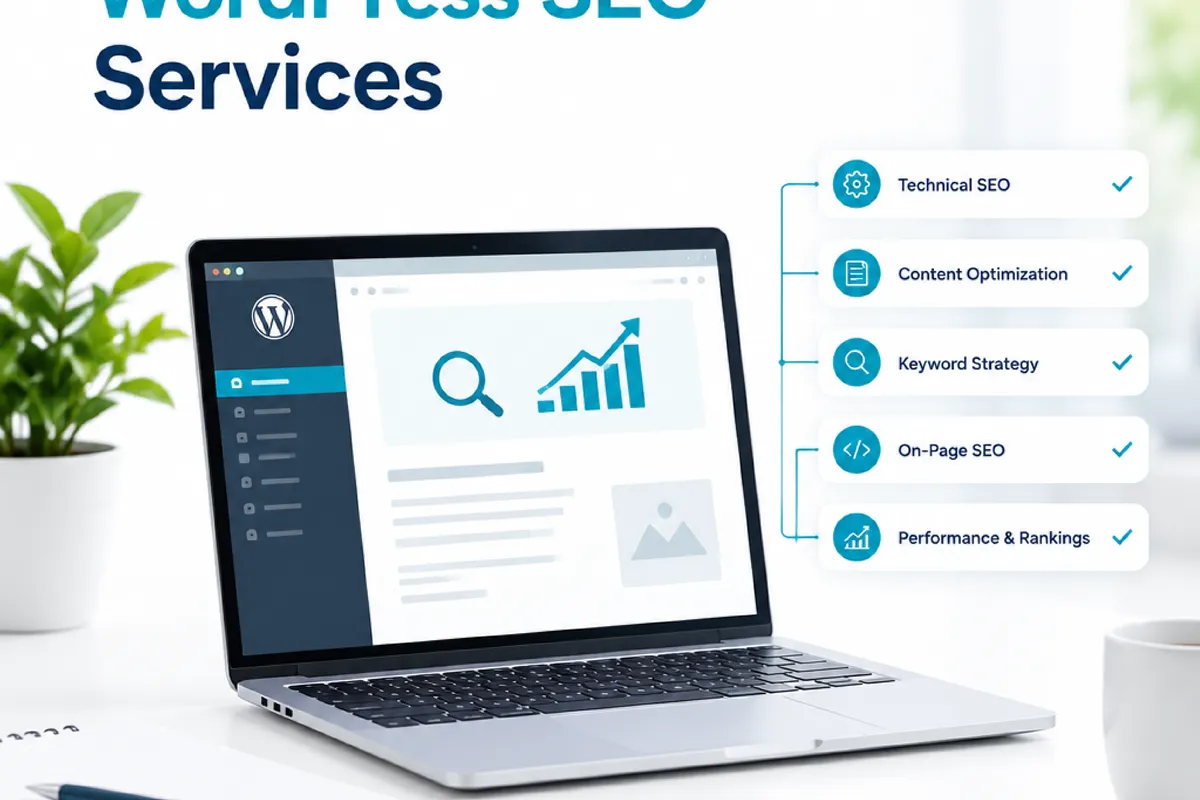
WordPress SEO services help site owners improve how search engines discover, understand, and present their pages. The work may include a technical review, improvements to important content, local visibility tasks, ethical link building, and reporting. SEO Deep Insights describes its WordPress service as covering SEO, Answer Engine Optimization (AEO), and Generative Engine Optimization (GEO), alongside those core activities.
AEO focuses on making useful information easier for answer-based search experiences to interpret. GEO considers how a brand and its content may be represented in generative search results. These areas still rely on solid fundamentals: accessible pages, clear information, accurate business details, and content that addresses real questions. They are not separate shortcuts around site quality.
This type of support may suit a business whose WordPress site has grown without a clear search strategy, a team that lacks time or technical capacity to address recommendations, or a site that attracts visitors but does not convert enough of them into inquiries. It can also help a business that serves a defined local area and needs its location, services, and contact information presented consistently.
There is no single checklist that fits every WordPress site. A small local service business may need accurate location pages and a few technical corrections. A larger site with many service pages may need attention to duplicate content, internal links, or how similar pages are organized. The provider should explain which needs apply to your site, and why.
How a WordPress SEO audit becomes a prioritized plan
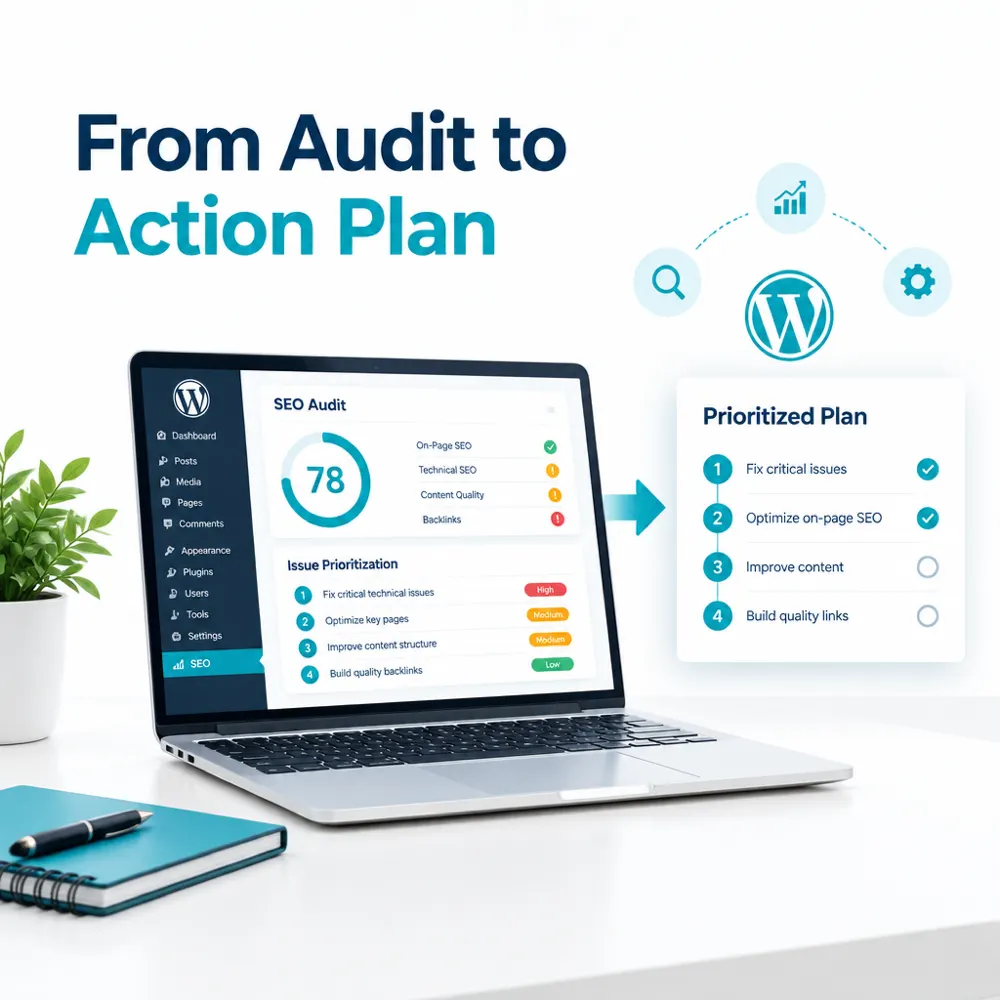
An audit should create a usable picture of the site, not just a long list of warnings from tools. It usually involves reviewing how search engines can reach and interpret important pages, checking how site content matches the business’s services, and identifying obstacles that may affect visibility or lead generation. The findings should connect to specific URLs or site patterns wherever possible.
For each recommendation, ask for a plain-language explanation of the issue, the pages or templates affected, the likely consequence of leaving it unresolved, and the proposed next step. A note that says “improve crawlability” is hard to act on. A more useful finding identifies the affected pages and explains whether a crawl issue is keeping key service pages from being discovered.
Prioritization is the work of deciding what to address first. Teams can weigh the likely business impact, the number and importance of affected pages, the effort required, and dependencies. For example, a template-level problem affecting every service page may deserve attention before a small wording change on one low-traffic post. But a warning should not be treated as urgent just because an audit tool labels it that way.
- Confirm the affected pages. Check whether the issue applies to important pages, a reusable template, or a small set of URLs.
- Understand the consequence. Determine whether the problem blocks access, creates confusing page signals, or has little practical effect.
- Identify who can make the change. Some tasks need a developer, while others can be handled by a content editor or site owner.
- Record the decision. Keep the recommendation, owner, status, and verification method together so the team can follow through.
This approach helps prevent two common problems: treating every audit finding as equally important and paying for a review that never turns into completed work. A useful audit gives your team a manageable order of operations, with room to revise priorities if business needs or site conditions change.
Which technical fixes should be handled first?
Technical SEO is the work of helping search engines access and interpret a website, while also making sure the site works well for people. On WordPress, some issues come from the way a site is configured, while others may relate to a theme, plugin, custom development, or hosting setup. A recommendation should identify the likely source rather than assume that every problem can be solved in the WordPress editor.
Start with issues that affect important pages or repeat across the site. Check whether key pages can be crawled and indexed, whether internal links point to the right versions of those pages, and whether the site has accidental duplicate or outdated URLs. “Indexed” means a search engine has included a page in its searchable database. A page’s presence in that database is not the same as a guarantee that it will rank prominently.
Other checks can include page titles and descriptions, heading structure, broken internal links, mobile usability, and page speed. The right priority depends on what the audit finds. For instance, a site-wide mobile issue deserves a different response from a single broken link in an older article. Likewise, a plugin-generated alert may need investigation before anyone changes settings that could affect other parts of the site.
Before implementing technical changes, agree on access, responsibilities, and a way to test the result. For larger changes, keep a record of the original setting and use a staging site when available. Afterward, verify the affected URLs, check that important pages remain accessible, and monitor for unintended effects. If a proposed fix involves custom code, site security, or complex hosting changes, ask a qualified developer to review it.
A technical recommendation is only useful when someone can explain its impact, implement it safely, and confirm that the intended pages still work afterward.
How content improvements and local visibility fit together
Content work should begin with the questions a potential customer needs answered, not a target word count. Review the pages that describe your main services, products, or locations. Is it clear what you offer, who it is for, where you operate, and what the next step is? Does each page provide information that is specific to its purpose, or does it repeat the same general claims as several other pages?
When revising a page, preserve accurate details and make the information easier to use. Give the page a clear subject, organize related points under descriptive headings, and link to relevant pages on the same site. Where a service has important limits or requirements, state them plainly. These improvements can help visitors make a decision and give search systems clearer context, but they do not guarantee a particular placement in search results.
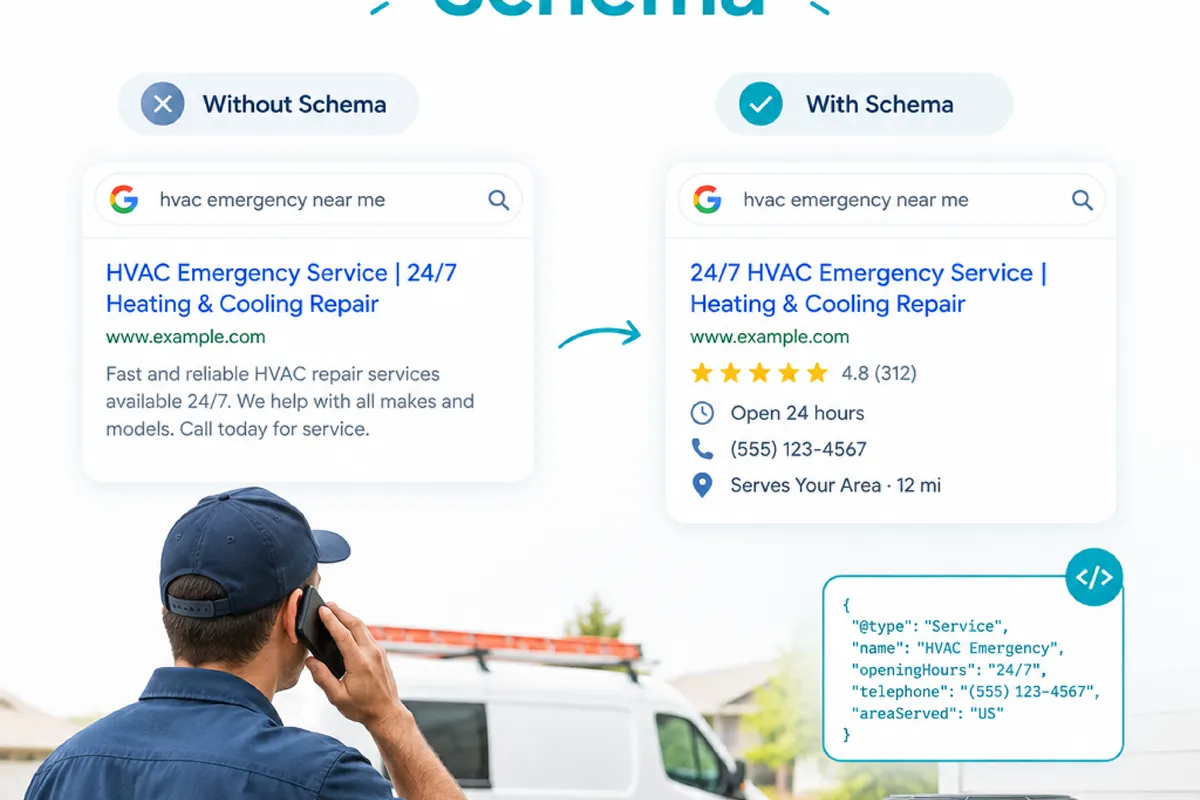
Local visibility matters when customers search for services in a specific city, neighborhood, or service area. Review whether your site gives consistent, accurate details about your business location, contact information, service coverage, and opening hours where relevant. A local landing page should explain what you do in that area rather than swapping place names into a generic template. If the business serves customers at their location, be clear about the actual service area.
Local pages also need a sensible role in the site structure. Link to them from relevant service or location sections, and make sure visitors can find contact or inquiry options without hunting. Avoid creating many near-identical pages for places you do not genuinely serve. Thin location pages can confuse visitors and do not provide a strong reason for a search engine to treat each page as useful.
How to choose a service scope and approach link building
Choose a scope based on the work your site needs and the people available to carry it out. Some businesses need an audit and a prioritized plan because they have an in-house developer or editor. Others need support with implementation as well as recommendations. Ask whether the provider will make changes directly, prepare instructions for your team, or coordinate with your existing developer. Clarify what is included before work starts.
Review the provider’s approach to technical fixes, content, local visibility, ethical link building, and reporting. SEO Deep Insights’ wordpress seo services page describes support across SEO, AEO, GEO, technical improvements, local visibility, content, ethical link building, and reporting tied to leads and revenue. Use that scope as a reference point, then confirm which activities fit your site and business priorities.
Link building is the process of earning links from other websites to yours. A responsible approach should focus on relevant, legitimate reasons for another site to reference your business or content. Ask how opportunities are evaluated, how placements are obtained, and what will be reported. Be cautious if a provider cannot explain its methods or proposes large numbers of links without discussing relevance and quality.
Before agreeing to work, request a clear description of deliverables and decision points. Useful questions include:
- Which findings will be addressed first, and what criteria determine priority?
- Who is responsible for making changes, and what access will they need?
- How will content recommendations be reviewed for accuracy by someone who knows the business?
- How will local information be checked and kept consistent?
- What does the provider count as a lead, and how will reporting distinguish organic activity from other sources?
Be wary of a scope that guarantees rankings, treats every warning as a crisis, or recommends changes without explaining trade-offs. Search performance depends on many factors, including competition, site history, the quality of implementation, and how people respond to the pages. A trustworthy service should describe its work and limits clearly rather than promise outcomes it cannot control.
What useful reporting looks like, and what to do next
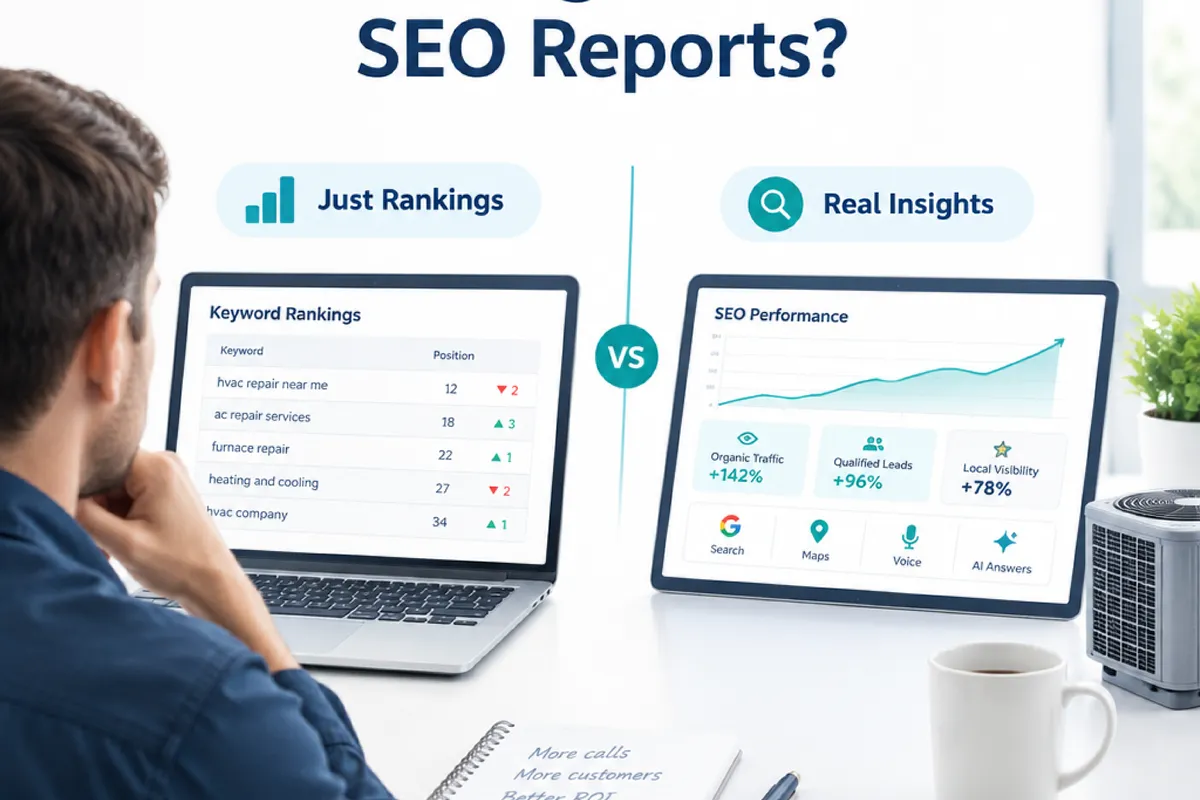
Reporting should help you understand both the work completed and what happened afterward. A list of tasks can confirm activity, but it does not show whether that activity supported the business. Ask for reporting that separates implementation updates from performance measures and explains what each measure can and cannot tell you.
Search visibility and organic traffic can help show whether people are finding relevant pages. Those measures are useful, but they are not the final business outcome. If your goal is more qualified inquiries, discuss how leads are defined and tracked. A lead might be a completed contact form or a phone call, depending on the business. Make sure the measurement method is practical, consistent, and agreed on in advance.
Leads and revenue can be difficult to attribute perfectly. A customer may discover a business through search, return later through another channel, and then make contact. Reporting should be transparent about what it can connect to organic search and where the data has limits. Ask how conversions are measured, whether key forms or calls are tracked, and how changes to the site or measurement setup might affect comparisons over time.
To prepare for a conversation with a provider, gather a few basics: the business’s main goals, priority services or products, important locations, existing site access and responsibilities, and any recent changes that may have affected the site. Then ask for an initial assessment that connects findings to a proposed sequence of work. You do not need to diagnose every technical issue yourself, but you should be able to understand why the recommended tasks matter.
Once work begins, keep a shared record of recommendations, owners, implementation dates, and checks completed. Review progress at regular intervals and revisit priorities when new information appears. The most useful WordPress SEO engagement is not the one with the longest audit or the most activity. It is the one that makes the work understandable, implements relevant improvements responsibly, and reports honestly on the signals that matter to your business.