Bing Webmaster Tools is pushing AI visibility reporting into a more practical era. With the global preview of its expanded AI performance report, publishers can now look beyond simple citation counts and start analyzing the context behind AI-generated visibility.
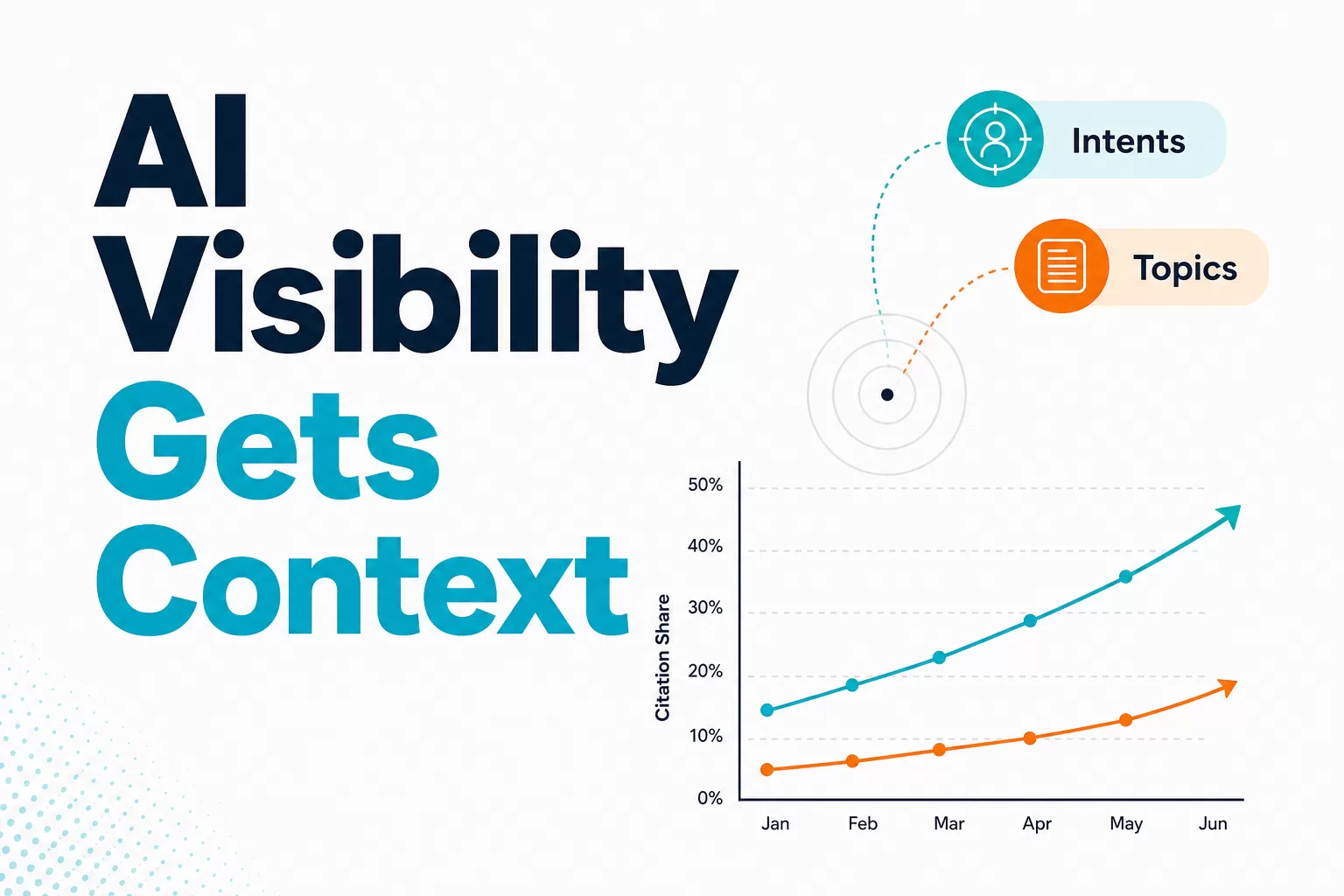
The update introduces four reporting lenses—Intents, Topics, Citation Share, and Compare—that help SEO teams understand not just whether content was cited, but why it surfaced, what theme it belongs to, how much citation presence it owns, and how that presence changes over time.
For AI search optimization, this is the key shift: visibility is no longer just about being found. It is about being understood in the right context.
That distinction matters for publishers, ecommerce brands, local businesses, and editorial teams alike. AI search systems do not simply match keywords; they synthesize meaning, infer user goals, and group sources semantically. Bing’s new reporting reflects that reality.
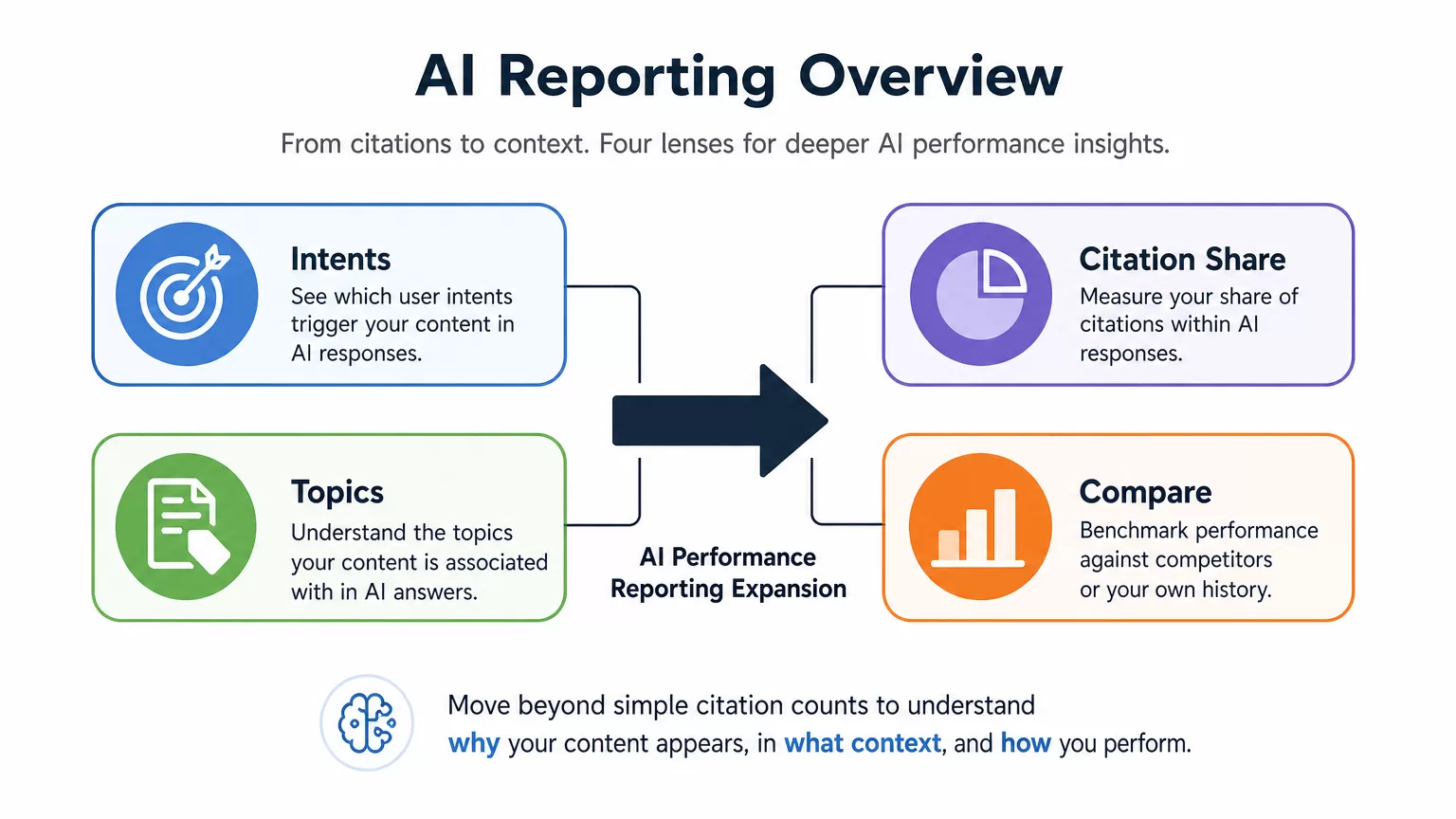
What Bing added to AI performance reporting
For hands-on help with this topic, explore SEO Services for Renewable Energy.
The expanded report reframes AI visibility as an observational measurement layer rather than a traditional ranking dashboard. Instead of treating AI citations like a leaderboard, Bing is exposing the signals that explain how content participates in AI-generated answers.
Here is what the new reporting layer adds:
- Intents to group grounding queries by user purpose.
- Topics to cluster related queries into broader thematic areas.
- Citation Share to estimate your site’s share of citations for a given grounding query.
- Compare to overlay time periods and spot movement in visibility.
That combination changes the workflow for SEO teams. Instead of asking only, “How many citations did we get?” the better questions become: Which intent did we satisfy? Which theme are we associated with? Are we gaining or losing share in AI responses?
For teams already investing in Answer Engine Optimization (AEO) or Generative Engine Optimization (GEO), this is a meaningful upgrade because it makes AI visibility more measurable inside a first-party webmaster tool.
How Intents changes query analysis
Intents groups grounding queries by the user’s purpose rather than by exact wording. Bing’s examples include categories such as Informational, Commercial, Navigational, Learn and Solve, Research, Creation, and Local.
That matters because intent is often the real reason a page is cited. A product page may show up in commercial comparison experiences. A guide may appear in research-heavy prompts. A local service page may surface when the system interprets a query as location-specific.
Intent-level reporting helps teams see whether content is serving the right job, not just attracting the right phrase.
For SEO teams, this opens up a more useful analysis layer:
- Are informational pages being surfaced where educational depth matters?
- Are commercial pages supporting comparison and decision-making prompts?
- Are local pages appearing in location-aware AI experiences?
- Are pages built for one intent being pulled into another?
That last question is especially important. If a page is repeatedly cited in a commercial context but was written like a broad informational article, the content may need better structure, clearer product framing, or more decisive language. In other words, intent alignment becomes a content quality issue, not just a reporting metric.
For publishers, Intents is also a reminder that AI visibility is not purely keyword-driven. It is increasingly shaped by how well content satisfies a user need in a specific context.
Why Topics matter for thematic visibility
The Topics layer is arguably the most strategic part of the update for editorial planning. Bing is clustering related grounding queries into broader themes, which mirrors how AI systems reason across concepts rather than isolated search terms.
Consider a cluster of queries like “solar panels,” “solar energy efficiency,” and “residential solar installation.” A topic layer may group those under a broader umbrella such as Solar Energy. That is a much more natural way to understand content performance than tracking each phrase independently.
This is where AI search analytics starts to look very different from classic SEO reporting. If your site consistently appears across a topic cluster, that signals thematic authority. If it only appears for one narrow query variant, your visibility may be more fragile than it looks.
Topics help teams answer questions like:
- Which content pillars are gaining AI visibility?
- Where is our editorial coverage too thin or too fragmented?
- Are we building semantic breadth around a subject, or just chasing phrases?
- Which themes are associated with our brand in AI-generated responses?
For content publishers, this has direct planning implications. Topic-based reporting encourages deeper coverage, better internal linking, and stronger content clusters. It also supports a more realistic view of how AI systems interpret expertise: not page by page, but theme by theme.
Citation Share explained
Citation Share measures the percentage of citations your site receives out of all citations shown for the same grounding query. That makes it a relative visibility metric, not a raw volume metric.
Why does that matter? Because citation counts alone can be misleading. A page may be cited often, but if many other sources are also being cited, the site’s actual presence in the response ecosystem may still be limited. Citation Share helps reveal whether a publisher is dominating a query’s citation space or simply participating in it.
Citation Share is not a traffic metric and not a ranking score. It is a visibility lens.
That distinction is crucial. Bing is explicitly positioning this as an observational metric, not a competitive leaderboard. It does not expose competitor domains, and it should not be treated like a share-of-voice scoreboard in the classic SEO sense.
Still, the strategic value is significant. Citation Share can help teams identify:
- Where they have strong citation presence versus weak presence.
- Which queries are crowded with multiple sources.
- Whether a content update improves relative visibility.
- How stable citation presence is across different AI search experiences.
For teams focused on AI visibility, this is the kind of metric that makes reporting more actionable. It helps separate “we were cited” from “we mattered in the response.”
Compare for trend analysis
The Compare feature adds the time dimension that AI search reporting has been missing. By overlaying a previous period onto the current report, teams can see whether visibility is rising, flat, or slipping.
That matters because AI citation behavior is dynamic. It can shift because of model updates, freshness signals, partner refresh cycles, user behavior, and broader web changes. A citation gain one week may not mean the same thing the next week.
Compare helps answer questions such as:
- Did visibility improve after a content refresh?
- Are certain topics gaining traction seasonally?
- Is a citation drop tied to content staleness or a broader system change?
- Are we seeing sustained growth or just temporary volatility?
For SEO teams, this is especially valuable because it moves AI reporting closer to the way we already evaluate organic search performance: through trends, not snapshots. In practice, Compare makes Bing Webmaster Tools more useful for ongoing monitoring, not just one-time inspection.
SEO implications for publishers
The biggest takeaway from Bing’s expanded AI performance reporting is that AI search optimization is becoming a semantic discipline. Keyword tracking still matters, but it is no longer enough to explain how content is discovered, interpreted, and cited in AI-generated experiences.
Publishers should start thinking in three layers:
- Intent: What user need does this content satisfy?
- Topic: What broader theme does this page belong to?
- Citation dynamics: How often are we cited, how much share do we hold, and how is that changing?
That framework has practical consequences:
- Content audits should map pages to intent categories and topic clusters.
- Editorial planning should prioritize thematic depth, not isolated keywords.
- Reporting workflows should separate absolute citations from relative Citation Share.
- Optimization priorities should include freshness, clarity, and contextual relevance.
There is also a vertical-specific opportunity here. Commerce sites may see stronger AI visibility in comparison-driven prompts. Educational publishers may perform better in research and learning contexts. Local businesses may benefit from intent signals tied to location and service need. Each of those patterns can now be measured more clearly.
For teams building broader AI search programs, this is a natural place to connect reporting with AEO, GEO, and content strategy workflows. The goal is not to chase every citation. The goal is to understand how your content is interpreted by AI systems and where you have durable thematic presence.
In the AI era, visibility is less about exact-match keywords and more about semantic fit, topical authority, and sustained citation presence.
Bing’s new reporting capabilities do not solve AI measurement completely, but they do move the industry in the right direction. For SEO teams, that means better diagnostics, better editorial decisions, and a clearer path to measuring AI visibility with less guesswork.
As the preview rolls out globally, the most effective teams will use these reports directionally: to identify patterns, validate content themes, and monitor how AI citation behavior evolves over time. That is where the real advantage begins.