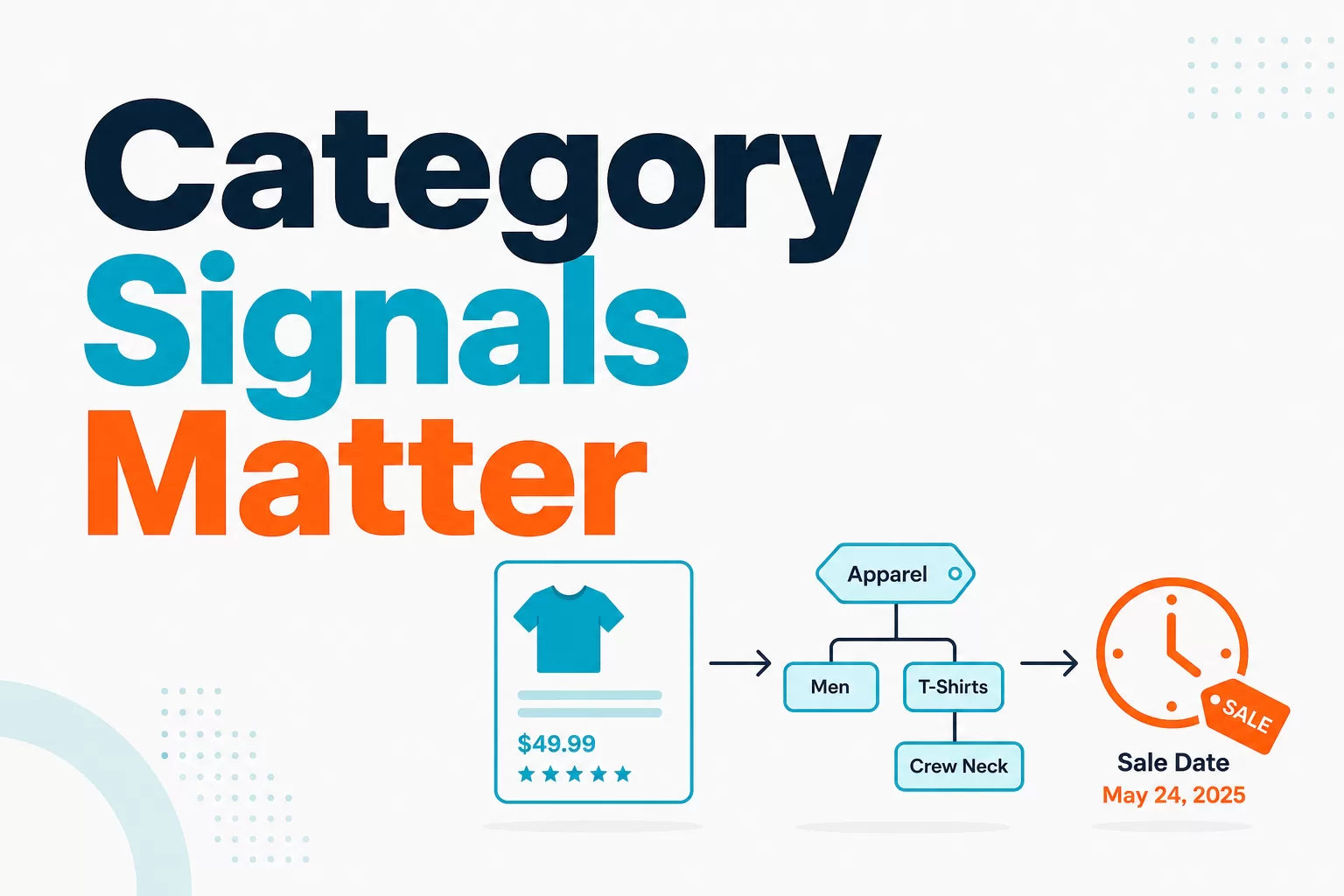
Google’s updated Merchant Listing structured data is less about adding another schema property and more about improving product data precision. For ecommerce teams, that shift matters. The closer your on-page markup matches your Merchant Center feed and Google’s product taxonomy, the easier it is for search systems to interpret what you sell, when it is on sale, and how it should appear in results.
That makes this update especially relevant for teams managing large catalogs, frequent promotions, or complex product hierarchies. If your product page schema, feed attributes, and merchandising calendar do not line up, you can end up with inconsistent product visibility or stale pricing signals. If you are already investing in SEO Services for E-commerce, this is the kind of schema work that protects both discoverability and result accuracy.
Key idea: Google is rewarding structured data that reflects real merchandising logic, not just schema completeness.
What changed in merchant listing schema
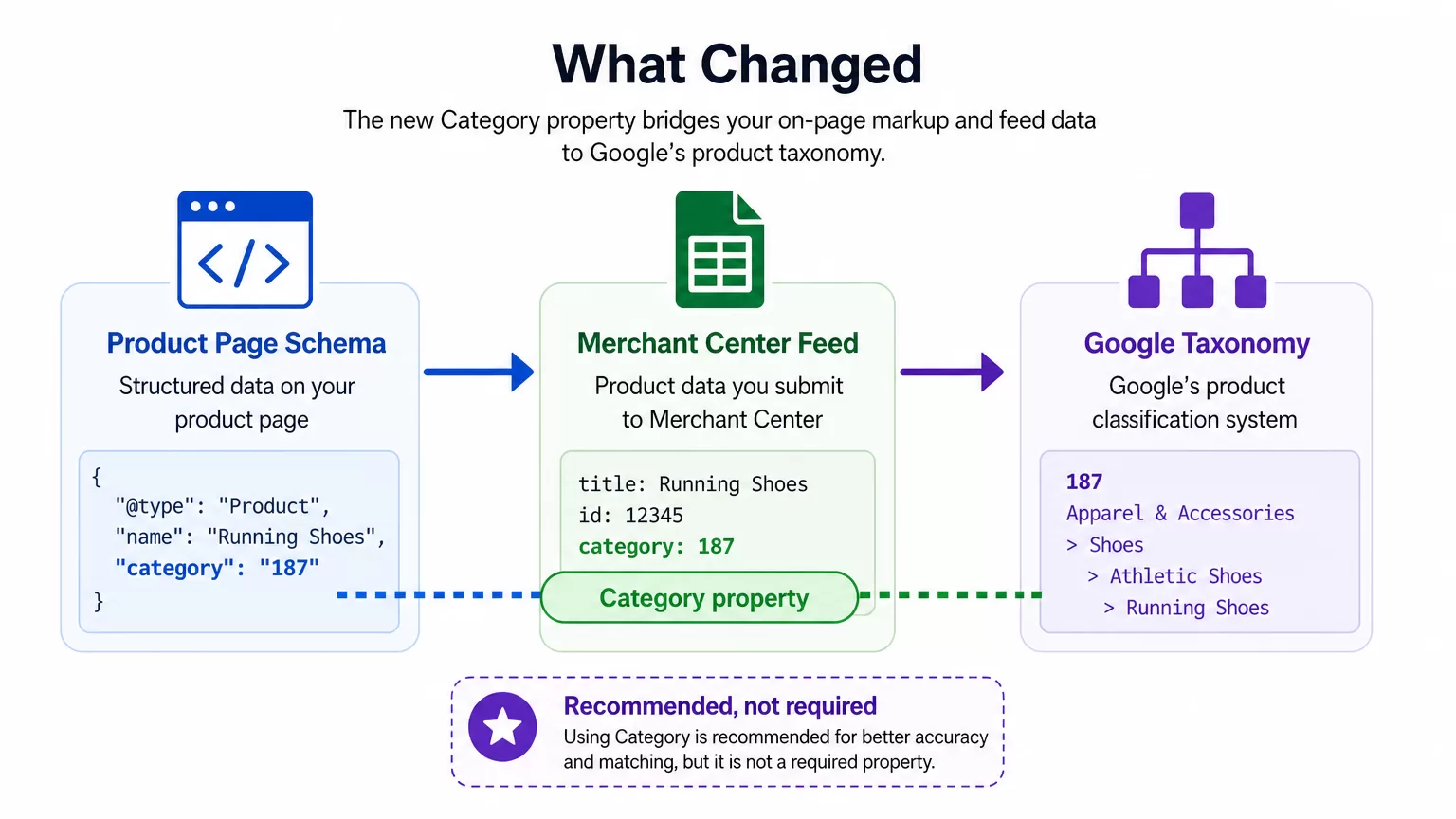
The most important change is the introduction of a Category property for merchant listing markup, along with clearer guidance on how to express sale timing. The new category support gives merchants a more explicit way to classify products on the page itself, rather than relying only on feed data or loosely defined product names.
Practically, this means ecommerce teams now have a better path to align three layers that often drift apart:
- Product page schema on the site
- Merchant Center feed data
- Google’s product taxonomy
The update is also important because the Category property is recommended, not required. That detail matters. It signals that Google sees category precision as a quality improvement, not just a validation checkbox. In other words, the markup should help Google understand the product context more clearly, especially when product naming alone is ambiguous.
For SEO teams, the strategic takeaway is simple: this is a taxonomy alignment update. It is not about stuffing more schema into a page. It is about making sure the page says the same thing your feed says, in the same language Google expects.
How CategoryCode works
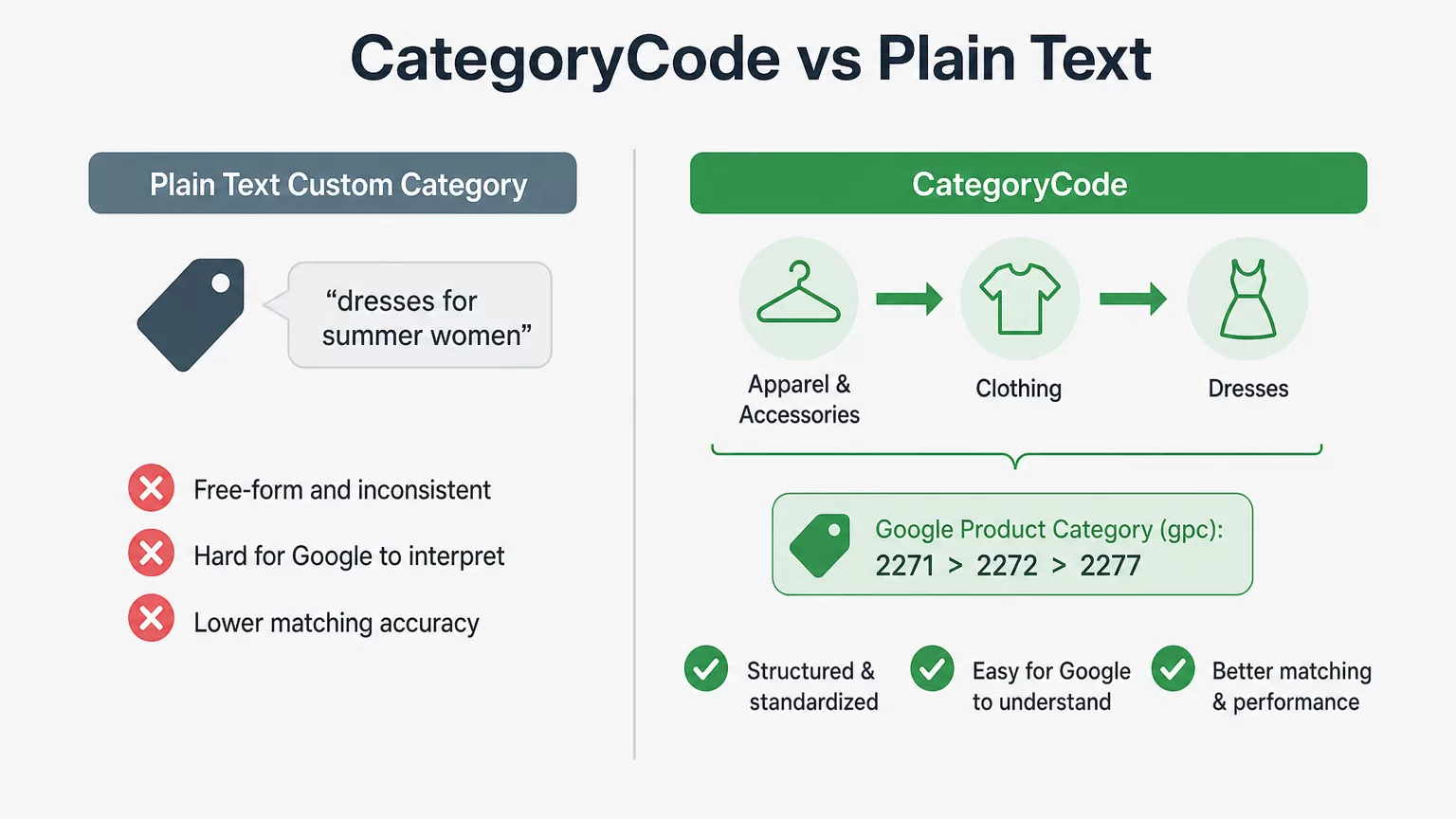
Google’s category guidance supports two formats: plain text and CategoryCode. Both can be useful, but they serve different purposes.
Plain text category values
Plain text behaves more like a custom product type. It can be useful for internal merchandising labels, seasonal collections, or store-specific naming conventions. The tradeoff is that it is less standardized. If your internal label does not map cleanly to Google’s taxonomy, the signal may be weaker or more ambiguous.
CategoryCode for Google Product Category
CategoryCode is the structured method for declaring a Google Product Category directly in on-page markup. It is the cleaner option when you want your product schema to mirror Google’s taxonomy more precisely. In implementation terms, CategoryCode uses:
- @type = CategoryCode
- inCodeSet pointing to the Google Product Taxonomy URL
- codeValue containing either a category ID or a full category path
A common example would be a path such as Apparel & Accessories > Clothing > Dresses. The separator is >, and each path segment must include at least one letter. Google also supports category IDs, which can be useful when your taxonomy mapping process is driven by a master catalog or feed management system.
Implementation rule: Use plain text for internal nuance, but use CategoryCode when you want Google’s taxonomy to be explicit in the page markup.
For larger ecommerce sites, the most reliable workflow is to map category values in a central taxonomy layer first, then push that mapping into both the feed and the page schema. That reduces drift and makes audits much easier. Teams focused on Technical SEO Services often find this is where structured data begins to pay off operationally, not just in search features.
Sale duration markup explained
The second major part of the update is clearer guidance around sale duration markup. Google now documents how to mark the exact period during which a promotional price is valid, using three key properties:
- priceValidUntil
- validFrom
- validThrough
Together, these properties define the start and end of a sale window. That matters because expired promotions can otherwise linger in search results and create a poor user experience. If a sale has ended, the markup should not suggest that the deal is still active.
All sale timing values should be formatted in ISO 8601. That may sound like a small detail, but it is one of the most common failure points in ecommerce schema implementation. A date that is technically present but operationally wrong can lead to stale snippets or, in some cases, prevent the listing from displaying as expected if the date is in the past.
Warning: Sale markup is only as accurate as the merchandising workflow behind it. If pricing changes daily, the schema needs to be updated automatically or through a tightly controlled publishing process.
In practice, this is where schema strategy and commerce operations intersect. The goal is not to decorate pages with promotional markup. The goal is to ensure search results reflect the same pricing reality that shoppers see on the page and in the feed.
SEO impact and best practices
This update does not mean that more schema automatically equals better visibility. The real SEO benefit comes from accuracy, consistency, and taxonomy fidelity. When Google sees aligned product page markup, feed data, and category structures, it has fewer conflicting signals to reconcile.
That can improve how product information is interpreted across shopping and organic surfaces, especially for catalogs with many similar products. It can also reduce the risk of mismatched promotions or category confusion in search results. For ecommerce SEO, that is often more valuable than chasing a generic “schema complete” score.
Best practices for implementation:
- Match page schema to feed data as closely as possible.
- Use CategoryCode when a Google Product Category is available.
- Keep custom text categories concise and avoid messy internal labels.
- Update sale dates in real time or through a reliable automation layer.
- Audit expired promotions so stale sale prices do not remain in markup.
- Validate structured data regularly after merchandising or catalog changes.
If your team is also working on broader schema and AI search visibility, this is a good place to connect the dots. Structured data increasingly supports both traditional product discovery and machine-readable product understanding, especially as search systems become more context aware.
Implementation checklist
Use this checklist to operationalize the update across SEO, merchandising, and development teams:
- Map each product to a primary Google Product Category.
- Decide whether the page should use plain text category values, CategoryCode, or both.
- Confirm that the Merchant Center feed uses the same category logic as the page.
- Add or verify priceValidUntil, validFrom, and validThrough where promotions apply.
- Ensure all dates are in ISO 8601 format.
- Remove expired sale dates from templates and cached schema outputs.
- Test structured data on representative product pages, including variants and sale items.
- Review category mapping whenever the catalog, taxonomy, or merchandising rules change.
For teams managing ecommerce at scale, the most effective approach is to treat structured data as a living data layer. It should evolve with the feed, the catalog, and the promotion calendar. That is how merchant listing schema becomes a visibility asset instead of a maintenance burden.
When implemented well, the updated category and sale-duration guidance can make search results more accurate, product context clearer, and promotion signals more trustworthy. That is a strong outcome for both users and search performance.