What Google changed
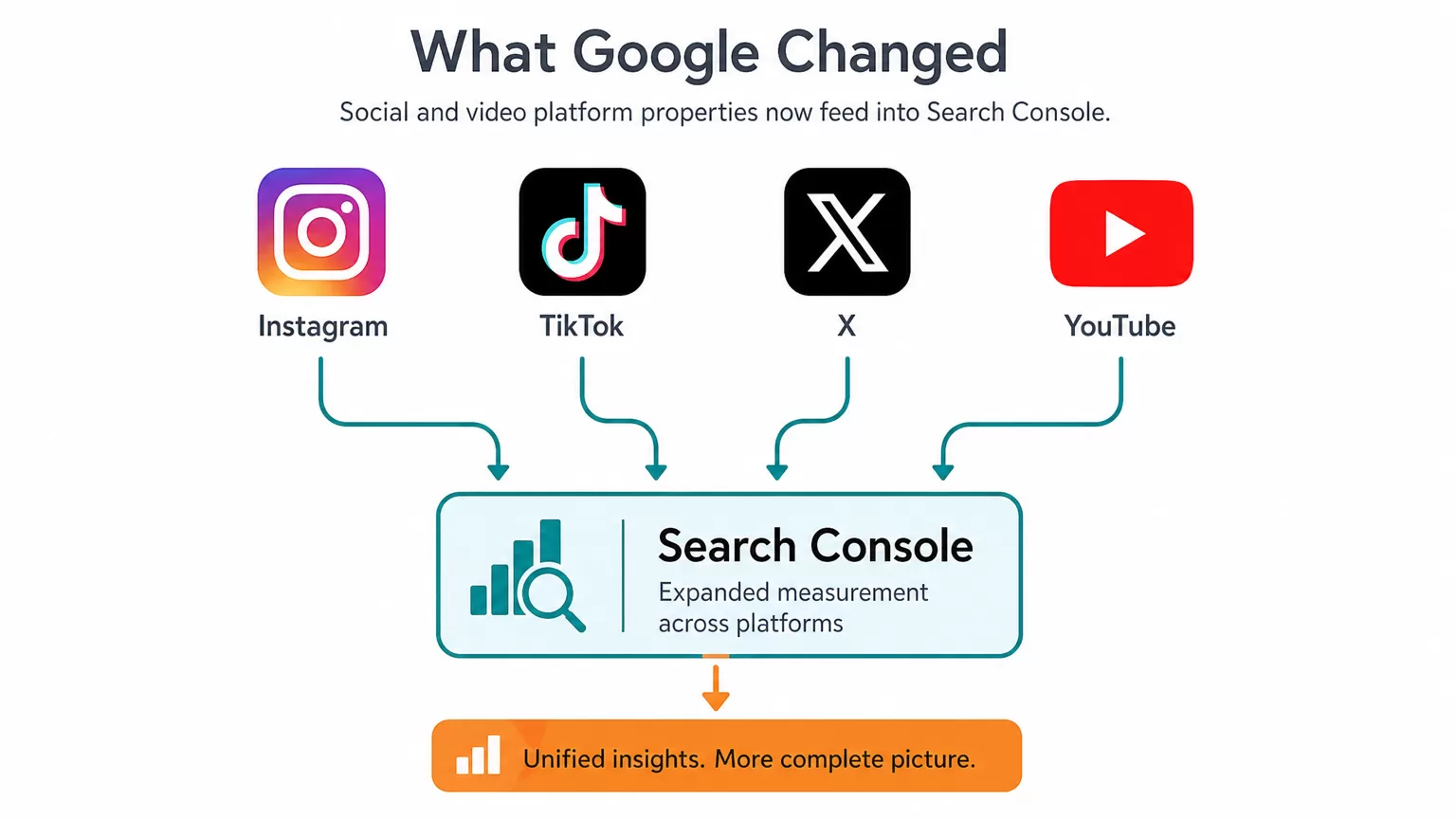
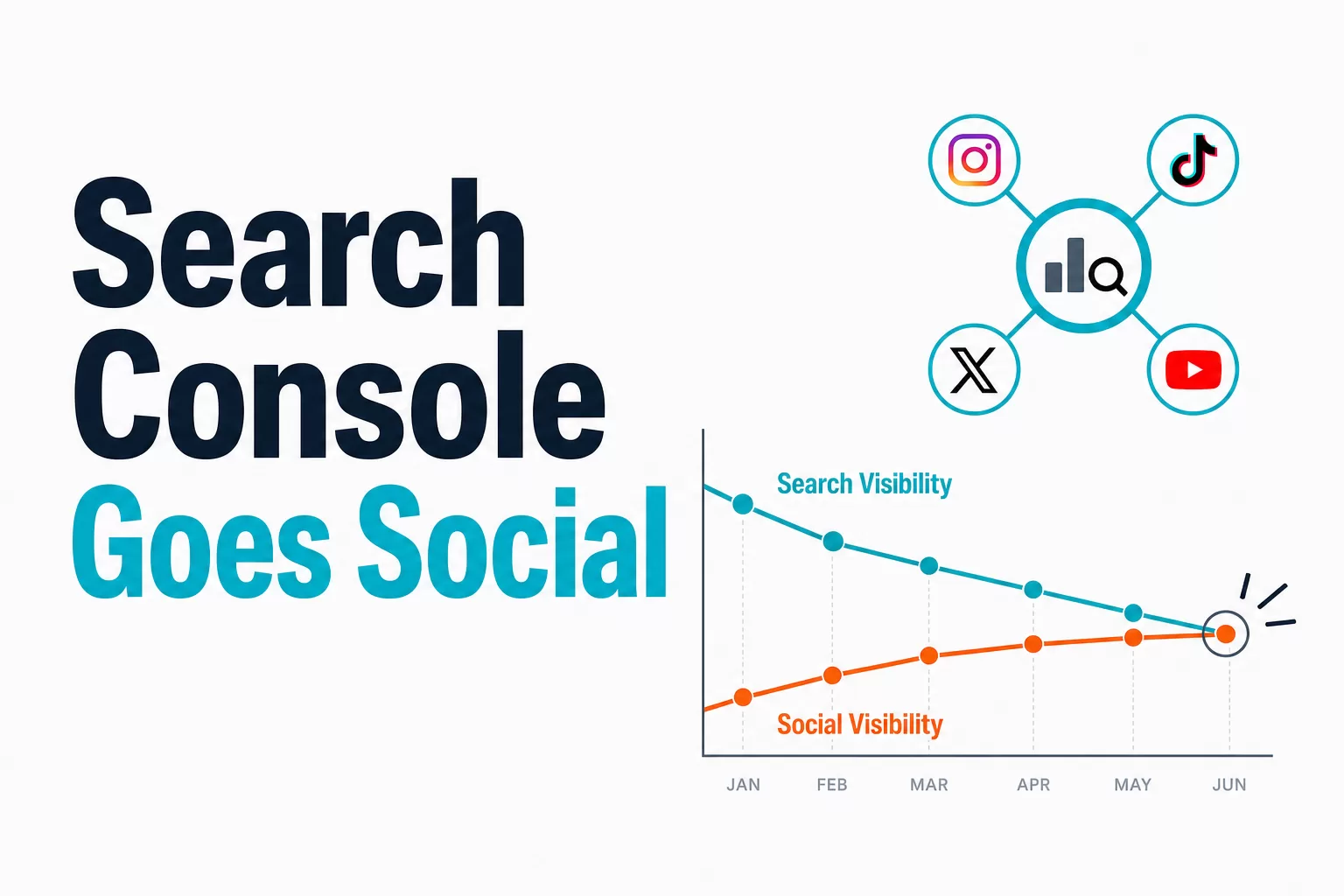
Google Search Console has expanded beyond traditional website and domain properties to support platform properties for Instagram, TikTok, X, and YouTube. That may sound like a product update, but the strategic meaning is bigger: Google is acknowledging that social and video content now belongs inside the measurement stack many SEO teams already use every day.
For years, Search Console has been the place where teams looked for query data, clicks, impressions, and technical signals tied to web pages. This update widens that lens. Social posts and videos are no longer treated as disconnected distribution assets. They can now be evaluated as part of the search journey, especially where Google Search and Discover surface creator and brand content.
In practical terms, Google is moving social visibility closer to SEO measurement, not farther away from it.
That shift matters for reporting, content planning, and even organizational ownership. If a TikTok clip or YouTube video can earn search demand, the team responsible for optimization needs a way to see that demand in the same ecosystem as website performance. For teams building a broader organic strategy, this is a strong reason to revisit how you define search visibility across channels. It also reinforces why measurement frameworks should not stop at page-level rankings; for a deeper framework, see Measure Search Performance Beyond Rankings.
Why platform properties matter
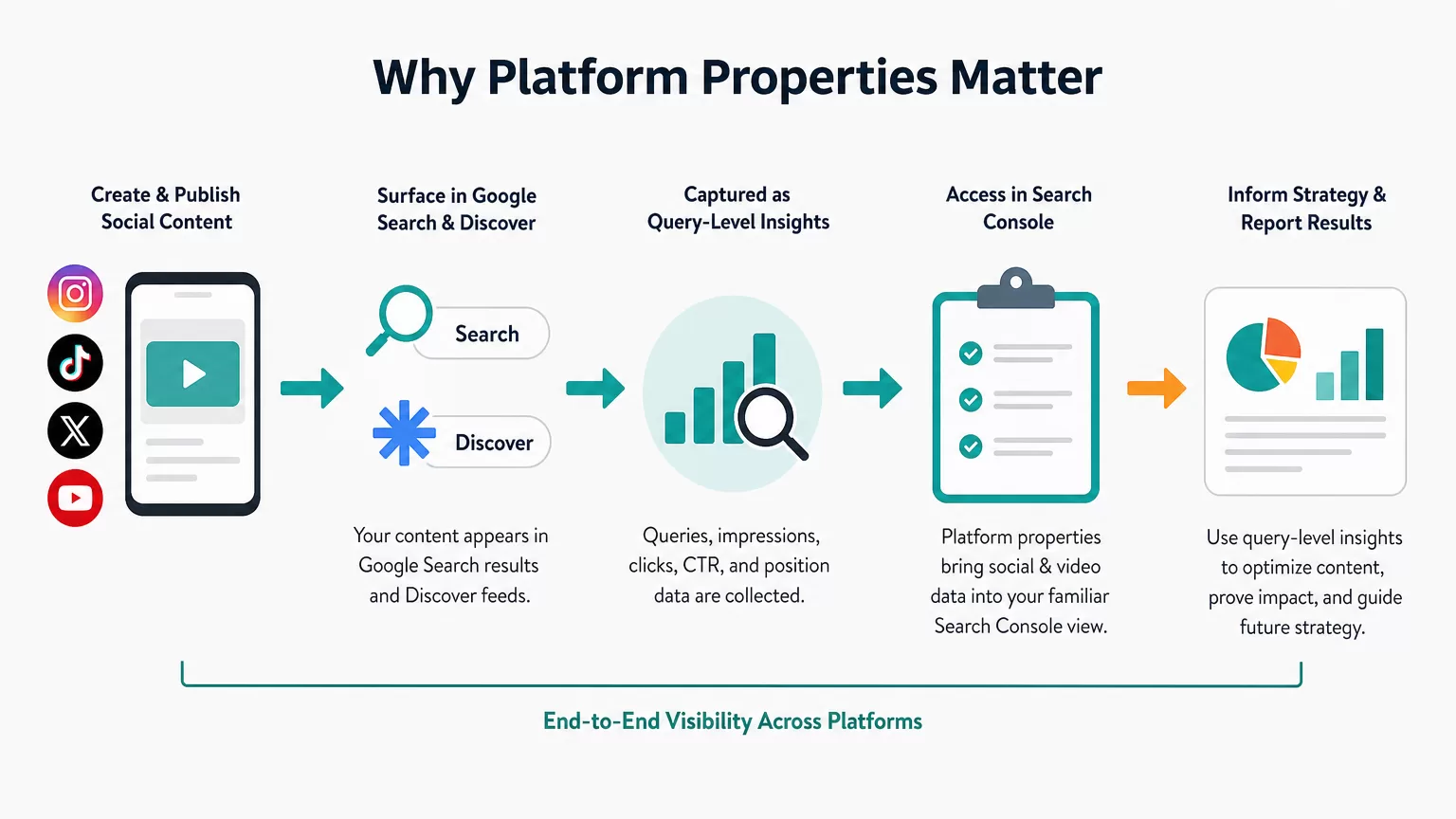
The biggest value of platform properties is not simply that they exist. It is that they bring social content performance into a reporting environment built for search analysis. That creates a more realistic picture of how people discover brands, creators, and topics across Google surfaces.
Search behavior is increasingly multi-step and multi-surface. A user may see a short-form video in Discover, search the brand name later, then return via a social post or video result. Without platform-level measurement, that journey gets fragmented. With Search Console support for these properties, teams can begin to connect the dots between query-level discovery, content format, and channel performance.
This matters especially for teams responsible for Instagram SEO, TikTok SEO, and YouTube Search Console workflows. These channels are often optimized for in-app engagement first, but they also influence branded search, topic discovery, and assisted traffic. The new property model makes it easier to evaluate which posts are actually generating search interest, not just likes or views.
- For SEO teams: social content can now be treated as search inventory.
- For content teams: post topics can be mapped to query demand.
- For leadership: reporting can show how creator assets contribute to visibility across Google surfaces.
That last point is important. If your brand invests in both content and distribution, the update supports a more unified view of performance. In many organizations, that is where the strongest strategic gains will come from.
How verification works
Verification is handled through the Search Console property selector or verification flow. Users choose one of the supported platforms, then complete the authorization steps for that account. In other words, Google is extending verification logic to properties that are not traditional domain names.
That may sound like a small UX detail, but it is a meaningful governance change. Search Console has historically been tied to site ownership and site verification. By allowing platform properties, Google is signaling that social and video accounts can be managed as first-class properties inside the same reporting system.
Verification is no longer just about proving control of a domain. It is about proving control of a visible search asset.
For agencies and multi-brand teams, this creates a few operational questions:
- Who owns access to each platform property?
- Should verification sit with the SEO team, social team, or a shared analytics owner?
- How will reporting permissions be documented across regions and business units?
Those workflow decisions matter because platform properties can blur traditional ownership lines. Social teams may publish the content, while SEO teams interpret the query data, and analytics teams manage reporting consistency. The best approach is usually a shared workflow with clear access control and a documented measurement process.
Which metrics are available
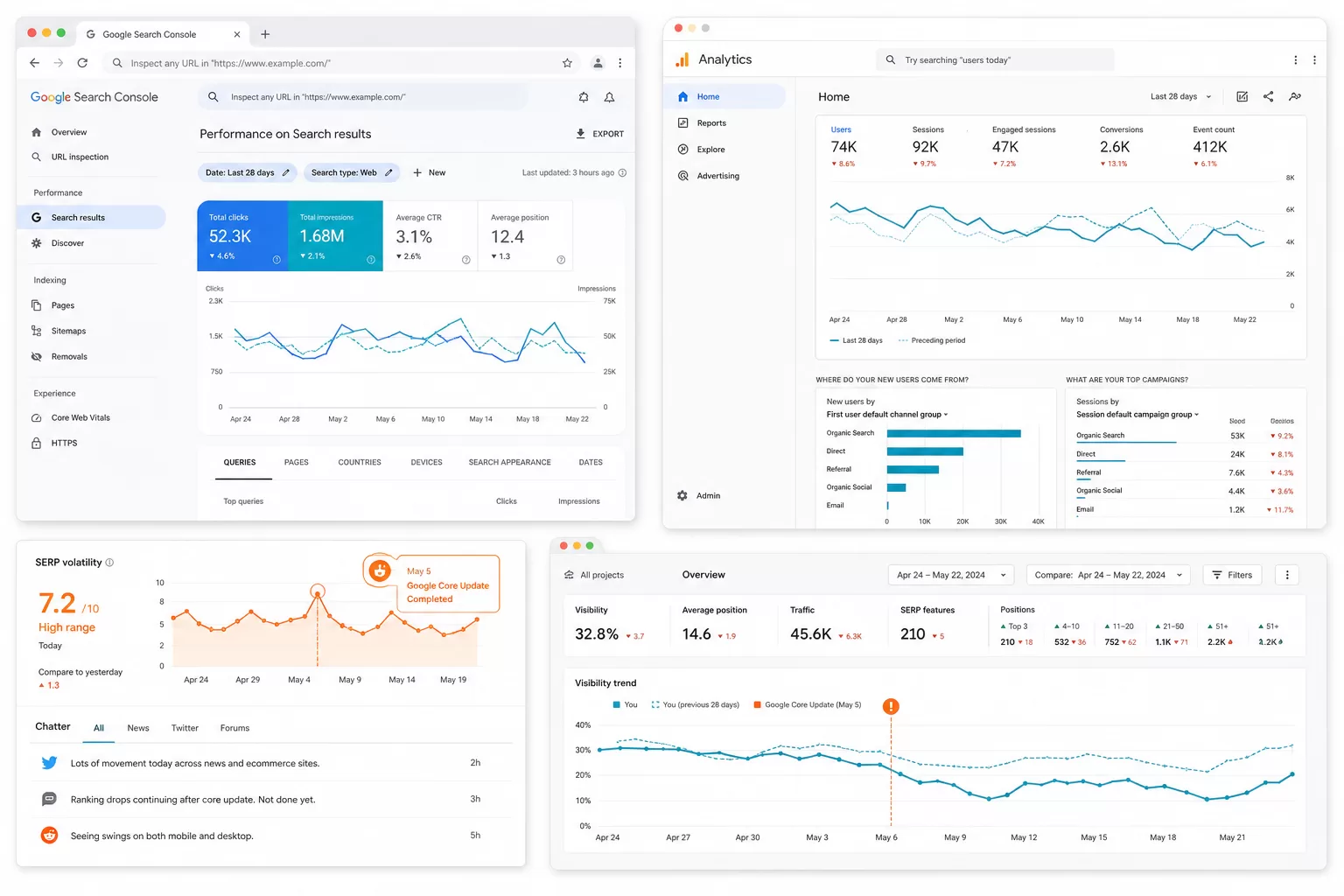
Google is integrating platform properties into the same reporting ecosystem used for website properties, with data appearing in Performance, Insights, and Achievements.
The Performance report is the most tactical layer. It surfaces metrics such as clicks and impressions, and it can help teams identify which posts and queries are driving visibility. That is especially valuable for understanding how a social post performs in Google Search or Discover, rather than only inside the native platform.
The Insights report is more directional. It is designed to show trends, top-performing content, and discovery patterns that help strategists understand what is resonating. For teams managing multiple channels, this can become the bridge between social planning and SEO content strategy.
The Achievements layer adds milestone-based measurement. Instead of focusing only on vanity metrics, it frames progress around thresholds such as total clicks from Google Search over the last 28 days. That is useful because it gives creators and brands a clearer sense of momentum.
- Performance: clicks, impressions, and post/query-level analysis.
- Insights: trend visibility and top content discovery patterns.
- Achievements: milestone tracking tied to recent search clicks.
For reporting teams, this means platform properties can become part of the same dashboard logic used for organic search. The result is less fragmentation between website analytics and social content reporting.
Implications for SEO and social teams
This update should change how teams plan content, not just how they report it. If social assets can surface in Google Search and Discover, then captions, titles, topics, and video framing all become part of a broader discoverability strategy.
For SEO teams, the key is to stop thinking of social as a separate performance universe. Platform properties create a path to measure whether a topic cluster is gaining traction beyond the website. That can influence editorial prioritization, internal linking strategy, and even keyword research. A topic that performs well on TikTok or YouTube may deserve a supporting article, landing page, or FAQ module on the site.
For social teams, the opportunity is to optimize for cross-platform search visibility. That does not mean turning every post into a keyword-stuffed asset. It means aligning content with the language people actually use when they search. Clear titles, descriptive captions, and topic consistency matter more when Google can read the performance trail across platforms.
For brands with ecommerce or product-led funnels, the implications are even broader. A product demo on YouTube, a behind-the-scenes clip on Instagram, and a trend-driven TikTok can all contribute to awareness that later shows up in branded search or assisted conversions. If your team also manages SEO Services for E-commerce, this is a strong reminder that product discovery often starts before a user reaches a product page.
Cross-channel measurement is no longer a nice-to-have. It is the only way to understand how discovery actually happens.
Teams that work across SEO and social should consider a shared reporting framework with these questions:
- Which topics earn the most search visibility across web and platform properties?
- Which social posts drive branded demand or Discover exposure?
- Which content formats create the strongest query overlap?
Limitations and rollout notes
As with many Google features, rollout appears to be gradual. That means availability may vary by account, region, or property type. Some users may see the new platform property options before others, and some verification flows may appear before the full reporting experience is broadly visible.
That phased rollout is worth planning around. Teams should avoid assuming the feature is universally available just because a colleague or client account can access it. The safest approach is to test access, document what is visible, and monitor whether Performance, Insights, and Achievements populate consistently.
There is also an important conceptual limitation: platform properties do not replace native analytics inside Instagram, TikTok, X, or YouTube. They add a search-centric layer. Native platform metrics still matter for engagement, retention, and audience growth, while Search Console adds visibility into how those assets are discovered through Google surfaces.
- Rollout may be gradual across accounts and regions.
- Verification may not appear identically for every user at first.
- Native platform analytics still matter for on-platform engagement.
In other words, this is not a replacement for social analytics. It is a bridge between social measurement and search measurement.
Strategic takeaways for measurement
The most important takeaway is simple: search visibility is becoming more distributed. Google is formalizing the idea that social and video content can be measured inside the same search ecosystem as websites. For SEO and content teams, that means the measurement model has to evolve too.
Here is the strategic response we would recommend:
- Unify reporting: combine website organic data with platform property data in one measurement view.
- Map topics to queries: use search terms to understand which social themes drive discovery.
- Rebuild workflows: assign clear ownership for verification, access, and reporting.
- Optimize for discovery: create social assets with Google Search and Discover in mind, not only in-app engagement.
- Measure beyond clicks: connect platform visibility to brand demand, assisted traffic, and downstream conversions.
For teams that want a stronger social execution layer around this shift, a dedicated Social Media Marketing workflow can help align publishing, discoverability, and reporting. The broader lesson is that SEO is no longer just about pages and rankings. It is about understanding how content moves across search, social, and discovery surfaces.
Google Search Console’s platform properties are a clear sign of where measurement is heading. The teams that adapt fastest will be the ones that treat Instagram, TikTok, X, and YouTube as part of the search ecosystem from the start.