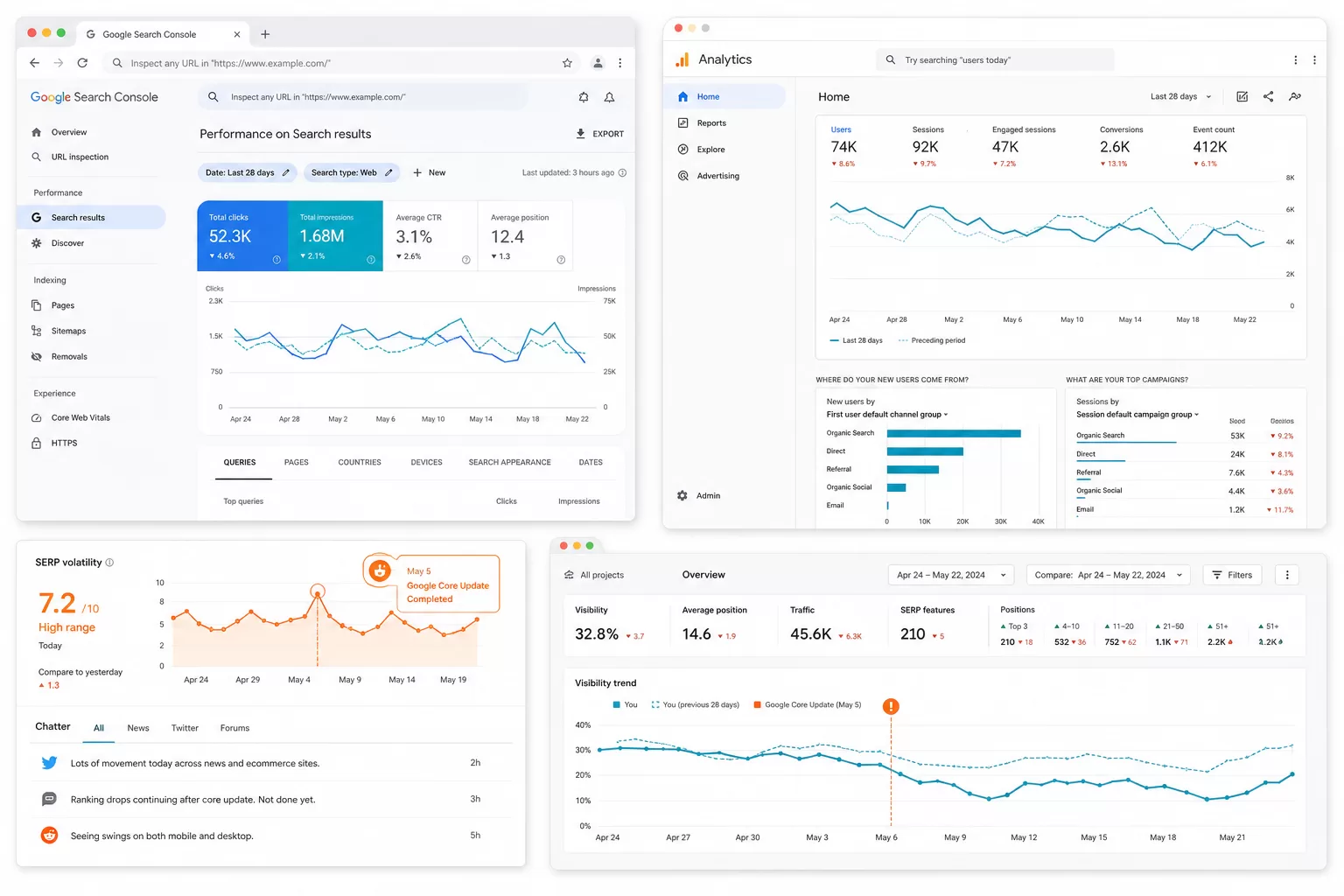
Google search ranking volatility rarely ends the moment a core update is declared complete. In practice, the SERPs often keep moving for days or even weeks as Google recalibrates how it ranks pages across different query sets, devices, and markets.
That is the situation SEOs are watching now: continued instability in rankings, uneven traffic movement, and a mix of winners and losers across news, ecommerce, and informational sites. The important question is not whether every fluctuation is meaningful. It is how to tell when the noise is becoming evidence.
Key takeaway: when rankings stay unstable after a core update, the right response is not panic. It is structured validation, segmentation, and disciplined monitoring.
What the volatility signals mean
When multiple volatility tools light up at the same time and practitioners across the SEO community report the same thing, that usually points to a real shift in the search landscape. It does not automatically mean a brand-specific problem. In broad volatility periods, Google is often re-evaluating relevance and quality signals across many site types at once.
That is why the current wave of SERP volatility matters. It appears to be affecting a wide mix of sites, including publishers, shops, and informational pages. Some domains gain visibility while others lose it. That redistribution is a classic sign of algorithmic recalibration rather than a narrow technical failure on one website.
- Broad volatility usually means Google is rebalancing rankings across many query classes.
- Mixed winners and losers suggest a systemic shift, not just one site issue.
- Traffic instability can show up before rankings fully normalize in your tools.
For teams tracking Google Ranking Volatility Keeps SEOs on Edge, the lesson is consistent: treat community chatter and tool movement as signals to investigate, not conclusions to act on immediately.
Why rankings remain unstable after core updates
Core updates are often discussed as if they are single events with a clean start and finish. In reality, they can create multiple phases of movement: early tremors, mid-update reshuffling, and post-completion recalibration. That is why rankings may still swing even after the official rollout ends.
There are several reasons this happens:
- Delayed recalculation: Google may continue reassessing signals after the update window closes.
- Query-level variation: Some topics stabilize faster than others, especially commercial versus informational queries.
- Market differences: Volatility can be stronger in one country or language index than another.
- Result quality reshuffling: Google may keep testing different pages before settling on a new equilibrium.
That is why some SEOs see stable rankings in one segment while another page type falls off a cliff. News publishers may feel the impact differently from ecommerce brands. Local intent may behave differently from evergreen informational queries. A core update does not move everything in the same way at the same time.
Important: a post-update drop does not always mean a page was “hit” in a permanent sense. It may simply be caught in the middle of a recalibration cycle.
For a broader framework on building durable search systems, see The Complete Guide to SEO in 2026: Strategy, Technical Foundations, and Measurement.
How to interpret tool data vs. anecdotal chatter
During volatility, the SEO community often becomes the first alert system. When many practitioners report the same pattern at the same time, that chatter is useful. But chatter alone is not enough. It needs to be cross-checked against data from Search Console, analytics, and volatility tools.
The best interpretation framework is simple: validate, then contextualize.
- Community chatter helps identify whether the issue is widespread.
- Volatility tools help confirm whether SERPs are moving at scale.
- Search Console shows whether impressions, clicks, and average position changed in meaningful patterns.
- Analytics reveals whether traffic changes match ranking movement or come from another source.
One reason chatter matters is that it often surfaces before dashboards fully settle. But anecdotal reports can also overstate the problem. A few loud threads do not prove a broad shift. Likewise, a quiet week in one tool does not mean the SERPs are calm everywhere.
Rule of thumb: if chatter is high, tool volatility is elevated, and your own data shows correlated movement, then you likely have a real ranking event on your hands.
Teams should also segment by page type, device, and country. A site may look stable overall while one content cluster is being re-ranked aggressively. That is especially important when traffic is tied to specific intent buckets such as news, product, or how-to queries.
What SEOs should monitor next
When the SERPs stay in flux, the goal is not to watch everything. It is to watch the right things at the right cadence. That means monitoring signals that reveal whether the volatility is broad, localized, or fading.
- Daily ranking movement for priority keywords, especially those tied to revenue or visibility.
- Search Console performance trends for impressions, clicks, and CTR changes by query group.
- Landing page traffic in analytics to identify whether drops are concentrated or sitewide.
- Country and device splits to detect regional volatility, including markets that seem more unstable.
- Competitor movement to see whether gains are isolated or part of a broader SERP reshuffle.
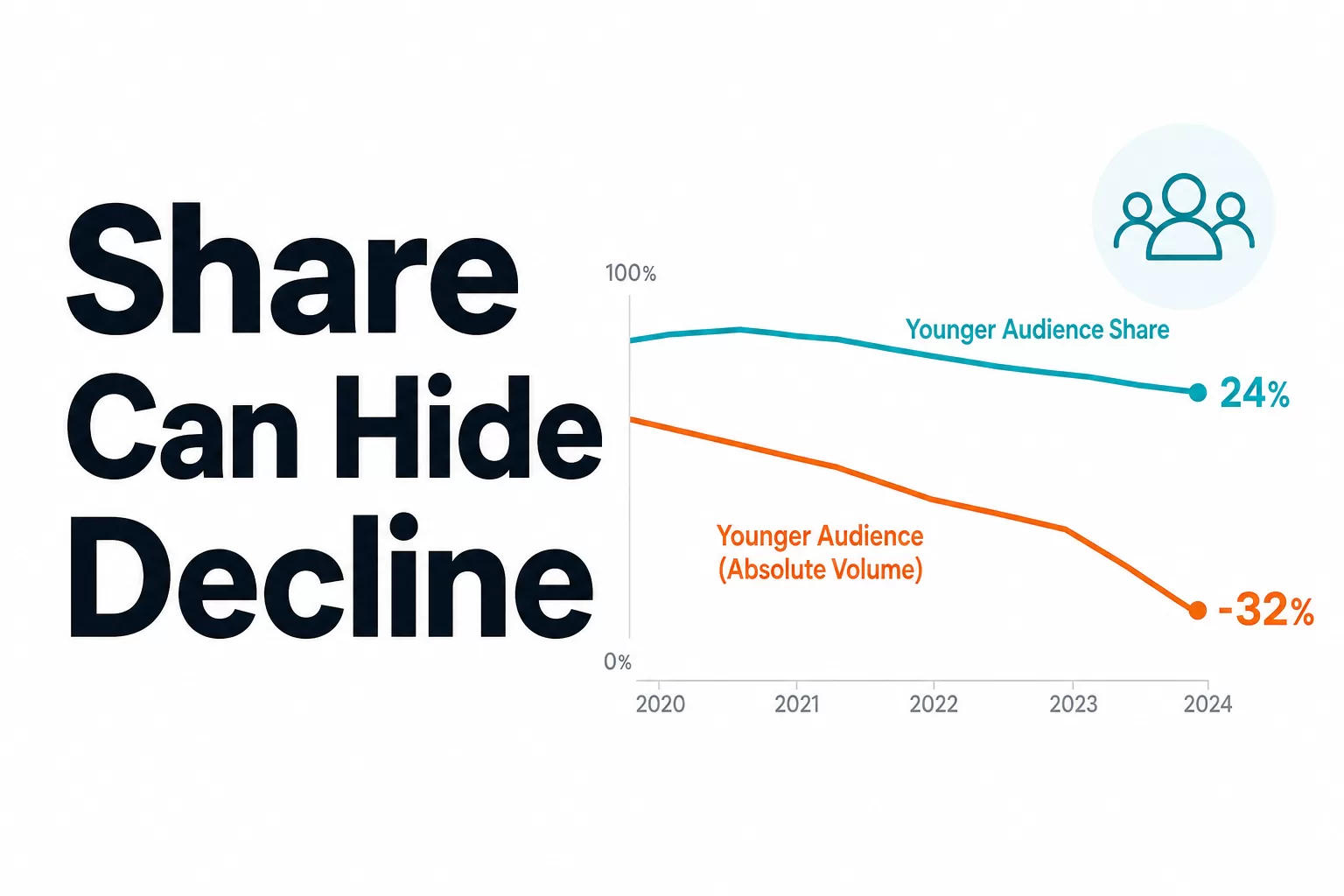
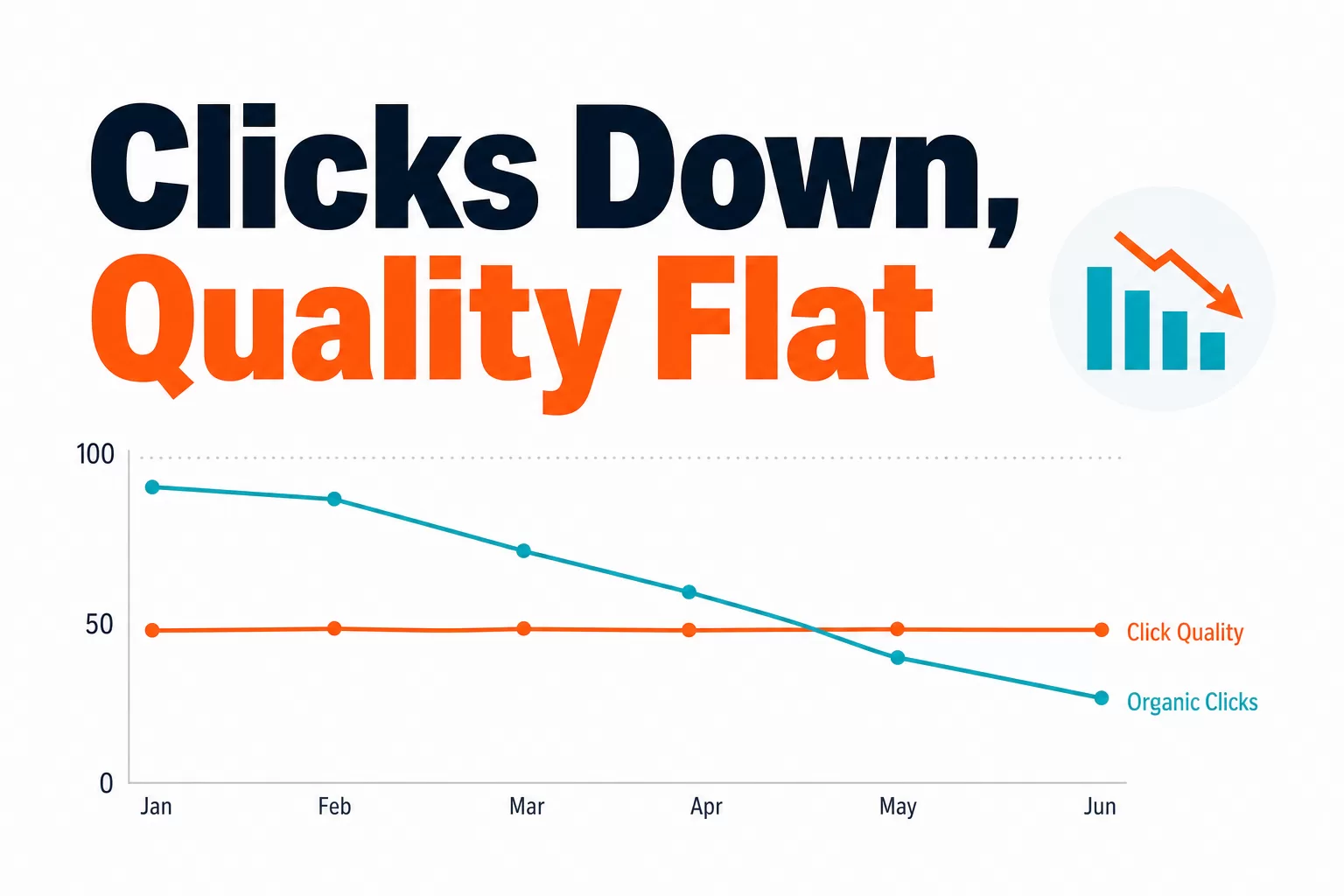
It also helps to watch for SERP composition changes. If the results page is filling with fresher news coverage, more ecommerce listings, or more repetitive pages, that can explain why a page loses clicks even if rankings only shift slightly. Volatility often changes the shape of the SERP, not just the position numbers.
For teams using rank tracking, the most useful view is often trend-based rather than snapshot-based. A single-day dip can be misleading. A sustained pattern across several days is more informative, especially when paired with Search Console and analytics.
Practical steps for teams during volatility
Volatility periods reward discipline. The worst response is to make a series of rushed edits based on one bad day of traffic. The better response is to use a repeatable framework that separates signal from noise and protects the site from unnecessary churn.
Use this response strategy:
- Freeze major changes unless you have a clear, evidence-based reason to act.
- Document the timeline of ranking and traffic changes against the core update window.
- Compare affected pages against pages that held steady to find common traits.
- Review intent alignment to make sure the page still matches what the SERP is rewarding.
- Strengthen content differentiation if competitors are publishing similar or stale material.
- Monitor conversions, not just rankings so you do not overreact to movement that does not affect business outcomes.
For publishers, rapid refresh workflows can be useful when the SERP is crowded with repetitive coverage. For ecommerce teams, the focus should stay on conversion resilience and commercial intent. For informational sites, clarity, topical depth, and authority signals matter more than ever.
Bottom line: volatile SERPs are a measurement problem before they are a content problem. Teams that measure well usually respond better.
The current wave of Google search ranking volatility is a reminder that core updates do not end neatly. Rankings may remain unstable, traffic may wobble, and the SERPs may keep redistributing visibility long after the rollout is complete. The teams that handle this best are the ones that combine tool data, community observation, and a calm operating framework.
In other words: monitor closely, interpret carefully, and avoid making permanent decisions from temporary turbulence.